soccer

Single-Digit Soccer: The challenge of finding a properly challenging level

The book Coaching Outside the Box: Changing the Mindset in Youth Soccer has a chapter with best-case and worst-case scenarios for moving up and facing a tougher level of competition.

The best case is a nice tale of a U11 boy named Liam, technically proficient but small in stature, who is invited to play up one age group for one or two games by a caring coach who lays out the pros and cons, then makes it his decision.

The worst case is a depressing story of a U9 girl named Sally, who is on a low-level travel team but interested in doing more. So she tries out for a local “premier” team that accepts her but shoves her on defense so she can run down opposing forwards despite lacking the technique to play at that level. The coach “reassures” the parents by telling them the team needs her speed. But the coach yells at her for making mistakes, and she’s miserable, realizing (even if her parents don’t) that she’s just not ready to play here.

Finding the right level is one of the biggest challenges in youth soccer, and it’s worst in the prime development years between U8 and U12. By U13 or so, most players have settled into a team that plays a particular level — an actual elite league, a pseudo-elite league, or the local multidivision travel league that sorts out the competition. Even rec leagues have ways of sorting things out.

It’s rather strange that we as a soccer community don’t make more of an effort to make games more even at this age. Granted, the vagaries of U9 soccer make matchmaking difficult — a single player with a big shot or a precocious goalkeeper can make a big difference in the score, which may or may not reflect the balance of play. But too many leagues spend an entire season letting one team dominate or one team get crushed, then schedule things exactly the same way the next season.

A lot of these leagues view promotion and relegation as an evil concept. If teams are worried about being relegated, the consensus says, they’ll play for the result rather than development. Fair enough. Some “club-centric” “elite” leagues don’t have promotion/relegation at any age group.

So what do you do when you get a lot of 9-0 games? You may not care about the result. But is anyone developing? Is the team with 0 learning anything or simply too overwhelmed to use whatever skills they’ve been picking up in practice? Is the team with 9 getting anything other than a mild sweat?

A couple of things that can help:

  1. Clubs should be on the same page, more or less, when it comes to how they’re approaching the competition. That wasn’t the case in a U8 competition I saw in which some teams were tossed together out of an open-enrollment training program while others were selected by tryout from a large talent pool.
  2. Without having formal promotion/relegation, leagues should take note of how teams are playing and adjust from the fall season to the spring season. If a couple of teams are losing badly or winning a series of blowout, schedule those teams against each other the next season.
  3. If some clubs in your league are tiering their teams (A, B, C, etc.) and others aren’t, don’t just hand the non-tiered teams a schedule full of other clubs’ A teams. Mix it up.

Bottom line: Be aware. If you have an opportunity to avoid a whole season of blowouts, do it.

The game needs to be fun. Blowouts aren’t fun.


soccer

Questions to ask after E:60 turf story

Let me toss in some disclaimers at the beginning:

  1. I worry about everything.
  2. I’m a big fan of Julie Foudy, and I’m glad ESPN has put her to work in ways that take advantage of her soccer expertise, her advocacy, and her inquisitive nature.
  3. I’m not a big fan of the E:60 production style. The fake newsroom meeting to introduce each segment. The ominous music.

TV is a difficult medium for investigative journalism. You can’t broadcast a spreadsheet. Compare the E:60 piece on artificial turf with Bloody Elbow’s investigation of UFC finances. Which one is more in depth?

So my biggest disappointments with the E:60 story are these:

  1. Where’s the accompanying web piece? ESPN’s E:60 page is woefully out of date. The only thing I found on the ESPN home page was “E:60 excerpt.”
  2. The piece devoted 44 seconds to someone who has actually studied the issue, Gary Ginsberg. One man’s tragic illness and death got much more than that.

And yet, there’s something here worth pursuing. The E:60 piece may keep the ball rolling, as prior reports by NBC and others have done.

The truth about turf is likely somewhere in the large space between “absolutely harmless – let your kids eat the pellets by the handful” and “do not ever, ever play on it.” It was interesting to see Amy Griffin, who has been compiling a long list of soccer players with cancer, still leading her team in practice on a turf field on a sunny day in which you’d think a nearby grass field would be OK.

Griffin’s no hypocrite, and she doesn’t deserve the backlash she’s been getting. I get the sense that she actually sees this as something other than a binary issue. And no one can blame her for raising the concerns that she has.

And even the Ginsberg study suggested that we may need some safe-handling measures when it comes to playing on turf — just as we would for kids playing on grass that’s been recently fertilized. (Or, in the case of Northern Virginia fields in November, recently covered in goose poop.)

Check the Ginsberg abstract:

Based upon these findings, outdoor and indoor synthetic turf fields are not associated with elevated adverse health risks. However, it would be prudent for building operators to provide adequate ventilation to prevent a buildup of rubber-related volatile organic chemicals (VOC) and SVOC at indoor fields.

“Wait, wait,” you may be saying. “If it’s harmless, why ventilate?”

Because the study doesn’t show that crumb rubber pellets are harmless in large quantities. Yes, there are materials in those pellets that could be harmful if you had enough exposure to them. (Hate to tell you this — but that’s also true of stuff in your food. Look up how much nasty stuff is allowed to be in your food as long as the quantities are small enough. We’re talking maggots in your mushrooms.)

These are old tires. You put tires on your car. You may even change your own tires, and you probably don’t think you’re going to get cancer from it. You should probably wash your hands, though, after you change them.

So future study, in academia and the media, should be geared toward ensuring we keep a safe level of exposure.

Which leads to some questions worth pursuing:

  1. Should we set a temperature limit on turf fields, both for possible airborne exposure to chemicals and so players don’t collapse from the heat?
  2. Should goalkeeper training, where goalkeepers spend much more time with their faces on the field than they do in games, be held on grass as much as possible?
  3. Can we educate parents and kids so kids aren’t building little mounds of pellets and then eating a snack without washing their hands? (That should apply to grass, too. Again — fertilizer and poop. We forget basic hygiene too often.)
  4. Why goalkeepers and not football players who spend even more time rolling around on this stuff? Is it just because they’re wearing mouthpieces? Do running backs and linemen never get this stuff on their faces?
  5. How does the rate of illness among young soccer players compare with the rate of the general population?
  6. And finally — how many of Amy Griffin’s names are in Washington state? Is there something in particular about some turf installations in that area?

So I’m not pulling my kids off their turf fields. I’m also not totally banning hot dogs in our household — just limiting them. But I will have them wash up, and I’m curious to see what future studies say.

soccer

Single-Digit Soccer: Time for parents to raise their voices

No, no — not talking about parents raising voices during games. We need to be restrained and supportive. If someone shoots video of you at a game and posts it on YouTube, it needs to be one of those videos that gets about 10 views, not something picked up on Tosh.0 or headlined “CRAZEE SOCKER MOM LOLOL!”

We need to raise our voices on the issues of youth soccer. We need to let coaches and clubs know what we need if we’re going to keep entrusting them with our kids.

Coaches are probably still thinking this idea sounds like an utter disaster. That’s because they already hear from some parents. They hear from the parents who are upset that their kids aren’t playing and winning for the Super Elite Red 04s or whatever. Not coincidentally, these are often the most ignorant parents.

We’ve all seen this, right?

(I still have no idea why Beijing’s Olympic Stadium, which is artistically displayed in the SportsMyriad banner, is the backdrop.)

No, we need to hear from the other parents. The ones who just want their kids to learn and have fun. Not coincidentally, those are the kids who are going to live up to their potential in this sport, whether it’s a World Cup appearance or good time in the local rec league.

Because one thing we’ve learned from the Great Age Group Kerfuffle of 2015 is that we parents aren’t getting much respect. Your experience may vary, but in talking about the switch to birth-year age groups with various coaches and administrators at many levels, I’ve found a lot of them don’t really care to hear what parents have to say about it.

And parents have legitimate concerns (some expressed in detail at SoccerParenting.com):

  1. They’re worried that their kindergartners will be in the minority in their age group alongside first-graders who are far more accustomed to a structured environment. (As it turns out, clubs have flexibility at this level, but that’s just being whispered rather than trumpeted.)
  2. They’re worried that their teams in the teen years may have half their kids in high school and the other half not, leaving clubs in the lurch when high school soccer is in season. (I haven’t heard a solution to this.)
  3. In general, they don’t understand why their teams of friends have to be busted up just so they can supposedly become better soccer players. How does that really help? And to what end?
  4. How is it any simpler for coaches, clubs and administrators to have birth-year age groups when the “season” is still a school-year season? (More on this tomorrow!)

The typical response: “Oh, don’t worry, it’ll all work out.” (How?)

And parents have other legitimate issues to raise and questions we should all be asking:

  1. Why do we have to drive all over creation to play games instead of playing the neighboring club?
  2. Why did you force my 8-year-old to play goalkeeper without even teaching her how?
  3. Why are you holding tryouts for 8-year-olds that put them on a “travel” track or a “rec” track, then offering very little for those on the “rec” track to catch up as they grow into their bodies?
  4. Why do you think U9s and U10s can’t pass the ball when we’ve been seeing kids from U7 on up spreading out and calling for the ball? Should they be playing U11 even though they’re about a foot shorter than anyone else in the age group?
  5. Why don’t we have better training for parents who want to be good coaches?
  6. Why don’t we have time to play multiple sports, when every reputable study on the subject and tons of world-class athletes say we should?

And maybe the biggest: Why does this cost so danged much?

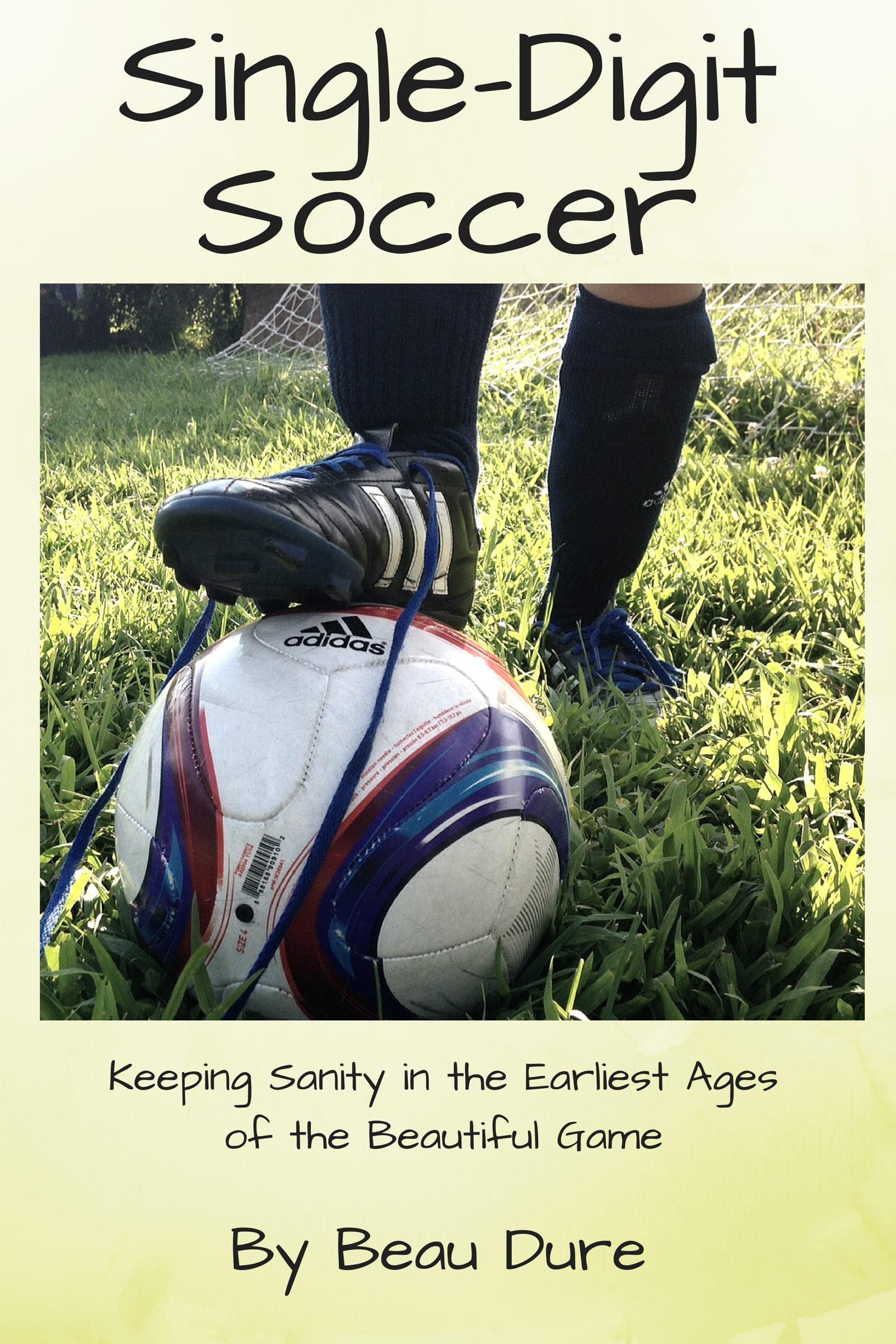
These are just some of the issues Single-Digit Soccer addresses. And my hope is that the book starts (or at least contributes to) a movement in which parents become better-educated consumers.

So please check out the revised page for the book, which you can now access directly from singledigitsoccer.com. You can “like” the Facebook page and share the new flyer.

And check out some of the sites doing similar work — the Changing the Game project, the Aspen Institute’s Project Play, SoccerParenting.com, and surely a few sites I don’t yet know about yet. (Please tell me about them.)

We can take ownership of our kids’ soccer futures. We don’t have to go along with everything coaches and clubs tell us. Read up and speak out!


soccer

Single-Digit Soccer: Dave Barry on the role of the parent

Dave Barry, who married a soccer writer, offers up some classic “it’s funny because it’s true” answers on soccer parenting:

Q. What is my job, as a parent, during a soccer game?

A. Your job is to yell instructions to your child and the other children on your child’s team.

Q. Should I make an effort to educate myself about the rules and tactics of soccer before I start yelling instructions?

A. There is no need for that. As a parent, you have a natural intuitive understanding of the game, which you should share with the entire world by constant yelling.

Too true, too true.


soccer

Single-Digit Soccer: What we don’t talk about

You have a great practice plan. You’ve read three different coaches’ takes on the exercises you’re doing, so you know all the points you’re trying to get across.

Then you spend half of practice trying to get kids to pay even the least bit of attention.

We usually don’t talk about this sort of thing in any coaching clinics or licensing classes. We get the occasional good tip — all I remember of my original F license class a few years ago is that the coach should face the sun so the players aren’t squinting at him.

That’s why I’m happy to report that the new F license class, the one offered online through U.S. Soccer, gives a few ideas on how to keep kids’ attention through keeping them busy and positive reinforcement.

And Soccer America just ran a good piece that draws from people who have to do this sort of thing every day for several hours — teachers.

If kids are still not getting it, redirect them with a non-verbal reminder while you’re still teaching. That is, use a gesture to tell them they need to put their ball down; their eyes need to be on you, etc. Check out how this amazing teacher makes a 10 or more non-verbal interventions in her classroom while she’s still teaching. This keeps the corrections from breaking and slowing down her teaching, which would only result in more off-task kids.

It’s a good conversation for coaches to have. Especially after my practice Monday.

Single-Digit Soccer is now available in paperback as well as in every electronic format I know. Get more info or go straight to Amazon.

soccer

Single-Digit Soccer: These issues matter

sds book coverOn the same day that The Huffington Post ran my piece on Myths Every Soccer Parent Should Know, I saw a cover story in a local magazine (Arlington Magazine, to be specific) in which author Jenny Sokol casts a skeptical eye on the whole business of “elite” or “travel” youth sport.

Problems can arise when youth teams are run with the competitive mentality of a professional sports franchise, says Bowes, who lives in Arlington. That’s when teachable moments tend to get lost. “I always laugh when a coach pulls a player out of a game [as punishment],” he says. “If you’re making a mistake, the only way you can correct it is by getting a chance to correct it. How else do you get better?”

Such scenarios are more common in select leagues, which, unlike rec leagues, are not required to grant players equal playing time. Not only do elite players face stiffer competition on the field; they are also jockeying against their teammates to get off the bench. That dynamic can sour some players’ enthusiasm for the game.

“A lot of times kids will start out loving a sport and enjoying playing it, but if it’s too competitive too soon and the pressure starts to mount, they struggle with anxiety,” cautions Tedesco, the McLean psychologist. “What used to be very enjoyable for them becomes stressful, less fun and more of a job.”

The article goes into note the status element of travel sports. One kid is told by his friends to quit wearing the shirt he wore with his previous team. That’s news to me — I thought kids could wear these things until they outgrew them.

What we really end up doing here is de-valuing rec league. The rec leaguers don’t get the cool shirts. And with so many kids doing travel and not rec (a handful of clubs let you do both at early ages), the rec league competition becomes frustrating for athletes who take soccer semi-seriously but don’t want to commit to (or fall just short of making) the local travel team.

That’s especially frustrating for those who want to follow in the footsteps of most soccer players — and indeed, most big-time athletes — and play multiple sports growing up. Juggling travel soccer and another sport is difficult, as the Arlington story points out. I know a veteran youth soccer coach who longs for multisport clubs that would help kids coordinate schedules, but the political issues there would be monumental. (In fairness, our local Little League also has schedules bordering on the sadistic, asking kids to commit to 4-5 days a week for practices of games once they turn 8 or 9, but most coaches understand if players miss a few of those practices.)

I do see momentum growing against U.S. Soccer’s mandates on grouping kids by birth year, a mandate that terrifies parents of young kids in particular. I’m seeing opportunity in the crisis and may soon unveil a plan that’s more inclusive for everyone while accommodating the truly elite players’ needs. Stay tuned.

Single-Digit Soccer is now available in paperback as well as in every electronic format I know. Get more info or go straight to Amazon.

soccer

Single-Digit Soccer: Is softball different?

It’s official — U10 sports are front-page news.

IMG_1370Granted, the Vienna Connection isn’t The Washington Post. It’s a weekly community paper.

And there they are — the Vienna Stars, national U10 softball champions! They won the Virginia title and moved on to beat teams from Virginia, Maryland, New Jersey, New York, Delaware, Pennsylvania and Illinois.

The team has two players from Great Falls, one from Lansdowne, one from South Riding, one from Leesburg, one from McLean, one from Warrenton, one from Bristow, and one from across the river in Potomac. Oh yes … and one from Vienna.

(For those who don’t know NoVa geography — these towns really aren’t that close to each other.)

Here’s how they did it:

The girls practiced twice a week as soon as Levin selected his team during a tryout period in August of 2014.

During the winter, the 10-year-old girls practiced in a warehouse.

Some players drove more than an hour to get to practices in Vienna.

So if you’ve read Single-Digit Soccer or Tom Farrey’s Game On or John O’Sullivan’s Changing the Game (and you should), you’ve probably spit out your Gatorade by now. This is exactly what we are not supposed to be doing, isn’t it?

Here’s the legendary quote, as reported by Soccer America‘s Mike Woitalla in 2007:

”National youth championships in the USA are the most ludicrous thing I’ve ever heard in my life,” says Horst Bertl, the Dallas Comets longtime director of coaching. ”Whoever thinks these up should be stoned.”

And the turf war Woitalla describes, with multiple national championships, is true in softball as well. The Stars won the U.S. Specialty Sports Association Fast-Pitch National Championship. You can also play in another organization’s fast-pitch “nationals” in four convenient locations! The ASA / USA Softball also has championships down to U10.

In Single-Digit Soccer, U.S. Club Soccer’s Christian Lavers defends the concept of national championship — but not at this age:

At US Club Soccer, we believe that regional competition at U-13 is a good thing, and playing teams from different areas of the country in meaningful games at U-14 is a good thing.

So here’s the question: Are national championships at U10 a bad thing in soccer because of something unique to soccer? Or are they a bad idea, period, even if we don’t want to spoil the fun of the Vienna/South Riding/Leesburg/Potomac Stars?

Part of the answer is easy — “winning” in U10 soccer is a lot easier if you sacrifice development. Put players in set positions, where they’ll learn fewer of the skills down the road. Have the big player blast the ball downfield to the fast player. Find players with the aptitude and love of the game to learn, I mean, find the biggest and fastest players.

Does softball face the same issues? Or is there no harm in having U10s playing a bunch of different tournaments and calling a couple of them national championships?

Single-Digit Soccer is available electronically now and soon in print. Learn more and order here.

soccer

Do U.S. Soccer’s divisional standards make any sense?

Or, to rephrase, are they necessary?

Northern Pitch, an essential soccer blog you should all add to Feedly or Twitter notifications or whatever you use to keep track of things, has a good take on The Broken Logic of USSF’s League RulesThe Northern Pitch folks are in Minnesota with one foot in the NASL and one in MLS, so they have a good perspective on such things.

So, of course, I feel compelled to be nit-picky …

First, the history.

In 2009-2010, the USL–at that time the 2nd division–experienced a schism: owners who wanted to spend more and up the level of the league broke off and formed what would become the NASL. USSF tried to make the two leagues play nice for 2010, but that didn’t last long.

I’d argue that USSF wasn’t trying to make them “play nice” as much as they were “trying to keep these clubs in existence.” Neither the NASL group or the USL group had a critical mass that could sustain a league. USSF, in what you might call a rare bit of common-sense intervention, banded them together for a special edition, one-time only D2 league.

Again, that’s nit-picky and not even all that relevant. The more important part of the history: USSF then unleashed a comprehensive set of standards designed to keep the riff-raff out of pro soccer so we wouldn’t have a revolving door of uncapitalized clubs coming and folding. (If you’re of a certain ilk, you might find such standards an important part of this complete conspiracy theory against promotion and relegation, but in reality, these standards have stabilized things. So well, in fact, that now people really think we can have promotion and relegation sometime soon. See, Alanis? Irony is everywhere.)

But the USSF has decided to upgrade these standards. And they’re run into some pushback, both illegitimate and legitimate.

The NASL has pushed back by unleashing sports lawyer Jeffrey Kessler, last seen in soccer circles drawing the ire of the court by trying to muddy everyone’s understanding of the English league structure, to fire off a nasty note. That’s a bit like bringing in Miley Cyrus to lend credibility to your jazz/prog fusion band — it ain’t gonna work, and it’s surely costing a lot of money.

The Northern Pitch argument is much stronger. Raising the population threshold for 75% of your league to metropolitan areas of 2 million would make a soccer league think twice about going to Salt Lake City, Indianapolis, Oklahoma City or other places that easily support major sports teams already. (Charlotte, though, is over 2 million, according to Census estimates.)

And that’s where the USSF looks like it’s just being officious.

It’s not that USSF should ignore population size in its criteria — as one astute commenter points out, market shares are important for TV, and TV may be just as important to long-term league survival as the deep pockets upon which these criteria insist.

But 2 million? Really?

Here’s another argument from former NASL PR man Kartik Krishnaiyer: He asks why we need such divisional designations at all.

And perhaps we don’t. The trick, though, is that we need to apply some sort of criteria, and it’s only sensible to apply different standards to an MLS club than to the Wilmington Hammerheads. (I always use them as an example because I’m still in wonder over the continued existence of professional soccer in the town where I spent my first three years out of college.)

I frankly don’t care what divisional designation the NASL has, and like another astute commenter at Northern Pitch (wow, these guys are lucky), I don’t think the NASL suddenly takes off if the USSF calls it D1. MLS has a pretty big head start.

And I hate to argue with Peter Wilt, who’s a big fan of the folklore of competing sports leagues in other U.S. sports, but I’m not sure I see the NASL being able to offer anything to distinguish itself from MLS. The ABA, AFL and so forth offered up different rules. Can’t do that in the NASL — not without alienating the “everything must be just like Europe!” fan base it apparently covets.

To me, the NASL’s best bet is either (A) start its own pro/rel pyramid and force the issue, as I’ve said a million times before, or (B) just focus on bringing quality soccer to markets MLS isn’t in. (Yes, I still miss my days as the one-man supporters section at Carolina Dynamo A-League games.)

Nor do I find it particularly unfair that the USSF is raising the standards. That’s because I simply don’t know of another federation that is under the obligation to smooth the path for a second D1 league. If I go to England and say I want to form another league system — and I’ll even open it to promotion/relegation through as many tiers as we can, based on how many clubs sign up with me — could I sue the FA if they put up any hurdles to me calling my leagues “Division 1, Division 2, Division 3”?

Now that would confuse the jury from the old MLS lawsuit, wouldn’t it?


youth soccer

Single-Digit Soccer reference material

Here’s the raw form of all the links in Single Digit Soccer for easy click-through access:

FOOTNOTES

[1] http://www.topdrawersoccer.com/club-soccer-articles/pro-prospects:-eight-year-old-heads-abroad_aid28264

[2] You’ll see Game On cited a few times in this book. Farrey also is the executive director of the Aspen Institute’s Sports & Society Program, which launched a program called Project Play to address many of the issues of accessibility.

[3] That’s the horrifying conclusion to the Game On chapter called “Age 9”

[4] Originally published in an ESPN piece I wrote from the convention on Jan. 27, 2011: http://espn.go.com/sports/soccer/news/_/id/6061681/us-soccer-matter-style

[5] As cited by John O’Sullivan: http://www.soccerwire.com/blog-posts/four-reasons-why-adultification-of-youth-sports-is-hurting-kids-and-damaging-love-for-the-game/?loc=psw

[6] http://espn.go.com/espnw/video/11678466/the-making-elite-athlete

[7] http://www.socceramerica.com/article/42752/when-they-were-children-world-cup-women.html

[8] http://www.socceramerica.com/article/47291/kristine-lilly-have-fun-and-go-after-it-qa-part.html

[9] “Report on Youth Academies in Europe.” European Club Association, August 2012. PDF online.

[10] Quick-witted English soccer commentator

[11] GOOOOOOAAAAALLLLLLL!!!

[12] SoccerTots handed out a fun brochure at NSCAA one year

[13] If you’re really curious, find the 1991 volume of the journal The Physician and Sports Medicine. Or just check the abstract http://journals.lww.com/jpojournal/Citation/1991/07000/Developmental_Skills_and_Children_s_Sports.71.aspx

[14] Sure, I spoiled the ending, but check it out at https://www.youtube.com/watch?v=HtAwOpQBYPI

[15] http://www.usyouthsoccer.org/us_youth_soccer_introduces_practice_guides_for_the_u6-u8_u-10_and_u-12_age_groups/ … similar characteristics are given in U.S. Youth Soccer’s Player Development Model.

[16] One exception: U.S. Youth Soccer’s site has the slideshow from a 2012 presentation “Behavior modification during training,” by Chris Hershey. It addresses characteristics of autism, Down syndrome, ADHD and more. Go to http://www.usyouthsoccer.org/coaches/coaches_document_center/ and search “behavior.”

[17] Feb. 15, 2014 LAT column by Kevin Baxter on Christen Press and Whitney Engen; online at http://articles.latimes.com/2014/feb/15/sports/la-sp-soccer-baxter-20140216

[18] Changing the Game

[19] 2015 NSCAA Convention

[20] Gridiron tools can be used in soccer training as well. Washington Spirit goalkeeper coach Lloyd Yaxley once gave Ashlyn Harris and Chantel Jones a blocking dummy so they could knock into each other while collecting crosses, simulating the bumps they would get in a game. The keepers eventually decided to ditch the pads to have more realistic collisions. Do not attempt this with youth players.

[21] Snow did a February 2014 webinar for the NSCAA.

[22] Again from Snow’s February 2014 webinar

[23] One of the funniest videos on YouTube is a semi-fictional account of a conversation between a beleaguered coach and an overbearing parent: https://www.youtube.com/watch?v=gETP14z515Q

[24] The link: http://www.soccerwire.com/blog-posts/the-fourth-path-rethinking-early-player-development-in-the-united-states/

[25] I caught up with Fraser at NSCAA 2014, specifically seeking out the cerebral coach as someone whose input I wanted.

[26] 2015 NSCAA convention

[27] Look around and find any study you want. One of the better roundups is from Slate writer and youth soccer coach Stefan Fatsis: http://www.slate.com/articles/sports/sports_nut/2014/02/soccer_headers_and_children_why_kids_shouldn_t_be_allowed_to_hit_the_ball.html

[28] One such teaching resource: http://coachingamericansoccer.com/introductions-to-skills/soccer-heading/

[29] http://www.phillysoccerpage.net/2015/02/05/youth-soccer-were-doing-it-wrong-part-3/ — Pugh draws heavily from the book Coaching Outside the Box by Paul S.A. Mairs and Richard E. Shaw

[30] Founder Scott Leben explains the video game-to-soccer connection at http://inside.playisoccer.com/great-articles-and-testimonials/how-to-use-gaming-psychology-in-practice/

[31] Sept. 27, 2007 column for Soccer America: http://www.socceramerica.com/article/23614/reviving-the-pickup-game.html

[32] David Leon Moore, “Q&A with Jürgen Klinsmann: ‘I Am Honored’ to Coach U.S. Team,” World Cup 2014, USA TODAY Sports, p. 20

[33] Changing the Game

[34] Article 18.4 of the youth club standards as of February 2012. See http://www.usclubsoccer.org/resources/youth-club-standards/

[35] Jack McCallum’s “Chaos Theory” story in the Feb. 25, 2013, issue of Sports Illustrated. In the SI vault at http://www.si.com/vault/2013/02/25/106289690/chaos-theory

[36] http://secondnaturesports.tumblr.com/post/60266341249/bee-hive-soccer

[37] Club Champions League: http://www.soccerwire.com/news/clubs/youth-boys/club-champions-league-scrimmagefest-features-street-soccer-atmosphere-for-u9s-u10s/?loc=psw

[38] http://www.ecaeurope.com/Research/ECA%20Report%20on%20Youth%20Academies/ECA%20Report%20on%20Youth%20Academies.pdf

[39] This is the same face-to-face interview mentioned in previous chapters, and it’s important to note that I wasn’t asking Fraser about any specific program.

[40] http://www.theguardian.com/football/2013/may/23/germany-bust-boom-talent — Same story also says teens in Germany academies get 34 hours a week of actual school, which English counterparts who were used to nine hours a week found astounding.

[41] This quote was widely distributed. One instance is from the Guardian Sports Network: http://www.theguardian.com/football/these-football-times/2014/aug/29/ireland-irish-players-premier-league

[42] Start at http://www.usyouthsoccer.org/us_youth_soccer_introduces_practice_guides_for_the_u6-u8_u-10_and_u-12_age_groups/ for the 2013 version; also see the U.S. Youth Soccer Player Development Model.

[43] http://www.sciencedaily.com/releases/2013/04/130423172601.htm

[44] http://www.ncbi.nlm.nih.gov/pubmed/24427397

[45] http://nyshsi.org/wp-content/uploads/2012/08/Competitive_Youth_Sports_in_Society-Malina-CSMR-2010.pdf

[46] The paper is “Intensive Training and Sports Specialization in Young Athletes,” in the journal Pediatrics, Vol. 106, No. 1, July 1, 2000, pp. 154-157. The policy was reaffirmed in October 2014. http://pediatrics.aappublications.org/content/135/2/e558.short

[47] This is in the “Age 2” chapter.

[48] Start with Salon at http://www.salon.com/2014/07/15/is_malcolm_gladwell_wrong_scientists_debate_the_10000_hour_rule/

[49] http://www.soccerwire.com/blog-posts/the-fourth-path-rethinking-early-player-development-in-the-united-states/

[50] https://twitter.com/D6MERIT/status/572552468590030848

[51] http://www.soccerwire.com/blog-posts/dismantling-the-dagwood-sandwich-an-equation-for-healthy-youth-sports/

[52] Also from the “Rethinking early player development” post

[53] 101 Ways to Be a Terrific Sports Parent: Making Athletics a Positive Experience for Your Child

[54] Check the July 8, 2013, ESPN magazine story “Miracle on Ice” or check http://espn.go.com/nhl/story/_/id/9418183/usa-hockey-encourages-kids-nhl-dreams-play-other-sports-espn-magazine

[55] http://www.teamusa.org/About-the-USOC/Athlete-Development/Coaching-Education/American-Development-Model

[56] http://www.socceramerica.com/article/59821/shannon-macmillan-a-world-champs-view-on-coachin.html

[57] Find a bit called “Tommy Salami” on Spotify or Comedy Central’s site. You can start at the 50-second mark at Comedy Central — http://www.cc.com/video-clips/v6wqiq/comedy-central-presents-tommy-salami — but the Spotify rendition is more apt.

[58] http://ceribowley87.blogspot.com/2014/12/developing-club-philosophy.html — at NSCAA 2015, he cited numbers in detail: 62% of players sought social skills, 23% soccer skills

[59] The curriculum is getting hard to find online. For now, try https://ussoccer.app.box.com/s/1z1gjgwhlyhxvamfq8s53utck8nnrtl2

[60] Originally published in my ESPN.com piece on the matter at http://espn.go.com/sports/soccer/news/_/id/6061681/us-soccer-matter-style

[61] http://www.socceramerica.com/article/50729/crazier-than-its-ever-been-jimmy-obleda-fulle.html

[62] http://www.socceramerica.com/article/42202/us-club-soccer-has-changed-radically-in-10-years.html

[63] Seriously — it’s a registered trademark. Also notable on AYSO: Though its philosophies make it sound like a rec league, it has produced some strong national team talent, including Landon Donovan, Julie Foudy, Eric Wynalda, Alex Morgan, and Brian Ching. See http://www.ayso.org/aboutayso/alumni/ayso_famous_alumni.htm

[64] See http://infinitysc.org/parents/education/helping-parents-navigate-the-maze-of-youth-soccer/

[65] http://www.socceramerica.com/article/45567/another-curriculum-us-youth-soccers-is-worth-a.html

[66] http://www.usyouthsoccer.org/news/encouraging_the_pass__when_the_time_is_right/

[67] Gratuitous Romeo Void reference. Look it up, though the song is PG-13.

[68] Email

[69] https://www.breakthroughbasketball.com/blog/index.php/should-we-teach-basketball-skills-to-kids-under-the-age-of-10/

[70] See http://www.nscaa.com/education/clubstandards

[71] David Newbery presentation on characteristics of good clubs at https://www.youtube.com/watch?v=ItGkdm4eFmg

[72] See http://www.usclubsoccer.org/wp-content/uploads/2013/11/US-Club-Soccer-Youth-Club-Standards-2012-02-16.pdf

[73] Email

[74] http://www.socceramerica.com/article/51171/usl-widens-the-net-tim-holt-qa-part-1.html

[75] Like the Arena quotes, this is from my ESPN story off the 2011 NSCAA convention and the curriculum unveiling: http://espn.go.com/sports/soccer/news/_/id/6061681/us-soccer-matter-style

[76] Parenting Young Athletes the Ripken Way: Ensuring the Best Experience for Your Kids in Any Sport, by Cal Ripken Jr. and Rick Wolff (chairman, Center for Sports Parenting).

[77] Email interview. Learn more about Rick Wolff (a very busy guy!) at his site: http://www.askcoachwolff.com/about/

[78] The PDF is at http://www.usyouthsoccer.org/assets/1/3/US_Youth_Soccer_Player_Development_Model.pdf – skip to p. 66-67 for this bit.

[79] From Snow’s blog: http://www.usyouthsoccer.org/blogs/blog/?BlogPostAlias=role_of_competition_in_soccer_development&BlogAlias=coaches_blog

[80] Game On

[81] Boston Globe magazine, May 4, 2014: “How parents are ruining youth sports.” The awkward URL: https://www.bostonglobe.com/magazine/2014/05/03/how-parents-are-ruining-youth-sports/vbRln8qYXkrrNFJcsuvNyM/story.html

[82] Forbes online columnist Bob Cook cited this on his blog Feb. 3, 2014: http://www.forbes.com/sites/bobcook/2014/02/03/as-the-middle-class-fades-the-casual-youth-athlete-dies-out-with-it/

[83] Check out the roster at http://www.fifa.com/tournaments/archive/u17worldcup/finland2003/teams/team=1882394/index.html

[84] Email interview

[85] The O’Sullivan piece is at http://www.soccerwire.com/blog-posts/our-unhealthy-obsession-with-childhood-athletic-success — for background on Barnsley and his research, he links to http://www.sportsscientists.com/2009/01/the-matthew-effect/

[86] A different O’Sullivan piece: http://www.soccerwire.com/blog-posts/our-biggest-mistake-talent-selection-instead-of-talent-identification/

[87] http://changingthegameproject.com/the-tipping-point-in-youth-sports/

[88] The Georgia Soccer “Academy” program: http://www.georgiasoccer.org/schedules/academy_program_scheduling/

[89] See Michael Calvin’s book, The Nowhere Men

[90] Found on the D.C. Urban Moms’ message boards. No point in citing beyond that — everyone’s anonymous. “DS” is a common abbreviation for “Dear Son.”

[91] Just search YouTube. You’ll find plenty of versions of the speech, including some “remixes.” People on the Internet are clever.

[92] NSCAA webinar

[93] Email

[94] http://www2.tsn.ca/blogs/jason_de_vos/?id=416455

[95] The Current keeps up a wonderful archive, but when I did my final footnote check, I found this discussion was no longer there. If you’re able to search some other way, look for the episode of March 6, 2013.

[96] http://www.socceramerica.com/article/59821/shannon-macmillan-a-world-champs-view-on-coachin.html … and yes, I’ve voted for MacMillan for the Hall of Fame.

[97] ESPN.com interview with Reyna: http://espn.go.com/sports/soccer/story/_/id/7790903/us-soccer-claudio-reyna-vision-fixing-us-youth-soccer-arch-bell

[98] http://www.nscaa.com/news/2013/10/winning-v-player-development—pt-1

[99] Mike Woitalla, Soccer America, Feb. 6, 2007, My View:Youth Soccer Turf War – http://www.socceramerica.com/article/20462/my-viewyouth-soccer-turf-war.html

[100] Email interviews with Lavers and Snow account for this and the next few paragraphs.

[101] http://www.socceramerica.com/article/54328/gotsoccer-insanity-ranking-9-year-olds-really.html

[102] http://www.soccerwire.com/blog-posts/hummer-gotsoccer-com-has-jumped-the-shark-by-ranking-u-10s-u-11s/ — two disclaimers are necessary here. First, Hummer’s site also produces youth soccer rankings, though not down to this level. Second, I’ve written for Soccer Wire as a freelancer.

[103] How Children Succeed talks little about sports — it’s mostly an education book. But it’s an interesting read for those who want to see which lessons apply to sports. Or if you just want to learn about parenting.

[104] The quote is from the book Changing the Game. O’Sullivan goes into detail on the two mindsets as they apply to soccer at http://changingthegameproject.com/the-mindset-of-high-performers/

[105] Some historians think Vince Lombardi, the legendary NFL coach to whom this quote is attributed, actually said something about “the will to win” or “making the effort to win.” Some say UCLA football coach Red Sanders should get credit for the quote. And some say Lombardi’s comment was taken out of context, anyway, and that he goes on to talk about sportsmanship.

[106] http://the11.ca/2013/02/20/to-keep-score-or-not-keep-score-why-both-sides-are-right/

[107] http://www.forbes.com/sites/bobcook/2014/12/26/it-doesnt-have-to-be-a-crisis-when-kids-give-up-sports/

[108] 2015 NSCAA convention

[109] Interview at 2014 NSCAA convention

[110] http://www.socceramerica.com/article/25076/beware-of-tournamentitis.html

[111] See “Relative Age Effect” in Chapter 8.

[112] http://www.ayso.org/For_Volunteers/coaches.htm

[113] http://www.usyouthsoccer.org/coaches/Education/

[114] http://www.nscaa.com/elearning

[115] http://www.ussoccer.com/coaching-education

[116] http://read.uberflip.com/i/277639

[117] http://changingthegameproject.com/the-race-to-nowhere-in-youth-sports/

[118] http://www.uslacrosse.org/multimedia-center/blog/postid/554/college-lacrosse-coaches-sound-off-on-multi-sport-participation.aspx

[119] 2015 NSCAA Convention: “Honest Answers for Soccer Parents”

[120] http://brsoccer.org/programs/recreational/how-to-start-a-team

[121] 2015 NSCAA Convention panel

[122] http://articles.courant.com/2013-11-09/sports/hc-soccer-choices-1110-20131109_1_u-s-soccer-development-academy-soccer-pioneers-academy-program

[123] Email interview

[124] The NSCAA’s David Newbery encourages mixed-age groups in his 20 Common Characteristics of Successful Youth Soccer Clubs. See https://www.youtube.com/watch?v=ItGkdm4eFmg

[125] Both quotes in this section are from Changing the Game

[126] What? See http://chess.about.com/od/rulesofchess/a/What-Is-The-Swiss-System.htm or Google “Swiss system” to find an explanation you like.

[127] http://www.theguardian.com/football/2013/may/23/germany-bust-boom-talent

[128] Changing the Game, again

[129] http://www.soccerwire.com/blog-posts/creating-an-early-engagement-model-in-north-american-youth-soccer/

[130] http://youthreport.projectplay.us/Game On author Tom Farrey is the executive director.

[131] http://goalnation.com/identifying-watching-developmental-saboteur/

[132] Mike Woitalla at a 2015 NSCAA panel: Don’t be frustrated if these fancy things you see at the NSCAA Convention don’t work with your kids

[133] 2014 NSCAA webinar

[134] 2014 NSCAA webinar

[135] http://www.usyouthsoccer.org/assets/1/15/2012_coaching_manual_for_web.pdf (p. 12)

[136] http://soccercoachingguide.com/coaching-youth-soccer/should-a-youth-soccer-coach-discipline-your-child-2

[137] Email interview

[138] Survival Guide for Coaching Youth Soccer; Lindsey Blom and Tim Blom, 2009, Human Kinetics.

[139] http://www.usyouthsoccer.org/coaches/Help_Volunteered/

[140] http://www.usyouthsoccer.org/assets/1/15/2012_coaching_manual_for_web.pdf

[141] http://www.greensborounited.org/

[142] Search “hockey canada psa” at YouTube. They’re all good. My favorite is the Pin the Tail on the Donkey Mom: https://www.youtube.com/watch?v=wbcEZxq6uqA

[143] Changing the Game

[144] O’Sullivan moderated this forum, called “Youth Soccer in the Real World.” Thompson is director of coaching for Maryland Youth Soccer.

[145] 101 Ways to Be a Terrific Sports Parent

[146] Changing the Game

[147] https://www.youtube.com/watch?v=7vhBZnUA3Ic

[148] https://www.nscaa.com/user_images/education/curriculum-material/Levels3-6-10.12.12.pdf

[149] One good take along the same lines: https://www.youthletic.com/articles/the-right-way-to-handle-a-referees-bad-call/?page=1

[150] The episode is “Bart Star” from Season 9, guest-starring Joe Namath

[151] This is No. 53 of the 101 ways in 101 Ways to Be a Terrific Sports Parent

[152] 2015 NSCAA convention

[153] How Children Succeed: Grit, Curiosity and the Hidden Power of Character

[154] Dweck wrote the book Mindset and sums up her ideas along with some interesting interactive tools at http://mindsetonline.com/

[155] http://changingthegameproject.com/the-mindset-of-high-performers/

[156] Changing the Game

[157] http://www.phillysoccerpage.net/2015/02/12/youth-soccer-were-doing-it-wrong-part-4/

ESSENTIAL BOOKS

Blom, Lindsey, and Tim Blom. Survival Guide for Coaching Youth Soccer. Champaign, IL: Human Kinetics, 2009.

Calvin, Mike. The Nowhere Men. N.p.: Random House UK, 2014.

Epstein, David J. The Sports Gene. N.p.: Current, 2014. Print.

Farrey, Tom. Game On: The All-American Race to Make Champions of Our Children. New York: ESPN, 2008.

Fish, Joel, and Susan Magee. 101 Ways to Be a Terrific Sports Parent: Making Athletics a Positive Experience for Your Child. New York: Simon & Schuster, 2003.

Hyman, Mark. Until It Hurts: America’s Obsession with Youth Sports and How It Harms Our Kids. Boston: Beacon, 2009.

O’Sullivan, John. Changing the Game: The Parent’s Guide to Raising Happy, High Performing Athletes, and Giving Youth Sports Back to Our Kids. N.p.: Morgan James, 2013.

Parr, Robert, Terry Eguaoje, Tom Condone, and Matt Fansher. Developing a Model Soccer Club. N.p.: SoccerROM LLC, 2012.

Ripken, Cal, and Rick Wolff. Parenting Young Athletes the Ripken Way: Ensuring the Best Experience for Your Kids in Any Sport. New York: Gotham, 2006.

Tough, Paul. How Children Succeed: Grit, Curiosity, and the Hidden Power of Character. N.p.: Mariner, 2013.

INTERVIEWS

In person: Robin Fraser

By email: Julie Foudy, Garth Lagerwey, Alexi Lalas, Christian Lavers, Sam Snow, Tiffany Weimer, Rick Wolff

Via the Houston Dynamo communications staff: Bobby Boswell, Mike Chabala, Andrew Driver, Kofi Sarkodie

RESOURCES FROM YOUTH ORGANIZATIONS

From U.S. Soccer:

From U.S. Youth Soccer:

From the NSCAA:

From U.S. Club Soccer:

From AYSO:

Other general resources mentioned in this book:

The European Club Association’s Report on Youth Academies in Europe was released August 2012, though you can feel free to check for an updated version. The 2012 edition: http://www.ecaeurope.com/Research/ECA%20Report%20on%20Youth%20Academies/ECA%20Report%20on%20Youth%20Academies.pdf

The U.S. Olympic Committee has devised an American Development Model: http://www.teamusa.org/About-the-USOC/Athlete-Development/Coaching-Education/American-Development-Model

Project Play: http://youthreport.projectplay.us/

NSCAA Convention sessions

2013
“Understanding Players with Disabilities,” Mike Barr

2014
“Coalescing the USSF, USYS, and NSCAA Curricula for U8-U10: Can it be done?” Mike Singleton
“How Can We Improve Our Recreation Program?” Lee Smith
“Kindersoccer,” Ron Quinn
“Implementing a Curriculum for Player Development,” Robert Parr, Terry Eguaoje, Ryan Lakin
“Better Player Development Option: High School or Development Academy/Elite Clubs National League,” Kevin Sims

2015:
“0.0017% vs. 100%: Sharing Player Development,” Ceri Bowley
“Project Play – Re-Imaging Youth Sports in America with an 8 Point Plan,” Tom Farrey
“Honest Answers for Soccer Parents,” Mike Barr
“Parent Coaches: What They Are, What They Should Be,” Eric Redder
“Building Champions: German Player Development,” Bernd Stoeber, Anouschka Bernhard, Frank Tschan
“Get Real: A Realistic Approach to Player Development,” Scott Snyder
“Changing the Game: Building a High-Performing State of Mind in Your Players,” John O’Sullivan
“Youth Soccer in the Real World: A Discussion of the Issues Faced by a Modern Day Club DOC,” John O’Sullivan, Brett Jacobs, Charlie Slagle, Karla Thompson, Mike Woitalla, Sam Snow
“TOPSoccer-Overcoming Barriers to Participation,” Libby Anderl
“How to Incorporate Recreation and Academy Programs – Steps for Success,” Eric Landon
soccer

Ali Krieger and the case of the missing midfielder

Ali Krieger won’t be with the Washington Spirit for the NWSL semifinal at Seattle. Does it matter?

Her absence, to attend her father’s wedding, is certainly a surprise. Her father, Ken, is a Virginia Youth Soccer Hall of Famer and the type of person you’d think would cut off his arm to be at an important soccer game. And he’s lucky that the D.C. United Academy team he coaches has the week off.

Women’s soccer fans love a good debate. Sometimes. Other times, they’re furious that anyone would even dare to question the noble intent of their favorite players. Or any players. So we can imagine the screaming in the wake of this news. The rough consensus on my Twitter timeline: “Leave Krieger alone! Blame the NWSL for not scheduling things farther in advance!” (I’m not sure what to make of the latter point — if they set the date a year ago, not realizing the NWSL would run into September, then it makes sense. But if they were scheduling it — or hadn’t even made a lot of nonrefundable deposits — over the winter, you’d think they might have figured a playoff game was a possibility.)

The rough consensus at The Equalizer is a little harsher.

(I have to give credit here to Jeff Kassouf for this marvelous and completely apt turn of phrase: “The deja vu seemed so ludicrous that Dure asked Parsons if he was joking.”)

So that’s the off-field debate. What about on the field? Perhaps this is an even more controversial point, which may explain why I’m phrasing it with so many qualifiers that a good editor would lop out of the story: The Spirit might not really miss Ali Krieger this weekend.

Make no mistake — you can’t talk about the best right backs in the world without talking about Krieger. She might be No. 1. She didn’t make FIFA’s Who-Voted-On-This-Stuff Team from the World Cup, but neither did Becky Sauerbrunn, which should be enough to send all of those voters to a therapist or an optometrist. Krieger was surely squeezed out because voters didn’t feel comfortable naming all four defenders from one team, no matter how well deserved. So forget the voting and look at the results — Krieger got into the attack on occasion (more effectively when Jill Ellis suddenly ditched the “whack it to Wambach” tactics), and every player on that line had to be in world-class form to stifle Germany as effectively as they did.

But Krieger hasn’t been playing right back for the Spirit. She has been playing defensive midfielder. And she might not be the best defensive midfielder on her own team.

It’s not quite the typical 4-5-1 or 4-1-2-3 or whatever you call it on Mark Parsons’ team. He has Crystal Dunn, Francisca Ordega and Diana Matheson at forward and on the wings, somewhat interchangeably. The three midfielders behind them also have overlapping roles.

Krieger has been in that mix. And though the view from the pressbox doesn’t always tell you everything, she hasn’t seemed as comfortable going forward as Christine “I WILL SHOOT FROM 30 YARDS AND TERRIFY THE KEEPER” Nairn or whichever midfielder Parsons selects from Joanna Lohman and Angela Salem.

Parsons has patiently told the assembled Washington-area media that Krieger has contributed in ways we really haven’t noticed — specifically, marking another player out of the game. Maybe Carli Lloyd. Maybe Kim Little. (Repetition alert: This point was also in my SoccerWire preview, which was obviously written before the Krieger news broke in the conference call. That’ll teach me to wait until the conference call.)

She’s not even playing a traditional No. 6. It’s as if Parsons is channeling Jim Valvano and turned Krieger into the “one” in a box-and-one.

That’s an important role, of course. But can the Spirit get some of that defensive tenacity, maybe by committee?

We the media botched the conference call yesterday in one important sense — we forgot to inquire into the health and form of one Tori Huster. The versatile player was a cornerstone in whatever the Spirit did right in its first two seasons. But she hasn’t been at full health or full form this year, perhaps feeling the effects of spending her offseasons playing in Australia or just dealing with nagging injuries here and there.

Maybe Parsons, who joked that he wished I hadn’t asked the “surprise news” question and forced him (not really) to reveal the Krieger news, is holding Huster in reserve and is sitting somewhere with a relieved smile that none of us thought to ask?

Or maybe Huster isn’t ready to go, and he’ll just put Lohman and Salem on the field together. Less surprising, but possibly effective as well.

If you’ve watched Krieger off the ball at Spirit games recently, you’ve noticed that she often seems a little less than fully engaged. WoSo fans might debate whether that’s a lack of motivation or just a sign that she’s worn down from the World Cup summer. That only matters if you’re dead set on putting Krieger on trial, and really, what’s the point of that?

The only practical concern here is that Krieger’s absence shouldn’t be a crushing blow for the Spirit. They have other defensive midfielders, maybe not as capable at 1v1 defense as Krieger but perhaps more comfortable giving some depth to the Spirit attack. They have other leaders — the quiet but inspirational Diana Matheson, the much louder and also inspirational Ashlyn Harris.

And if Seattle mastermind Laura Harvey thought she had the Spirit figured out last week, now she has to wonder what her good friend has in store now.

Said it last week — I’d pay to watch Harvey and Parsons play chess. This semifinal ought to be interesting.