women's soccer

On race and protests …

I’ve asked in this space whether Megan Rapinoe’s national anthem protest is effective, and I’ve asked what’s next.

The answers, even within the politically homogeneous circles of women’s soccer Twitter fandom, have been diverse:

  1. No, because it’s all about her and now her spat with Bill Lynch, which revved up when she called him “homophobic.”
  2. Yes, because we’re talking about it.
  3. How dare you ask that, you dumb white man?!

(OK, they’re paraphrased.)

I should point out that I have had a good discussion on race myself. Not on Twitter. I spoke with a former football coach and former Marine (well, once a Marine, always a Marine, so let’s say “a Marine veteran”). He’s African-American and older. (But not old.)
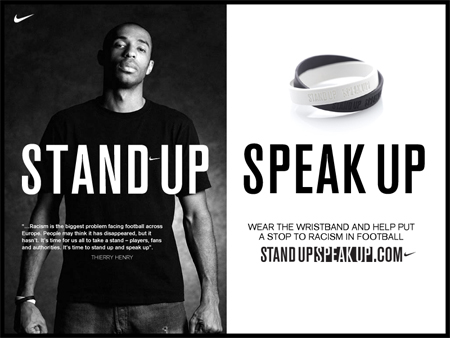
standup

A conclusion we reached was interesting. When Barack Obama was elected in 2008, a lot of Americans unfortunately got more racist, and they actually used the president as an excuse. “Hey, our country elected a black man,” they’d argue, at least implicitly. “So racism is dead, and you can’t call me racist.”

Interesting point? Others can judge.

Now — was that conversation a direct or indirect result of Colin Kaepernick, Megan Rapinoe, Brandon Marshall and others deciding not to stand when the old English drinking song with Francis Scott Key’s lyrics of unlikely flag survival is played? (Marshall, incidentally, has paid for his stance with lost sponsorships, which I find sad and ridiculous.)

Maybe. But he and I have had good talks on race before. And we covered familiar ground in the same conversation, including a good scornful laugh at the people who took Gabby Douglas to task for not putting her hand over the heart for the anthem in Rio, only to fall mysteriously silent when a succession of white track and field athletes stood the same way the next week.

Related to that today: I’ve put up a poll asking people to put themselves in Rapinoe’s shoes when she wears a U.S. uniform next week:

https://twitter.com/duresport/status/774714193580785664

As of this writing, it’s 51% kneel, 44% stand/repping USA, 5% stand/avoid controversy. I’m going to link it on Facebook later, and my guess is the “stand/repping USA” will surge into the lead.

No, I’m not Facebook friends with a bunch of wingnuts. A couple, yes. My high school didn’t exactly turn out to rally for Mondale.

But I also went to a college renowned for “political correctness.” Right-wing mags of the day spilled much ink denouncing our English department, among other things.

While I was there, I wrote a column ridiculing “political correctness” critics. I said many of the things some people consider “politically correct” are just good manners. If you’re going to say or do something that offends other people, you’d better have a good reason. Frat parties with sexist or racist themes? That’s not a good reason.

And yet, I often saw how easy it was for a well-intentioned political campaign to go off the rails.

It often boils down to people trying to outdo each other and forgetting what’s best for the cause. The most extreme case I saw in college: People trying to prove their anti-racism bona fides by hyping a speech by a speaker of color … who happened to be virulently anti-Semitic.


And so I’ve received some pushback on Twitter. Some of it is frank, honest and reasonable. Some of it is simply driven by a desire to one-up me in the anti-racism department — ironically by telling me to quit asking difficult questions. Or by telling me it looks bad for a white man to tell black people how to protest — which surprised me because Megan Rapinoe is most definitely white.

There’s also a basic problem within our politically homogeneous group of WoSo fans who follow each other on Twitter. Implicit throughout the discussion is the idea that only some bigoted jerk would take offense at a demonstration during the national anthem. (A notable exception: A veteran who gave it serious consideration.)

I don’t take offense. But I recognize that my feelings on patriotic symbols are unusual. This is one of my favorite Rush lyrics:

Better the pride that resides
In a citizen of the world
Than the pride that divides
When a colorful rag is unfurled

(Please don’t tell my right-wing friends on Facebook. That’s not politically correct in their circles.)

But I recognize this: There are reasonable people who wish Rapinoe and company would find a different means of protesting, at LEAST while she’s wearing the U.S. uniform.

So I have questions:

  • Are the anthem protests more effective than, say, the Minnesota Lynx’s T-shirts? (In that case, I have to say that while I’m generally reluctant to tell people when they can or can’t be offended, the police who walked off the job in that case looked like idiots.)
  • Do the anthem protests need to continue to be effective? Or should we call that Phase 1 and evolve into a next phase with T-shirts or bracelets (see above) that would help people spread the message in their daily lives without incurring backlash, not just from Bill Lynch but from plenty of people who are more reverential toward the anthem than I am?

phase1

  • Related to the last question: Which approach is better, more confrontational or less confrontational?
  • When Rapinoe says she thinks Bill Lynch is homophobic, does that overshadow whatever she’s trying to say on race?

I’m not pretending to know the answers. Matthew Doyle asked a good question on Twitter about how the gay rights and civil rights movements moved forward. I’m not sure. When I think of the civil rights movement, I think of brave but nonviolent leaders such as Martin Luther King and the Freedom Riders. I have no idea how the gay rights movement has made such strides — 12 years ago, John Kerry was considered ahead of the curve by advocating for “civil unions,” but today, a Twitter follower of mine says that’s homophobic. If you had told me 20 years ago that you’d be seeing Republicans (no, not all, of course) reaching out on gay marriage, I’d have said we’ll be on Mars first.

But I think the questions are a valid part of the discussion. And if you try to score Twitter points by questioning my sincerity in asking … what, exactly, are you contributing to moving the discussion forward?

So I’m going to keep asking. Because electing a person of color in 2008 clearly didn’t solve everything. We’ve got a long, long way to go.

culture, women's soccer

What next for Rapinoe protest?

Not another 1,000-word essay, but too complicated for 140 characters on Twitter …

The Spirit game this weekend at Seattle will surely be interesting. But I think all eyes are going to be on Columbus on Thursday, when the USWNT plays Thailand.

I have to distinguish between two sentiments here:

Personally, I would have no issue with Rapinoe or her teammates taking a knee during the anthem. And if I were covering the game, I’d happily ask her afterwards if she feels she’s making any progress getting the country to learn and talk more about race.

Pragmatically, I fear the worst if Rapinoe kneels during the anthem. We have to recognize that some people are offended by protests during the anthem, whether we agree with them or not. To do so while wearing a U.S. uniform raises issues that don’t exist when she’s representing the Seattle Reign. It’s like arguing within a family vs. arguing about your family in front of other people. I know plenty of people in the non-Twitterverse — including many who would otherwise sympathize with everything Megan Rapinoe says — who would have a serious problem with protesting during the anthem while repping the country.

Again (repeating because I feel people really want to focus on the parts with which they disagree, which is actually an extreme example of what I talked about in last night’s post), I have to stress that I personally would not be offended. Though it’s not a First Amendment issue (the Constitution does not guarantee employment), I think the free expression of kneeling outweighs the symbolism of the national anthem. (Which, in my eyes, is not a memorial to fallen veterans, and I think it’s a stretch for Bill Lynch to construe it as such.)

But pragmatically, would kneeling during the anthem at a USWNT game further Rapinoe’s cause of trying to open a discussion of race relations? That discussion has been … well, hijacked. What’s the next step forward? Bow in prayer as Mahmoud Abdul-Rauf did?

I’m open to being convinced that it would work. Maybe she would be like Tommie Smith and John Carlos at the 1968 Olympics — vilified at the time but now seen as taking a heroic stand.

I’m skeptical. But I’m ready to listen.

I know some people would say, “Damn the consequences! Speak and act as you see fit!” But that’s what Bill Lynch did Wednesday, and I don’t think it did any good at all. PR consultants may get a bad rap, but sometimes, we need to listen to them.


women's soccer

Is Rapinoe’s protest effective?

I’ve been pleasantly surprised by the Twitter debate over my Guardian piece on the Washington Spirit derailing Megan Rapinoe’s protest last night. Granted, in nearly 30 years of journalism, I’ve resigned myself to a low bar. If I don’t have a high school cross-country coach running into the newsroom to yell at me about something I didn’t even touch or a gaggle of Alex Morgan fans threatening to kill me “twice” or buy my book to slap me with it, it’s a good day.

Low bar notwithstanding, I think people have raised some good questions. I’ve seen some tangential debate on why we play the national anthem before domestic sports events in the first place.

As one Guardian commenter put it: “They don’t do that in Europe or in most other countries around the world. Only when there’s an international game are the country’s national anthems played. In fact at some football clubs like Dortmund, Liverpool and Celtic, they have their own “national anthems” i.e. You’ll Never Walk Alone.

I read — and now I forget where, perhaps a message board somewhere — an interesting take pointing out that Rapinoe’s decision to kneel for the anthem, like Colin Kaepernick’s decision not to stand, isn’t starting a conversation about race relations. It’s starting a conversation about Megan Rapinoe and Colin Kaepernick. (To add to that point: I don’t even remember why NBA player Mahmoud Abdul-Rauf declined a traditional observance of the anthem. I just remember that he did, and it was controversial.)

When I mentioned that on Twitter, I got a couple of good responses that boiled down to “Whose fault is that?” The media’s? The athlete’s?

Good question.

When Rapinoe first took a knee for the anthem, I was optimistic that the conversation would go beyond Colin Kaepernick — who, frankly, might not be the best person to lead the discussion. The one-time QB sensation has lost his starting job in San Francisco and may come across as bitter for reasons that have nothing to do with the nation’s problems with race. “OK, now someone else is doing it,” I figured. “Now it’s not just about Kaepernick.”

Last night, things changed. And if you hang out in my circles on Twitter, it’s pretty unanimous that the Spirit blew it. If you chat with people I know on Facebook or BigSoccer, including people whose politics would never be described as “conservative,” it’s a different story.

screenshot-2016-09-08-at-7-53-52-pm

No, I don’t agree with that, as my Guardian piece should make clear. But within the echo chamber of women’s soccer fans on Twitter, I’m still going against the groupthink because I think Rapinoe undermined her own protest by calling Spirit owner Bill Lynch “homophobic.”

I also said it made little sense to use that term on someone who willingly bought a women’s soccer team and made a special effort to bring in players who were “out” well before Rapinoe was. Some people have challenged me on that point, saying the Spirit have been the only club not to go along with other NWSL teams on hosting LGBTQ Pride events or cheering decisions in favor of gay marriage.

One person decided to lighten the mood on Twitter.

https://twitter.com/RealMeMP/status/773852222438379520

But seriously, such litmus tests can be tricky. When the first Gulf War broke out in 1991, basketball teams raced to put American flags on their jerseys. Some refused to wear them because they opposed the war, and they were ostracized. Some opposed the war but wore the flag anyway. And veterans’ opinions were not as one-sided as one might think: Princeton coach and Korean War veteran Pete Carril was outspoken in defense of players who were not wearing the Stars and Stripes. (I can’t find any record of it, but I recall one of the last college teams to give in to the pressure to wear the flags was Duke, coached by West Point alum Mike Krzyzewski.)

Still, for sake of argument, let’s say Lynch isn’t as progressive on gay rights as the WoSo community would like. If I were the Spirit’s PR consultant, I’d be yelling at Lynch every day to follow the crowd on such things.

But is “homophobia” something Rapinoe should bring up?

Upon watching the video (see below), I found a subtle distinction. Rapinoe didn’t bring it up. It was brought up by Think Progress reporter Lindsay Gibbs, who asked about it (around the 11:15 mark).

So if you’d prefer to blame the media for sidetracking the discussion, fine. Blame Gibbs if you like (though it was certainly not her intent, and she couldn’t have foreseen Rapinoe’s blunt answer) for raising a question that wound up overshadowing the rest of the conversation as surely as the Spirit’s ham-fisted decision to reschedule the anthem overshadowed everything else last night. (Not that ESPN would’ve led SportsCenter with Crystal Dunn’s goal under any circumstances, but still …)

Not that Rapinoe had to take the bait. And she didn’t have to say she thinks Bill Lynch is homophobic in such direct terms.

The follow-up question tried to steer things back to race relations. And Rapinoe gamely tries to expound on it. But within a few seconds, she’s talking about being a woman and fighting for equal pay.

Rapinoe readily concedes that she doesn’t have all the answers. That is, as a lot of philosophers have said, the sign of a wise person. And I have to stress here that we’re looking at all of this — Lynch’s decision, Gibbs’ question, Rapinoe’s answer — with the benefit of hindsight. (I wasn’t even there. I had to coach a youth soccer team. Practice was canceled for the same reason the Spirit-Reign game was delayed, but by the time we cleared the field, it was too late to make the epic weeknight drive to the Plex.)

But we have to use this hindsight to ask whether Rapinoe’s protest is effective. As it stands now, it’s not. We’re not talking about race relations. We’re talking about Rapinoe, Lynch, homophobia accusations, overshadowing the Spirit’s big win (which wasn’t THAT big — they were likely to clinch a home playoff berth in the next week or so anyway), etc.

That’s absolutely not entirely Rapinoe’s fault. Nor is it entirely Lynch’s fault.

I wouldn’t even say it’s entirely the media’s fault. The point I tried to raise in the Twitter conversation that prompted this post is that it’s human nature to focus on what’s most controversial. I’ve been tweeting today about the Paralympics. I debuted a new feature finding interesting live sports around the Web. I retweeted the Landon Donovan news.

But guess what people want to talk about.

Like Rapinoe, I don’t have all the answers. I don’t know the next step. Should the entire WNT take a knee during the national anthem of their upcoming friendly? (My gut says that would backfire horribly on the grounds that when Rapinoe kneels as a member of the Reign, she’s making a point internally, but if she does so while wearing the U.S. uniform, she’s showing up her countrymates in front of others. As they said in Animal House, only WE can do that to our pledges.)

Should Rapinoe try harder to steer the conversation to race relations? Should the Reign, who have issued sharp, professional statements in support of Rapinoe without flinging mud at anyone else, establish a partnership with a group working to end racism?

So far, Rapinoe’s actions aren’t working. But that’s no reason to give up.


olympic sports, women's soccer

Olympic schedule for WoSo fans looking to branch out

I’ve been tinkering with schedule spreadsheets and decided to try one for women’s soccer fans who also want to sample the rest of the Games, with an emphasis on soccer and women’s sports.

Check Aug. 3-9:

Women’s 2016 preview – 3-9

And Aug. 10-14:

Women’s 2016 preview – 10-14

Disclaimer: Everything is subject to change, and I’ve hit the occasional discrepancy in a few times. And if it’s on NBC or NBCSN, you may be hopping between events and not catching things quite live. The best place to check for the latest info and live streaming is the NBC live stream schedule, which is going to be your best friend for the next three weeks.

women's soccer

Quick Spirit-Sky Blue thoughts

I went to the SoccerPlex today with one question: “Is Sky Blue for real?”

I left with many more questions:

  1. Why did the two Sky Blue players whose combined age is 74 cover more ground than the rest of the team? Yes, we know running is Christie Rampone’s thing, but Tasha Kai was left isolated and trying to press the entire Spirit team for much of the game. After an hour, she started coming over the sideline for water. She may have drawn a foul by simply falling down out of exhaustion. She said, in good humor after the game, that she simply ran until the tank was empty. Good for her, and she did have Sky Blue’s lone goal and another 1-2 good chances, but does this team really have no one else who can help with the pressure, especially against a Spirit defense that was unusually prone to coughing up the ball today?
  2. If Sky Blue had trouble possessing the ball and getting Raquel Rodriguez involved against a team missing five players on international duty, what happens when all the big guns come back from their teams? Sky Blue gets Kelley O’Hara and Sam Kerr, but in their last five games (my goodness, this season has gone quickly), they’ll be facing Chicago (Press, Johnston, Naeher), Kansas City (Sauerbrunn, O’Reilly — who’s going to Brazil as an alternate, Scott, Bowen), Orlando twice (most of the defense) and Portland (everyone).
  3. Would this game have been less choppy if it had been played at 9:30 last night instead of 11 a.m. this morning?

Rampone said this was the first time in her pro career she has played a game in the morning. I asked about the Olympics, which can impose some strange start times, but apparently not there, either. But she and coach Christy Holly weren’t using the early wake-up call or the soupy weather as an excuse. Both teams had to deal with it, and that might explain why neither team looked particularly sharp.

Spirit coach Jim Gabarra said the first half might have been the best half they’ve played all year. Offensively, at times, sure. Estefania Banini looked dangerous every time she touched the ball, and the passing combination that led to the first goal was pretty. And we might remember this as a breakout game for Caprice Dydasco, who was the sturdiest Spirit defender and also contributed offensively.

I didn’t have a good view of the second goal, so I wasn’t sure if Cheyna Williams had a terrific first touch on the ball or a lucky deflection. Honestly, neither was she. She said it all happened in a blur. But the shot was a nice, composed finish.

But to me, the Spirit seemed more error-prone than usual. Perhaps it was the heat, perhaps it was the occasional forearm shiver from the imposing Sky Blue players, perhaps it was the strange timing of the game.

In any case, the Spirit hit the Olympic break in great shape. Gabarra pointed out that the team went 4-1 in July without Dunn, D-Math, Krieger, Labbe and Zadorsky.

In fact, the last time those five players were available, the Spirit lost 2-1 at home to Sky Blue. If you know the quality of those players and watched today’s game without them, you’d wonder how in the world that was possible.

Funny old game. See you in September.


work portfolio, youth soccer

Survey says status quo in youth soccer isn’t satisfactory

Soccer leagues are proliferating like milkweed in the mid-Atlantic. Are they meeting unserved needs, or just getting in each other’s way? To find out, Beau Dure asked 102 local coaches, technical directors and club administrators a series of multiple-choice and short answer questions.

Source: Dure: Survey says status quo in youth soccer isn’t satisfactory — Soccer Wire

women's soccer, work portfolio

The Great U.S. Women’s Soccer Labor Dispute of 2016

A few bits of history and perspective that pointed out some inconvenient facts …

— For The Guardian, comments from the U.S. women’s national team’s lawyers along with facts, figures and questions about how this could all play out. (Will we have a league? Will we have a better national team? Will everyone get paid?

Source: The US women’s soccer pay dispute: a tangled web with no easy answers | Football | The Guardian

April 11, 2016

— For OZY, a flashback on a previous labor dispute that actually reached the point of calling in replacement players, albeit replacements who were also on board with what the striking players were doing.

Source: When Women Walked Out on Soccer

May 9, 2016

— For FourFourTwo, a piece on U.S. Soccer’s rebuttal to the team’s EEOC complaint. And the question: What do the women really want?

Source: USWNT vs. U.S. Soccer: What do the players really want?

June 2, 2016