Uncategorized

The NWSL, USA Curling and the dangers of inadequate investigations

The accusations of abuse in the NWSL deserved a professional, thorough investigation.

They got that. It’s the Yates Report.

A second report, commissioned by the NWSL and the NWSL Players Association, has some utility. It is, however, flawed in multiple places. 

In some cases, dangerously flawed.

As usual, the media reporting on the situation doesn’t help. Everyone from accused sexual predators to coaches who apparently yelled at players are lumped together under the heading “abuse.” 

The nuances are important here, and to the investigators’ credit, they ask the powers that be to consider what’s acceptable and what’s unacceptable moving forward. The NWSL doesn’t want any Bobby Knights, nor should it. Players and staff will have to decide if they would abide by a Mike Krzyzewski or even an Anson Dorrance. (“Lost control of her bowels” is a disturbing phrase to describe a fitness test, and “mess with us mentally to pick out who were the weaklings” is a phrase that might have raised a yellow or red flag for the investigators.) 

That discussion is all well and good. It’s clear from the report that players have different levels of what they consider “abuse,” and it’s something they should be able to talk through. Absolutely.

Unfortunately, in other areas, the bad guys are predetermined, and the conclusions aren’t always justified.

Consider this bewildering passage concerning Rory Dames. To be sure, there’s no defending his behavior as described here and in the Yates Report unless everyone else involved is lying. But then we get to things like this: “Dames told the investigator that he revoked the media credentials of a player’s boyfriend because he concluded that the boyfriend’s presence was “not positive” based on a conversation with a USWNT coach.” 

This point is raised because the NWSL/NWSLPA investigators want to take a US Soccer investigator down a notch for failing to follow up on this “explanation as to the treatment of this player.”

The NWSL/NWSLPA investigators do not, however, take issue with the fact that a player’s boyfriend has a media credential.

Note to journalists: If you start dating a player on a sports team, stop covering that team.

The “guilty until proven innocent — and even then, still guilty” approach isn’t surprising in a sport that holds strict adherence to The Narrative. Players are always right. The lawyers they hired are always right, which is why they get millions of dollars after losing in court. Coaches who cross them — whether they’re perceived as abusive or whether they pull a Tom Sermanni and start tinkering with the lineup — are always wrong. Referees are always wrong. Everyone who has ever worked for the league is wrong. Everyone who was interested in women’s soccer before everyone else got interested in women’s soccer from 2011 onward is wrong.

What’s more disturbing is that the investigators have some fundamental misunderstandings of how to fight abuse. We’ll get to that.

But first, let’s see how someone’s career has been shredded over flimsy, out-of-context conclusions and months waiting in limbo.

James Clarkson

Here are some of the complaints against former Houston Dash coach James Clarkson, who was temporarily suspended for what turned out to be an entire season and will not have his contract renewed.

  • “(A)nother said she felt under the microscope based on the position she played and feared she would be cut from the team.” Well, yeah. It’s professional sports. Ask NFL players about their job security.
  • The coach thought some players had been drinking the night before a preseason game and that they were hung over. Players deny it. They didn’t deny being out at dinner with a player from the other team until midnight when they had a 6 a.m. wake-up call, or that one of those players became ill.
  • A player told a member of the coaching staff but not Clarkson that an injury was bothering her, but she decided to dress because she figured she wouldn’t play. Clarkson, figuring she was fit, put her in the game. She went in and then asked to come out. Clarkson got mad about this, and reports differ on whether he dropped an f-bomb. This is all somehow Clarkson’s fault. (A player who witnessed the incident also said Clarkson later admitted he could’ve handled the situation differently.)

Another note about the last one. On page 71, the report says, “Accounts differ about what happened next.” A player says she doesn’t recall the specific words. On page 104, things are suddenly more certain: “Clarkson denied making this comment, but witnesses corroborated that Clarkson was visibly upset and frustrated at the player, and that the player was upset.”

There’s another passage that paints Clarkson as being a tad racist even though the evidence within that paragraph offers an alternate explanation. Dash player Sarah Gorden, who is Black, said her boyfriend was followed closely by stadium security and told he’d be arrested if he got too close to the team, while white players had freedom to talk with their families. (That’s pretty bad, and we have to hope the team addressed it.) Clarkson asked players to write apologies to stadium security. But upon further investigation, it turns out Clarkson sought those apologies not because Gorden criticized security but because the team had violated COVID-19 protocols. 

“But some players and club staff described that Clarkson seemed to defend stadium security, and players and club staff expressed disappointment at Clarkson’s and the club’s failure to attempt to understand the Black players’ perspective. On the other hand, some thought Clarkson handled the situation well and reported that he later expressed his support and apologized if he had appeared insensitive.” 

So are the players who reported Clarkson’s support … lying? And the others aren’t? Or, as seems most likely and supported by the evidence, players and staff were disappointed at first but talked through it to clear up any misunderstanding and got assurance of his support?

This incident is lumped together under “Offensive and Insensitive Behavior Related to Race and Ethnicity,” along with accusations that former Washington Spirit coach Richie Burke used the N-word, asked if he should sing the “Black version” or “white version” of Happy Birthday, and compared the team’s poor play to the Holocaust, for which his defense was that he didn’t know there were Jewish players on the team.

Overall, the Joint Investigative Team found that Clarkson committed emotional misconduct.

That’s despite this line: “A majority of players expressed the view that Clarkson’s treatment of players did not rise to the level of abuse or misconduct.”

That’s despite, as the report notes, Clarkson asking for a mental health program to support his players.

That’s despite, as the report notes, Clarkson agreeing that the head coach and general manager should not be the same person.

If you want to fire Clarkson, fire him. Coaches sometimes aren’t that right fit. That’s fine.

But now Clarkson’s name sits alongside that of accused sexual predators and people who don’t seem to care that they use actual racial epithets. His chances of getting another job at this level are surely diminished.

Little wonder he’s fighting back.

It would’ve been far fairer to Clarkson to have fired him months ago. Instead, he was left to twist in the wind for months, only to have his name smeared by trumped-up claims of abuse.

SafeSport and reporting

At the end of a long report detailing how the NWSL and US Soccer failed to investigate NWSL abuse issues, the investigators come up with several recommendations that the NWSL and US Soccer should continue to investigate NWSL abuse issues. 

The investigators urge the league to follow through on its 2022 Anti-Harassment Policy to make sure each club has two people, one of which is neither the Board of Governors representative nor the head coach, whose job is to receive reports of potential violations. 

Those people are then responsible for reporting these issues to the NWSL. 

Ever work in an office in which someone’s sole job is to sit in a swivel chair and relay things from a lower rung of the org chart to a higher rung? 

That part is kind of funny. The next part isn’t. 

The investigators charge the NWSL with sufficiently staffing its HR and Legal departments to investigate “all complaints of misconduct.”

This is, at best, a bad idea. At worst, it’s illegal.

The US Center for SafeSport, established by federal law (what, you haven’t memorized the Ted Stevens Act yet?), has a SafeSport Code that lists the allegations for which the Center has exclusive jurisdiction (all sexual misconduct, criminal charges of child abuse, various failures to report, etc.) or discretionary jurisdiction (non-sexual child abuse, emotional and physical misconduct, criminal charges not involving sexual misconduct or child abuse, other failures to abide by the Code). 

From that Code: “When the relevant organization has reason to believe that the allegations presented fall within the Center’s exclusive jurisdiction, the organization—while able to impose measures—may not investigate or resolve those allegations.”

Continuing: “When the allegations presented fall within the Center’s discretionary jurisdiction, the organization may investigate and resolve the matter, unless and until such time as the Center expressly exercises jurisdiction over the particular allegations.”

Back to the NWSL/NWSLPA report: There’s a claim that “SafeSport only has jurisdiction over reports concerning NWSL coaches or staff who hold U.S. Soccer coaching licenses.” I wonder if that would hold up under scrutiny. 

And in that same paragraph: “Many players who spoke with the Joint Investigative Team were not aware that they could report concerns about misconduct to SafeSport. Some within the NWSL held the misconception that SafeSport deals with misconduct against youth athletes and does not investigate misconduct against professional athletes.”

That sounds like a misconception that should be changed. And it may be difficult to do so when we have a report commissioned by the NWSL and NWSLPA that urges the NWSL and its clubs to take the lead.

The Center has had a wobbly start. But it’s just that — a start. The Center is supposed to be like the US Anti-Doping Agency, taking leagues and NGBs out of the business of policing themselves when it comes to drugs. Between the NWSL cases and the horrors of USA Gymnastics, we’ve surely seen enough to know that we need something similar in the realm of abuse as well.

And at the very least, any allegations like the ones against Paul Riley should go to SafeSport. Not someone on the small staff of a professional women’s soccer club.

Finally, let’s consider a recent test case in which the Joint Investigative Team of this NWSL/NWSLPA report investigated something new:  

From the report: “In October 2022, the Joint Investigative Team received a report that then-Thorns Head Coach Rhian Wilkinson had disclosed to the Thorns’s HR director potentially inappropriate interactions with a player with whom she had formed a friendship. The Joint Investigative Team promptly conducted a thorough investigation and, based on the evidence, found that Wilkinson did not engage in wrongdoing or violate the Anti-Harassment Policy. On November 4, 2022, these findings were conveyed to the NWSL, NWSLPA, Thorns, Wilkinson, and the player involved. Out of respect for player privacy, this Report does not provide a detailed account of the evidence or findings in this and other instances where the Joint Investigative Team determined no misconduct occurred.” 

A few pages later: “The NWSL’s Non-Fraternization Policy, adopted in 2018, states: “No person in management or a supervisory position with a Team or the League shall have a romantic or dating relationship with a League or team employee whom he or she directly supervises or whose terms or conditions of employment he or she may influence.” The Joint Investigative Team found multiple instances of romantic relationships between players and staff members in violation of this policy.” 

In her resignation letter, Wilkinson said she and the player had expressed their feelings to each other but stopped it there and went to HR. But other players on the team took issue with the Joint Investigative Team’s work and expressed some misgivings about the whole chain of command:

That letter isn’t mentioned in the report, even though it’s dated November 20, and the report references at least one event from as recently as December 1. Maybe the league didn’t hand it over to the Team?

All of the people involved here are human. NWSL players are human. Lawyers are human. Investigators are human. Coaches are human. We all make mistakes. 

What we need is a system that minimizes those mistakes and operates with a clear-headed passion to find the truth while treating everyone — accusers, accused, and those around them — as humans.

Jeff Plush

For my fellow curlers, here’s a quick summary of our former CEO’s appearances in various investigations:

The Yates Report, with which Plush did not cooperate, shows that Plush did a bit to hinder Paul Riley’s future employment within the NWSL after allegations of sexual misconduct were reported. See previous post.

The NWSL/NWSLPA report shows that Plush did a bit more than was reported in the Yates Report, and it says the league failed to act despite Plush’s warnings. However, the NWSL/NWSLPA report relies mostly on one source — Plush, who did cooperate with this one.

Still, the report raises one red flag, and it seems well-substantiated: “Plush told the Joint Investigative Team that the Flash had been considering Riley since October 2015, and Plush warned Lines in October 2015 that the Flash should not hire Riley but should follow up with the Thorns as to why Riley was “no longer coaching there.” Plush wrote that he was “very careful in describing the situation” with Riley because he had been informed by counsel to U.S. Soccer that he could not share the Thorns’s investigative report or its details. However, this position appears inconsistent with the email from the Thorns’s counsel transmitting the Riley report to the League, which Plush received and which did not place any restrictions on the League.”

But the main verdict on Plush is rendered on page 111, and it’s complicated. Plush says he was limited in what he could say about Riley on advice of counsel. The investigators say that’s inconsistent with email from the Thorns counsel and the fact that Plush shared some information with Sky Blue, the New Jersey team that backed away from pursuing Riley. Was it “inconsistent,” or did the advice from counsel come into play after the Thorns email and the Sky Blue conversation?

The bottom line may be how you interpret this final line in his entry on page 111: “By allowing Riley to continue coaching in the NWSL, the League conveyed its continuing implicit approval of him, despite the information Plush received and the concerns that he expressed to others.” 

Some people with whom I’ve talked are interpreting “the League” as “Plush.” I don’t think that’s the case, in part because of the “despite” clause and in part because so many other people wielded at least as much power as Plush did. And Riley continued to coach long after Plush was gone. 

On the whole, Plush comes across as someone who is too happy to take bad legal advice. That comes up again in the two investigations USA Curling released today. Feel free to ignore the first one, which is only two pages and is essentially a record of the investigator’s inability to get a word with anyone from US Soccer or the NWSL except for one anonymous comment: “Jeff did absolutely nothing wrong in how it was handled.”

The second investigation isn’t much better. It has four interviews — Plush, USA Curling CFO and former USSF/NWSL CFO Eric Gleason, an NWSL team owner, and someone who was a US Soccer official in 2015. 

Plush confirms that he didn’t cooperate with the Yates Report on the advice of counsel, and he now recognizes that maybe he should’ve done it anyway. That raises the question of why the Yates Report doesn’t mention him at least saying he had been advised not to cooperate, and it raises the question of why he went along with the NWSL/NWSLPA investigation.

The rest of the USAC investigation casts Plush as a mostly powerless figure, beholden to lawyers and USSF officials, who did what little he could to stop Riley from being hired at an NWSL team. I covered women’s soccer during that time (and many years before and after), and I know there’s a lot of truth in this depiction. But at best, Plush is following various lawyers over a cliff. A good leader should know better.

Other than that, the investigation is flimsy. The only interviews are with Plush and people sympathetic to him. 

To recap what’s happened since then: Plush resigned, as did the board chair and two other board members.

And the new management isn’t pleased with these investigations:

“It was important to engage a third-party to do this work, but the quality of these reports does not rise to the level that the Board and the curling community deserved,” noted USA Curling Board Chair Bret Jackson. “As a result, we will conduct an audit of our internal process, and learn how we can be better in the future.”

So what does this mean for USA Curling moving forward? 

In social media, a few people want to see the rest of the board resign as well. I’ll disagree for two reasons: 

First, the decision to keep Plush (before he resigned) doesn’t appear to be unanimous. Three days after the board announced he was sticking around, the Athletes Advisory Council issued a carefully worded statement that left the door open for further consideration. Plush resigned 12 days later, closely followed by the board chair and independent directors. It’s fair to say they didn’t just find a burning bush that told them to change their ways. Someone gave them a push behind the scenes.

Second, it’s easy to see how board members could have been misled into thinking Plush did nothing wrong. When an investigator hands over interviews with top soccer people defending him, it’s all too tempting to take that as face value. Failing to see beyond the investigator’s report is a mistake, not an act of malice. And in a sense, the investigator and the interviewees were right. He did “nothing wrong.” It’s just that, after a certain point in the timeline, he did nothing at all. It takes a bit more digging to realize his inaction was based on an unwillingness to stand up to people giving him bad advice. 

So the top officials at USA Curling are gone. The new board chair and interim CEO have thrown open the discussion to see how USAC could do things better.

A National Governing Body (NGB) is vital to the success of any Olympic sport. In my next post, I’ll explain why that’s the case and why I’ll continue to be a USAC member even though I’m hardly national championship material.
pro soccer, us soccer, women's soccer

Welcome, drive-by pundits. Can we introduce you to the NWSL?

I’ll toss this into the “maybe tying pay to revenue isn’t such a good idea” argument, and please don’t take one part out of context …

Over the past week, per the daily Soccer America newsletter, eight MLS games and one CONCACAF game had better attendance than the WNT’s game in Tampa.

What does this mean? Let’s ponder.

Marketing: You may argue that the WNT game wasn’t properly marketed. Possibly. I don’t know how to quantify it. I just know people said that about MLS for years.

If I knew where to advertise, my books would sell more and my blog would’ve made money. So I’m the last guy to ask about that, and I’m interested in hearing ideas.

Maybe MLS teams have the advantage of being in town all year every year. But at the same time, fans can see them play whenever, and how often is the WNT in Tampa? Shouldn’t fans be taking advantage of that rare opportunity?

No, MLS isn’t the MNT. Maybe the MNT isn’t properly marketed outside of Mexico games, either. You can support the WNT’s legal case and still say the MNT games should be treated better – or ticket prices should be lower. If it becomes either/or, everyone suffers.

But in any case, drive-by media pundits who only know World Cups and Olympics miss the boat with WoSo attendance triumphalism. They have no idea that tens of thousands show up to see Zlatan. Rooney. Martinez. Tim Howard’s farewell tour. Jordan Morris. Efrain Martinez. (Google him.) Would you rather see the since-departed Almiron or the MNT? Thought so.

Maybe it would help if everyone, including the drive-byers, paid more attention to the NWSL. Then they’d have the advantage of a consistent community presence that MLS teams enjoy.

Not that the NWSL has done particularly well in marketing, either. Maybe a new broadcast deal will help. Assuming they get one.

The international challenge: Women’s soccer won’t thrive on the SheBelieves Cup alone. Nor can it rely on a big boost every quadrennium with a win or thrilling run to the final in the World Cup or Olympics. Not with European teams turning up the heat. England has crashed the party. France, propelled by two big-spending clubs, has been there for a while. Germany and Sweden never really left. Then all those teams were bested in Euro 2017 by the Netherlands and Denmark. Then those teams fell far short in the Algarve Cup, in which Norway beat Poland in the final.

Yikes. Then factor in Canada, Brazil and Japan. Don’t count out Australia.

And this isn’t a bad thing. We all want the game to grow internationally. Look at the struggles softball has endured because it’s basically a three-country sport (USA, Japan, Australia). No one’s kicking women’s soccer out of the Olympics as they did with softball. The competition’s too good.

The revenue argument: So suppose the WNT and MNT both tie their salaries (WNT) and bonuses (WNT and MNT) to revenue. Looks great for the WNT — now. Suppose the WNT doesn’t make the final in either the World Cup or Olympics over the next two years. That’ll make a dent in revenue, and that’s actually when we’ll want U.S. Soccer to spend more on women’s soccer.

If U.S. Soccer was really as dastardly as people say (and, at times, it has been), they’d say, “Oh, tie it to revenue? Sure!” Then they’d cackle as the revenue drops when 2016 proves not to be a fluke.

As I said in the last post, I don’t have answers here. I just know that yelling “equal pay for equal play” and other slogans won’t solve the problem. It’ll take some serious attention to detail.

So I’ll write these wonky posts. And maybe the handful of you who read them will be able to ask questions and advocate for things to be better — not just with a short-term victory for Jeff Kessler but (also?) a long-term victory for the sport.

pro soccer, women's soccer

The top 100 women’s soccer players, by the numbers

The Guardian has released its annual list of the top 100 women’s soccer players in the world, drawing votes from an outstanding panel.

It’s a diverse group of voters. The only U.S.-based journalists on the panel are Jennifer Gordon and Jen Cooper, both terrific choices. (You might also include Jordan Angeli, a former player now doing broadcast commentary, in the journalist category as well — a great choice as well, no matter how you classify her.) I don’t see any U.S. managers/coaches on the list — the three from the NWSL are all from Europe, though they’ve certainly been here long enough to know the talent pool. Three former U.S. players, including Angeli, are on the panel. They’ve found voters based in Asia, Africa, Australia, South America, Central America and New Zealand in addition to the usual hotbeds of the USA and Europe.

Fortunately for me, the timing is excellent. I’m writing the women’s soccer portion of my book now, and this data fits perfectly. 

I’ve uploaded my spreadsheet to Github if you’d like to dig in for yourself. Here are some highlights … 

BY COUNTRY

The USA is still No. 1 in terms of numbers of players on the list. FIFA rankings in parentheses.

  • 16 USA (1)
  • 11 England (4)
  • 11 Germany (2)
  • 9 France (3)
  • 6 Netherlands (7)
  • 5 each for Australia (6) and Sweden (9)
  • 4 each for Brazil (10), Japan (8), Norway (13) and Spain (12)

Fifth-ranked Canada had two players on the list. No. 11 North Korea had none.

I also wanted to look not just at the overall depth but in terms of where the top players ranked. To analyze that, I used the same scoring system that cross-country meets use — a sum of the top five. The lower the score, the better.

  • 75 USA
  • 98 France
  • 114 England
  • 116 Netherlands
  • 151 Germany
  • 265 Norway*
  • 311 Brazil*
  • 334 Australia
  • 375 Sweden
  • 390 each for Japan* and Spain*

The asterisks are for countries that had four players on the list. I added a hypothetical fifth player ranked 125th — seems likely that those countries would have another player somewhere around that rank if it continued for another 50 or 100.

So by either measure, the USA leads the way despite all the progress made in the rest of the world. The biggest surprise is that England and the Netherlands have raced past Germany. 

BY LEAGUE

One caveat here: Players on loan from the NWSL are counted in both of their leagues. That means several players, such as No. 2 Sam Kerr, contribute to the rankings for the NWSL and Australia. No. 28 Jess Fishlock counts for both the NWSL and France. (I filtered out the second reference to each player when I calculated the county rankings.)

I’m a little surprised that the NWSL held onto No. 1.

  • 30 NWSL
  • 21 France
  • 18 Germany
  • 16 England
  • 6 Australia
  • 5 Spain
  • 4 Sweden
  • 3 China
  • 2 Norway
  • 1 each for Japan and the NCAA

The cross-country rankings don’t really tell us much. Five players can form the backbone of a very strong team, but they don’t reflect the strength of a league. Still, I was on a roll, so …

  • 26 France
  • 45 NWSL
  • 92 England
  • 93 Germany
  • 266 Spain
  • 331 Australia
  • 417 Sweden (again using the hypothetical fifth player ranked 125th)

As expected, France’s success rides mostly on the ridiculous strength of one club …

BY CLUB

  • 14 Lyon
  • 10 Wolfsburg
  • 8 North Carolina (Courage, not NCAA)
  • 6 Seattle
  • 5 each for Arsenal, Chelsea, Manchester City and PSG
  • 4 each for Barcelona, Bayern Munich, Chicago, Orlando and Portland

You’re not expecting the cross-country rankings to be close, are you? Asterisks once again mark the four-player teams with a hypothetical 125th-ranked player added.

  • 26 Lyon (3rd, 4th, 5th, 6th, 8th)
  • 93 Wolfsburg
  • 145 Arsenal
  • 201 Chelsea
  • 209 Seattle
  • 235 North Carolina
  • 243 Portland*
  • 276 Manchester City
  • 328 Chicago*
  • 342 Barcelona*
  • 343 Orlando*
  • 347 PSG
  • 383 Bayern Munich*

As you’d expect, the salary-capped, parity-driven NWSL spread its talent across far more clubs than the other leagues did.

NWSL: 30 players — 8 at North Carolina; 6 at Seattle; 4 each at Portland, Orlando and Chicago; 2 at Utah; 1 each at Washington (Pugh but not Lavelle) and Houston 

France: 21 players — 14 at Lyon, 5 at PSG, 2 at Montpellier

Germany: 18 players — 10 at Wolfsburg, 4 at Bayern Munich, 2 at Essen, 1 each at Turbine Potsdam and Frankfurt

England: 16 players — 5 each at Arsenal, Chelsea and Manchester City, plus 1 at Birmingham

Australia: 6 players at 5 clubs

Spain: 5 players — 4 at Barcelona, 1 at Atletico Madrid

Sweden: 4 players — 3 at Rosengard, 1 at Linkoping

China: 3 players at 3 clubs

Norway: 2 players at 2 clubs

ODDS AND ENDS 

  • The players in China’s league are from Brazil, Nigeria and Malawi.
  • The five nominees for U.S. Soccer Female Player of the Year rank 7th (Morgan), 10th (Rapinoe), 12th (Horan), 25th (Heath) and 32nd (Ertz). The nominees did not include No. 21 (Dunn).
  • The U.S. players who played the most international games in 2018 without being ranked in the top 100 are Lloyd (19), Sonnett (14) and Lavelle (13). 
  • Adrianna Franch is ranked (65th) despite making no appearances for the USA in 2018.

Again, the full spreadsheet is at Github.

women's soccer

Washington Spirit report: Meet the new boss …

Taylor Smith won the ball at the back and surged down the right channel into open space. Mallory Pugh went out wide. A couple of passes threatened to unlock the Utah defense.

I don’t remember exactly what happened next, but it probably involved Becky Sauerbrunn breaking up the attack.

I bring it up because that may have been the only time Wednesday night that the Washington Spirit looked like they had a chance of scoring a goal. Even a glimmer of hope.

Sure, Rose Lavelle had a couple of dazzling moments, pulling off skill moves usually seen only in coaching clinics in which the coaches are trying way too hard to show they can teach some off-the-wall 360 move. (Calling it the “Maradona” is surely ironic these days given that Jupiter would rotate with more speed than Maradona would.) And Lavelle had a good run going until Rachel Corsie committed a foul that would’ve been a 15-yard penalty in the NFL.

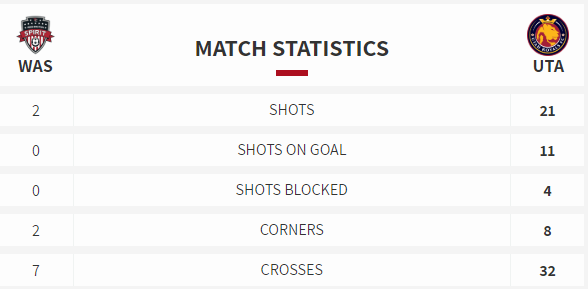
But the stats for this one were just ugly for the Spirit, unless you count saves, in which long-serving understudy DiDi Haracic tallied 10 and was a bit unlucky not to have an unlikely 11-save shutout. She at least made Laura Harvey and company sweat on a cool, almost chilly night at the Maryland SoccerPlex.

spirit-shots
Does the “expected goal” (xG) stat ever go into negative numbers?

With that, I have to confess that the headline is misleading. I did not meet the new boss, Tom Torres. I’m working on a story for The Guardian, and my priority was talking with some Utah folks — including Laura Harvey, who told me she used to deliver The Guardian. Small world.

But the Won’t Get Fooled Again reference is apt. This Spirit team isn’t suddenly going to learn to avoid defensive lapses. Nor is the midfield going to provide any meaningful possession.

So I’m still at a loss to explain why the Spirit felt the need to fire Jim Gabarra now rather than offer him a sideline swansong and then perhaps another job in the organization. And I didn’t get any more answers on what was frankly a weird night at the SoccerPlex. Jen Gordon wasn’t there, apparently for the first time since the Spirit’s debut. Neither was Boyd. Good dog.

I’m pondering the quote from Spirit president and interim GM Chris Hummer from yesterday’s post, in which he talked about starting the process for 2019 now. Does that mean interim coach Tom Torres is a candidate?

Torres’ resume isn’t bad. But my sense is that the restless fan base will want a bigger name or more top-level experience. Also, the Spirit may still have trouble shaking the perception that they think they can get by with the coaching talent in the D.C. area. They caught lightning in a bottle with the then-green Mark Parsons, who had been a youth and high school coach in rural Virginia, but the Spirit otherwise have a track record of overvaluing coaches (and sometimes players — the DMV is not California) from this area. It’s understandable in the academy — nothing wrong with hiring a former player like Lori Lindsey or a mid-Atlantic stalwart like Santino Quaranta — but another perspective would surely help. And this team needs it.

Next stop: Audi Field.

pro soccer, women's soccer

Time for U.S. pro leagues to treat their cornerstones a bit better

With its callous attitude toward Columbus, MLS has already staked out a “thanks for getting us off the ground, now go away” attitude that Don Garber must fix before he either leaves office or renews his contract.

Are we seeing the same thing in pro women’s soccer? It’s complicated. We might not know a complete answer until we know the lineup of teams for 2019.

But it’s not looking good.

We might be able to absolve the NWSL of blame for the fact that 2018 will be the first season of pro women’s soccer in the USA without a team called the Boston Breakers. They weren’t the strongest club in WPS — see general manager Andy Crossley’s dissections of his handiwork for more details on that and yet another reason to add Curt Schilling to your list of the worst human beings in sports. And they never really found a good home ground in the NWSL — Dilboy Stadium was about as “track-and-field-specific” a venue as anyone could find, and Harvard’s Jordan Field was OK but tiny.

So when word spread that the owners were trying to sell, no one could really blame them. We may never know what happened with the new owners who, as of a few days ago, seemed set to buy the club and continue into the new season. Was the league completely blindsided? Or should they have done more to wrap up the deal or reject it in time to let others have a chance? Would the league have a more potent voice if it made up its mind as to whether Amanda Duffy is the interim or permanent commissioner, executive director, CEO or whatever they want to call their leader?

As we know now, others did indeed leap into the fray to try to save the team. I spoke with representatives of three different camps, some of whom are opposed to each other on other issues. They were confident that they had investors with enough money to keep the Breakers running. They were less confident that they had time for everyone to get through due diligence. After missteps of the past — Jeff Cooper’s mysterious money men bailing on St. Louis, Dan Borislow taking the Washington Freedom to Florida and butting heads with authority for a year until the league finally collapsed — “due diligence” is not something that can be skipped.

Whatever happened has happened. The question now: Is there any chance of reviving the Breakers in 2019?

What I’m hearing isn’t positive. Nor is the fact that the NWSL has not responded to my inquiries over the weekend about the Breakers situation, first to get comment on the last-ditch effort to save the team and then to get comment on what happens next.

The answer affects more than just Boston. Like the Crew in Columbus, the Breakers name means something to soccer fans. It’s an original.

And for all the bluster of MLS-affiliated women’s teams being better situated that everyone else, look who had the most extensive youth and reserves operations — the Boston Breakers, along with fellow independent Washington Spirit. (At least the Breakers Academy will continue. FC Kansas City also still has Academy games scheduled, resuming Feb. 10.)

Something dies every time a team folds or moves. MLS has lucked out so far that things have turned out well in the long run, but that streak could end very quickly if the Crew move. And if the NWSL can’t act on the obvious interest to restore the Breakers next year, the league’s credibility will suffer.


women's soccer

Spirit, Reign play a legitimately entertaining soccer game

Things didn’t bode well Saturday. Traffic heading up the Beltway to Maryland was worse than usual. The SoccerPlex didn’t have its usual Ben & Jerry’s cart — Yom Kippur apparently kept the proprietor away.

And Seattle’s Jess Fishlock, simultaneously one of the most inspirational and infuriating players in women’s soccer, started the game by clattering into Washington’s Mallory Pugh, the type of foul that does nothing other than send an early message.

Then a funny thing happened. An actual soccer game broke out. Free-flowing. Long strings of passes. Good runs.

For Spirit fans, it looked a bit like 2016 all of a sudden, with Pugh replacing Crystal Dunn and Meggie Dougherty Howard replacing everyone else. The two rookies carved up the Seattle defense with incisive passes en route to a 2-0 lead.

But the defense certainly isn’t last year’s defense. The Reign got back into the game as Spirit defenders kept whiffing on clearances. It’s the SoccerPlex — a terrific playing surface on which the Spirit play every home game. They should be used to it.

And credit to the Reign. They were pressing. They didn’t want their season to end on a loss. And coach Laura Harvey told us after the game, incongruously given her giddiness after Seattle’s 3-2 win, that she had reminded players at halftime they were playing for their jobs.

So were the Spirit players. Looking ahead to next season, they’ll build around their two sensational rookies from opposite ends of the hype meter — national teamer Pugh, who skipped out on UCLA to go pro early, and third-round pick Dougherty Howard. Of the other 11 Spirit players to appear in the game, who’s guaranteed to return next year? Probably captain Shelina Zadorsky and original Spirit player Tori Huster, who can surely play for the Spirit as long as she wants. Anyone else?

It’s not that the players are particularly bad. As a whole, even with a viable starting XI on the injury report, Washington had a competitive team this season. It’s strange to say for a last-place team, but they overachieved. If you’d told me before the season they’d have this many injuries but would still win five games (two more than the disastrous 2013 season) and score 30 goals (more than Kansas City, Boston and Houston, and only three less than playoff-bound Chicago), I’d have said that’s impossible.

The defense, though, needs to be addressed. I don’t want to speculate on whether Stephanie Labbe will be back in goal for the Spirit — I simply hope she’s happy and healthy. Zadorsky is generally solid, and Estelle Johnson was having a career year until her injury. Other than that, it’s simply not a reliable group of players for this level.

They’ll surely draft Andi Sullivan, who could slot in at center back alongside Zadorsky. But she can have a bigger impact in midfield.

They can’t just draft a bunch of defenders with their surplus of picks and see who emerges. The Spirit have enough youth. If they want their rebuilding project to be 1-2 years instead of 3-4, they need to make a trade or a sign a big-time free agent.

But there’s time enough to deal with that. Tonight, it seems most NWSL fans got an entertaining sendoff to the regular season, a nice change of pace from what’s been a lackluster season marked by cynical play that the referees refuse to stop.

Whatever you think of the Spirit, let’s hope tonight’s slate of games was a nice harbinger of things to come next year.


soccer, sports culture

To kneel or not to kneel (revised)

When Colin Kaepernick started kneeling for the national anthem last year and Megan Rapinoe followed suit, I was skeptical. In the circles in which I run, skepticism is a bad idea.

Outside the women’s soccer community, of course, opinion was more polarized. I was stunned to see people I’ve considered sympathetic to the Kaepernick/Rapinoe cause object to their protest, quite angrily. I even saw people profess to become greater Washington Spirit fans when Bill Lynch pulled the anthem switcheroo to keep Rapinoe from kneeling on the field at the Maryland SoccerPlex.

(One year later, I can’t recall seeing those people at any Spirit games, so perhaps I should ignore their input on the matter.)

I worried that the message wasn’t getting through. Maybe it’s because I gave too much voice to the counterdissent, or maybe it’s because I’m an aging, jaded journalist who knew how this would play out in the media. Or maybe I was looking at it with white, straight, male privilege. Or some combination of the three.

To this day, I don’t know. All I know is that it’s not simple.

The players who’ve really been at the forefront of spreading the message against racism — particularly the institutional racism that is far too forgiving of police who harass, shoot and kill black people — are in the WNBA, as this SB Nation roundup shows. I thought their mix of T-shirts and linked arms had the potential to get the point across. But just as many people outside the WoSo community are unaware of Rapinoe’s protest, a lot of people missed the WNBA players’ unified voices. (And they resumed their activism before Game 1 of the league finals today.)

Today, I have no reservations about the hundreds of NFL players taking some sort of action — kneeling, linking arms, staying in the locker room — during the anthem. And that, of course, brings out the haters again — people who are still so offended that anyone questioned the effectiveness of last year’s protests that nothing can appease them.

One such accusation: Oh, so you DIDN’T care when it was about black lives, but now you care because it’s free speech?

Wrong. I always cared about the underlying issue. Even some of the people who claimed to be bigger Spirit fans after the anthem incident care about the underlying issue. On Twitter and at this year’s annual general meeting, we’ve seen that plenty of people within the rank and file of U.S. Soccer weren’t at ease with the anthem protests, and they simply can’t all be bigots.

I disagree with them on the anthem protests. To be clear — I was never offended. I worried about the protests’ effectiveness, and I may have been wrong. I’ve been in a high school gym in Norfolk, Va., in which half the crowd sat and yelled at others to sit down during the national anthem because they felt the anthem celebrates slavery. If I’m not offended by that, I’m not going to freak out when Megan Rapinoe takes a knee.

What’s changed is this:

  • We have a new president who demonizes immigrants and cozies up to white supremacists. This is no longer an issue of local police. This is national. So protesting national symbols makes a lot of sense to me. (You can argue that the protests last year were aimed at racist attitudes that were so widespread that they effectively were national, and I respect that view. I would suggest, though, that what we see today is at another level — and it’s institutionalized.)
  • That president has challenged the rights of people to protest during the national anthem and remain employed. The only way to challenge that is to protest en masse during the anthem.

I can’t stress enough — if you think last year’s protests were effective or should’ve been more effective if not for the sensationalist, superficial media coverage, I respect that point of view. I still have some reservations about the protests’ effectiveness, but I recognize that, in the long run, the movement may be effective.

My views are certainly malleable, within reason. I’ve written before that I grew up not thinking about issues of sexuality and gender. I was raised in a medium-conservative Christian environment that had a few good life lessons and a few things that have required some deprogramming over the years.

What changed my mind? It wasn’t a bunch of people patting each other on the back for the cleverest insult behind my back (subtweeting, in the modern environment). For the most part, it was simply getting to know people who were different — gay, Muslim, Northeastern — and watching my stereotypes melt away. It was positive interaction.

In any case — my opinions aren’t that important. I’ve rejected what journalism professor Jay Rosen calls the “view from nowhere,” the twisted view of objectivity that makes us journalists consider everyone’s point of view equally even if one side is clearly malicious or dishonest. But I still believe in putting facts first, and my goal is to make my observations accurate. I didn’t spend 90 minutes tearing apart Stefan Szymanski’s declaration on behalf of the NASL lawsuit because I hate the NASL or Szymanski or the Cosmos — indeed, I found a couple of his points had merit. I did it because a lot of that declaration set off the b.s. detector that makes somebody a journalist.

So if you want to retreat into the “woker than thou” women’s soccer echo chamber, knock yourself out. (Yes, there’s an echo chamber for everything. I did a story on the Flat Earth movement, which has a surprisingly savvy echo chamber. There’s probably an echo chamber in which everyone competes to be the most dogmatic believer in the notion that Donald Trump is from Mars.)

If you want to engage on what’s happened today, I’m all ears. I’ve written 1,000 words here (exactly!). Your turn. Be nice. But be candid.

And congratulations to those who’ve demonstrated today that a Twitter troll, no matter what office he holds, isn’t going to silence anyone.

home, women's soccer

No one injured in Spirit-Breakers game

Neither the Washington Spirit nor the Boston Breakers tanked Saturday night’s game to get the No. 1 draft pick. For once, my prediction was right.

But it wasn’t pretty. I didn’t notice any Spirit Academy kids in the crowd, and that’s probably for the best. You don’t want them to learn anything from this. Two own goals by the same luckless player, former Breaker Kassey Kallman. No shots for the home team in the first half. Fouls that weren’t particularly malicious but just pointless. Passes that clattered into opponents.

The Breakers played hard, and aside from two maybe-overdue yellow cards, they played fairly. Own goals are often a mix of luck and getting the ball in good spots, and the Breakers got the ball in good spots many times in the first 10 minutes of the second half, turning a 0-0 snoozer into a 3-0 game with a bit of life.

And the Spirit didn’t pack it in. Two terrific strikes were called back due to close but probably correct offside calls. The silver lining (coincidentally, the Rilo Kiley song of the same name is now playing on my Spotify mix) for the Spirit: They put the ball in the net four times! Too bad two counted against them and the other two didn’t count at all.

Late in the game, those of us in the pressbox were wondering why Breakers coach Matt Beard was so animated, chastising his team and gesticulating wildly. After the game, the thoughtful and tactically shrewd coach explained that he was legitimately worried that the Spirit might come back, like Sky Blue has on more than one occasion this season. When you haven’t won a road game in a while, a little paranoia is understandable.

So yes, both teams were trying. It wasn’t just a couple of teams tanking to land Andi Sullivan in the 2018 draft. At this point, the Spirit seem destined to land their hometown hero. And tonight, they looked like they needed her. Some of the players on the field simply were not up to the task.

And it’s not as if the Spirit have many other options. They dressed 14 players for the game. (The Breakers, also limping toward the finish line of the season and missing game-changer Rose Lavelle, only dressed 15.)

Coach Jim Gabarra said quite candidly after the game that his team really didn’t have the training they needed to prepare. Too many games in a short time. Too many injuries.

“So you didn’t think it would be a good idea to run your players through a series of intense practice in 90-degree weather with only three available subs?” I asked (paraphrased).

“Probably not,” Gabarra said.

Spirit fans weren’t about to forget the birthday of their last remaining original player, Tori Huster.

Spare a thought for Spirit fans who’ve attended most of the games this season. They’ve seen a lot of bad soccer, and it’s not all from the home team.

Maybe it’s a strange thing to say about a team in last place, but the Spirit overachieved in many ways this season. Stephanie Labbe and Estelle Johnson were having great seasons until they abruptly ended a couple of weeks ago. Arielle Ship was better than expected. Meggie Dougherty Howard was way better than expected — even people who wish the next hurricane would race up the Potomac and destroy the Maryland SoccerPlex because they so despise Spirit ownership have pegged the late third-round draft pick as a solid pick for Rookie of the Year.

But Spirit fans really haven’t been treated to a lot of quality from their visitors, either. Portland showed little in Mark Parsons’ return to the SoccerPlex. Orlando wasn’t quite the Morgan-and-Marta juggernaut they later became. The Chicago Red Stars looked like they were playing old-school roller derby. The best game of the season, oddly enough, may have been the previous Spirit-Breakers game, when Boston goalkeeper Abby Smith flat-out robbed the Spirit (legally) of a win.

Call it bad luck, compounded by some personnel moves that will leave some lasting bitterness. Frankly, the quality of play in the NWSL has been poor this season. If you want to blame anyone, blame the referees who’d rather carry on conversations with players like Allie Long and McCall Zerboni rather than give them cards for any of the 349 fouls they commit each game. That needs to change.

One thing that’s not going to change — the occasional late-season game between tired, ailing teams at the bottom of the table. And if this game proved one thing, it’s that the women’s game is not ready for promotion and relegation, no matter how many U.S. Soccer presidential candidates try to win points by promising it. These coaches can’t afford a training injury, and there’s absolutely nothing to be gained by tossing Rose Lavelle or Cheyna Williams out on the field at this point just so they can avoid swapping places with WPSL champion Fire And Ice SC. (Granted, if the problem with Lavelle is that she’s flying too much, may I suggest a bus with adequate sleeping space? And no, I have no idea what possessed anyone to name a team “Fire And Ice.” Does Shy Ronnie play for them?)

Even in a no-good, horrible, very bad game such as this, you’ll see moments of quality. Smith didn’t have to pull the mind-boggling saves she made last time to get the shutout this time, but she was terrific when she needed to be. Mallory Pugh adds life to any attack, whether it’s the U.S. national team in full flight or whichever players the Spirit can scrape together around her.

The Spirit will be better-prepared when Seattle visits for the season finale. I’m predicting a 6-5 game with 30 saves. We’re due.


pro soccer, women's soccer

Attendance check: Club over country?

Attendance at last five Atlanta United home games:

July 4: 44,974
July 29: 45,006
Sept. 10: 45,314 (first game in new stadium)
Sept. 13: 42,511
Sept. 16: 70,425

Attendance at last five Seattle Sounders home games:

July 23: 43,528
Aug. 12: 43,350
Aug. 20: 40,312
Aug. 27: 51,796
Sept. 10: 44,697

Attendance at last five U.S. men’s national team home games:

July 15: 27,934 (Gold Cup; Cleveland)
July 19: 31,615 (Gold Cup quarterfinal; Philadelphia)
July 22: 45,516 (Gold Cup semifinal; Arlington, Texas)
July 26: 63,032 (Gold Cup final; Santa Clara, Calif.)
Sept. 1: 26,500 (World Cup qualifier; Harrison, N.J. — sellout and a loss)

Attendance at last five U.S. men’s national team home friendlies:

Oct. 11: 9,012 (Washington)
Jan. 29: 20,079 (San Diego)
Feb. 3: 17,903 (Chattanooga, Tenn.)
June 3: 17,315 (Sandy, Utah)
July 1: 28,754 (Hartford, Ct.)

Attendance at last five FC Cincinnati (USL) home games:

July 29: 23,548
Aug. 5: 25,308
Aug. 23: 20,058
Sept. 2: 22,643
Sept. 16: 30,417

Attendance at last five U.S. women’s national team home games:

April 9: 11,347 (friendly; Houston)
July 27: 15,748 (Tournament of Nations; Seattle)
July 30: 21,096 (Tournament of Nations; San Diego)
Aug. 3: 23,161 (Tournament of Nations; Carson, Calif.)
Sept. 15: 17,301 (friendly; Commerce City, Colo.)

Attendance at last five Portland Thorns home games:

June 28: 16,199
July 15: 16,804
July 22: 18,478
Aug. 5: 18,243
Aug. 19: 19,672

What’s going on here? Do we officially care more about club soccer than international games? How can the Thorns outdraw the women’s national team? How can Atlanta, Seattle and Cincinnati outdraw men’s friendlies?


podcast, women's soccer, youth soccer

Podcast, Ep. 9 — Girls’ Development Academy with Travis Clark, plus a soccerpolitical rant

The podcast starts this week with a bit of a political rant. The news on DACA is hard to ignore, and we’ve had some ongoing overheated arguments in the soccer community.

The Travis Clark interview on the Development Academy starts around the 9:25 mark. A few landmarks:

  • Will the NWSL affiliates dominate? (19:45)
  • DA vs. high school (25:00)
  • Can we tame the chaos and still have multiple development pathways? (30:30)
  • A few clubs to watch in the DA (38:45)