us soccer

Some good soccer journalism

Every once in a while, Soccer Twitter goes into media-bashing mode. It falls into a few strains:

  1. Frustration at an inability to find work that questions authority. (I’m going to argue here that such work exists but isn’t always amplified.)
  2. Knee-jerk snark.
  3. People who are trying to amplify themselves by discrediting the work of others. One of the oldest propaganda tricks in the book. Sometimes done subconsciously.
  4. People who are utterly convinced that MLS and U.S. Soccer have buried bodies or trunks of money somewhere.

Now let’s be clear here. There’s an institutional reason to be frustrated with the media in general. The media are weaker today than they have been, for the following reasons:

  1. Print advertising has dried up. (Local newspapers in particular used to rely on classified advertising, which is now free on Craigslist, Facebook, etc.)
  2. Online advertising doesn’t pay enough to support large newsrooms.
  3. Even the ESPN model (money from cable subscriptions) is collapsing. ESPN has had waves of layoffs. Fox laid off its entire writing staff and just has videos of its talking heads who do little to no research.

It isn’t stopping.

https://twitter.com/sltrib/status/996079773741875200

And yet, there are plenty of soccer reporters who do not take what authorities say “at face value.” First of all, a lot of us aren’t taking Silva’s $4 billion “offer” or Commisso’s posturing at face value. But a lot of people also scrutinize things in the USSF/MLS/SUM power structure as well.

To be sure, most soccer writing is about the game. If you’re a beat writer covering a team, you’re going to spend the bulk of your time writing about games, injuries, transfers, etc. Maybe the occasional feature on an interesting player. Investigating MLS isn’t going to be the bulk of your output. (That’s also the bulk of MLSSoccer.com’s output, just as Barca TV and Liverpool’s Twitter feed are going to tell you more about the U23 team’s latest win and not as much about whether Barca should’ve done better in Europe or Liverpool should’ve done better in England. That’s OK. There’s a value to slickly produced game highlights.)

But what I’m highlighting here is journalism that goes beyond taking things “at face value.” It’s out there. It deserves more amplification than it gets.

These pieces aren’t 60-minute documentaries on the ills of U.S. Soccer. But they flesh out the discussion beyond what we see in games and press releases. Some simply point to a world beyond MLS and NWSL. Some raise questions, sometimes pointed, about what the league and federation are doing. And some are indeed the elusive “deep dive.”

Add it all up, and you can certainly get more than game stories and press releases.

Enjoy.

Stuff MLS and USSF aren’t putting in press releases

A Soccer America classic from January: Brad Rothenberg rips federation for losing Jonathan Gonzalez and missing talent in general. (In a similar vein, here’s an interview with Hugo Salcedo)

At SI, Brian Straus raises good points in the wake of the Gonzalez fiasco

Goff on the Crew: “Unfortunately, the referee — in this case, league headquarters — is complicit.”

Straus shares info contradicting MLS claims on the Crew saga

Goff: D.C. United in danger of not filling 5,000-capacity venue.

Soccer America speaks with Steve Gans (in May, not pre-election) about what still needs fixing (a lot)

Soccer America speaks with a club director who’s leaving the Development Academy

MLS salary info after union’s periodic release: ESPN, Philly.com, plenty of others out there

The peripatetic Graham Parker on pissed-off MLS fans

Soccer America: Where are the U.S. players in MLS?

Wayne Rooney? Seriously? USA TODAY (Martin Rogers), Yahoo (Leander Schaerlaeckens)

I remember Doug Roberson’s interview with Eric Wynalda being interesting, but I can’t see it now because I’ve hit my paywall limit. Come on, Doug — put your stuff out there for free! (I’m teasing. Doug and I worked together back in the Stone Age, where soccer content was maybe 0.1% of our work.)

SB Nation’s Outsports taking USSF to task for holding games in North Carolina.

Also SB Nation, and close to a “deep dive” here: How U.S. Soccer ignores players from underserved communities

Goff examines USSF financial disclosures, leads with all the employees making more than Jill Ellis

More SB Nation: Why NWSL can’t keep all its top players.

Not that MLS is keeping everyone happy. (Washington Post, but not Goff)

And one more SB Nation: A pretty deep dive on SUM.

Compelling interviews

KC Star’s Sam McDowell with good questions for Garber: The irony is that this piece started some of the conversation. Yes, it’s merely a Q-and-A. But the questions are good. They keep pro/rel, winter/spring schedule and “what the heck is TAM?” in the conversation. And then we can discuss Garber’s answers (which aren’t fully satisfactory to me, either).

Yahoo’s Doug McIntyre with Klinsmann AND Arena (and Bedoya): You may not like the answers, but there’s value in having them on the record.

Reporting on players outside MLS, and not just when they’re with the MNT or WNT 

ESPN’s Stephan Uersfeld goes beyond the immediate news on Julian Green.

Goff’s weekly roundup on more than 100 U.S. players overseas.

Global issues 

This is a starter. I spent a couple of hours doing this, not because the stories aren’t there but because you have to scroll past a lot of game highlights and other coverage (which is fine) on unnavigable sites (which is not — ATTENTION SPORTS ILLUSTRATED!!!! TURN DOWN YOUR AUTOPLAY ADS!!). Please leave more nominations in the comments.

us soccer

Revised rules of engagement and objectivity (or: when to shut up)

So, stirring up trouble again?

I get asked that question quite a bit. It’s not really my goal. It’s an unintended consequence.

I do ask provocative questions. But unlike cable “news” outlets that use fear to keep you tuning in (or keep you voting out of paranoia), my goal is to push the discussion forward. Sometimes I do a good job. Sometimes I aggravate people. Sometimes both.

(NSFW language alert here …)

The quality of my questions and my suggestions for pushing the conversation forward is for others to judge. But it’s safe to say I think about these things a lot. And now that I’m launching a new project designed to give parents the information they need to make better decisions, it’s time to re-examine everything. Again. Do I want to continue arguing with people on Twitter? Is now the best time to publish material that gives me reactions like this?

My skin is pretty thick. I paid my dues in local journalism, where people who hate your news organization will tell you to your face or over the phone while you’re trying to work. At my first newspaper, I dealt with callers who accused our sports staff of being alumni of one particular local high school (none of the five of us went to high school within 100 miles), callers who said it was just like the liberal media not to send a reporter to the middle-school lacrosse game, a caller who was pissed that I wouldn’t drive out to his farm and deliver a missing paper, and a cross-country coach who apparently just walked right into the newsroom past our alleged security and started yelling at me because I was the only person in the sports department at that hour. I can deal with a septuagenarian New Yorker who doesn’t like his thinly researched opinion questioned — at least until he’s elected president.

And I grew up believing in old-school journalism. Just the facts, maybe with some lively but impartial observations.

I got a wakeup call in 1994. Polls showed voters were getting their information from opinionated media, specifically talk radio in those pre-Internet-on-my-phone days, and they still believed — erroneously — that the country was still in recession. No matter how you feel about the Republican wave in that year’s midterms, you have to admit — that ain’t good. So I started to think telling the truth required a bit more force and persuasion than we were using.

IMG_3707

(We miss you, Susan. The annual training sessions at the Duke student paper are named in her memory.)

A few years later, I was finishing up grad school at Duke, balancing academic work with my job. On my 29th birthday, I turned in an independent study on the history of objectivity in journalism. The quick summary: Objectivity is generally driven by business practices. In the 1800s, partisan scandal sheets dueled for attention — media historian Mitchell Stephens described them as summaries of info from the mail fleshed out with “musings, conjectures and diatribes.” That approach drew readers but maybe not advertisers — see today’s boycotts of Breitbart advertisers. Then telegraphs offered astounding opportunities to transmit news from place to place, but the start-up costs were immense, and “wire” services needed to sell their news to everyone, regardless of partisan politics. Hence the proud tradition of the reliable, if occasionally bland, Associated Press.

No matter how well-intended, a singular approach has flaws. African-American journalists rose up in the late 19th century (maybe before — the example I found in my research was that of Ida Wells, and by sheer coincidence, The New York Times posted an obituary of her yesterday) to challenge the reporting of white journalists who clearly didn’t understand the perspective of the African-American community. Then journalists challenged their own work when they realized Sen. Joseph McCarthy was taking advantage of their system of getting “both sides” of a story — and, in many cases, leading with whichever “side” spoke most recently. Edward R. Murrow — a proud son of Greensboro, where I was working when I started grad school — was the forerunner of a modern fact-checker, firmly dismantling McCarthy’s wild claims with the cold, hard truth. (Yes, he’s the subject of Good Night and Good Luck.)

But Murrow wasn’t just wildly slinging mud, and there are still a few aspects of “objectivity” that are important. From my paper:

The common thread in these definitions (of objectivity) is that facts, not opinions, are given prominence.

Part of the distinction, also a big part of my paper, is the difference between skepticism and cynicism. Let Thomas Friedman explain:

Nathaniel intuitively understood that there was a difference between skepticism and cynicism. This is a lesson a lot of us have forgotten. Skepticism is about asking questions, being dubious, being wary, not being gullible. Cynicism is about already having the answers — or thinking you do — about a person or an event. The skeptic says, “I don’t think that’s true; I’m going to check it out.” The cynic says: “I know that’s not true. It couldn’t be. I’m going to slam him.” There is a fine line between the two, but it’s a line Nathaniel always respected.

So by this point, I was firmly on the side of skepticism.

A year later, I finished that graduate degree with a thesis — still available online in a format showing off the height of JavaScript circa 2000 — about the way new media is changing journalists’ jobs. The conclusion: We’re all doomed. I was right.

But there is a certain amount of freedom in story-telling these days. The Daily Show, John Oliver and even The Onion are able to tell the truth in ways traditional journalists envy. In John Oliver’s case in particular, his show does as much research as any documentary-maker, then presents that info with a bit of humor for easy digestion.

You may argue that Oliver’s takes are one-sided. But while being fair is still important if you want your work to be taken seriously, being balanced leads to problems. It may be a coincidence that “both sides” is abbreviated “b.s.,” but it’s so apt. On everything from climate change to vaccination to evolution to gun laws’ effectiveness to whether promotion/relegation is the only factor that differentiates the USA from other countries, one side has thoroughly vetted facts on its side and the other does not. (They’re not always the same “side.” People are complicated.)

What does this have to do with me, my Twitter arguments and Ranting Soccer Dad? Glad you asked.

I left USA TODAY — which, like the Associated Press, was purposefully bland so it would appeal to the widest possible variety of business travelers who got it in their hotels and airports — in 2010. I liked a lot of the work I was doing, but I was spending too much time in the office or on the road doing too many jobs. I had kids. If I hadn’t left, I might still be Ranting, but I wouldn’t be much of a Soccer Dad. I certainly wouldn’t have been able to sign up to coach except as an occasional assistant who would miss a few games to sit at a desk or cover a UFC card.

So when I left, I gained a bit of freedom. I still don’t campaign for political candidates –the only time we’ve allowed ourselves a yard sign was for a nonpartisan school board race — and I didn’t push myself full-bore into “musings, conjectures and diatribes.” But I could at least be a bit more argumentative than typical USA TODAY content.

I became, in short, aggressively objective.

In many cases, I’ve challenged facts and analysis of my own affinity group or “side.” The best example is in women’s soccer, where I’d love to be able to tell you everything the women’s national team said in contract negotiations was correct and fair, but it wasn’t. I’ve had my run-ins with some women’s soccer players, all of whom I respect but none of whom get a free pass to mislead and demean anyone else just because they’re heroes to a lot of people.

So now that I’m doing a project that I want to appeal to parents (and players and coaches and everyone else) of all opinions and all backgrounds, am I going to imitate the Associated Press or USA TODAY of old and shy away from being adversarial?

Well … some. It’s not quite in my nature to close up entirely.

Besides, I’m writing/podcasting about youth soccer. Youth soccer has an awful lot of b.s. Therefore, if I turn off my b.s. detector, I’m not doing my job.

I’ll try to avoid repeating the more ridiculous arguments on Twitter. If you offer up some fact-addled point about promotion/relegation or anything else that demonstrates a lack of knowledge of U.S. soccer history, I’m going to refer you to my soccer bookshelf or possibly my previous writing on pro/rel. (I may one day summarize it in an FAQ.) If you have something new to add to any of these topics, great, but I might ask you to do so on my blog rather than exchange 280-character bites. (Or I might invite you to my podcast.)

I’m also through dealing with accusations and assumptions. Someone recently told me I should check out an NWSL game, so I sent her a link to Enduring Spiritmy NWSL book. (I didn’t hear back.) And we should certainly be well past the notion of assuming the “others” on Twitter must be paid by MLS or George Soros or anyone else. (Yes, I wrote some fantasy soccer columns for the previous management of MLSNet back in the Dark Ages. I wrote fewer columns than Eric Wynalda. Go call him a “shill.” I’d pay to see that — I mean, I’d be interested in seeing that.)

And if you must resort to petty insults, please remember: I’m not a wanna-be. I’m a has-been. And now I’m doing something else that I hope will be constructive and productive and something that makes us a better soccer nation. And better parents. And better people.

So if you want to know what “side” I’m on, the answer is simple. Yours. Speak up. Let me know what’s going on in your soccer community, and I’ll put it all together for us all to share.

Rant on.


work portfolio

Save newspapers, save the world

I try to steer clear of politics, mostly for professional reasons.

But this, to me, isn’t about simple politics. This is about our fundamental ability to discern fact from fiction. It’s been under assault for decades — my thesis, published in 2000, warned us that we were in danger of retreating to misinformed echo chambers. (I wish that term had been in vogue at the time. It would’ve saved me some exposition.)

So please don’t interpret this piece, a roundtable with me and several other veteran journalists at Popdose, as simple Trump-bashing or left-wing fretting. We should all be concerned about attitudes toward the media.

The media need watchdogs, sure. But how did we reach the point at which we trust some obviously partisan person doing no original reporting over honest investigations requiring many people to do a lot of digging and checking?

We journalists tend not to stick up for ourselves. It’s hard to imagine another product that always prints criticisms of that product ON that product. (I’m referring to letters to the editor, and my historical research concluded that they weren’t any smarter or nicer in the 1960s.) And with rare exception, we don’t even respond. If someone calls me all sorts of nasty names — and yes, it happened even before the Internet made it easy — I’m supposed to sit back and take it.

I’m not sure we can do that any more. What we do is valuable. We can — and should — defend our work. We can’t just do the politically correct thing and listen patiently as every wingnut on the planet (and yes, this includes many on the “left” as well as the various factions fighting to be the “right” these days) takes shots at us that we can easily refute.

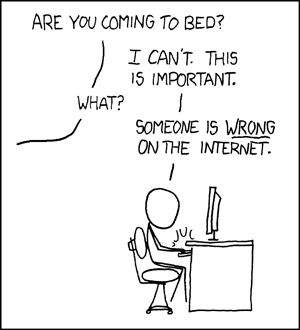
Call it elitist if you want. All I can tell you is that I’ve worked with hundreds of people who put their work ahead of their politics, and they make an honest effort to get at the truth. And they’ll listen to constructive feedback. If you tune them out and listen to some deranged cartoonist instead, you’re choosing unwisely.

Source: Popdose Roundtable: Saving the Media in a Post-Fact World

women's soccer

The NWSL final, soccer’s cruelty and the most D.C. finish ever

Most of the time, journalists are able to put aside personal sentiments in sports and just do their jobs. Most of the time.

Readers’ accusations of bias are usually wrong. I’ve been on a sports staff in which we were all accused of attending one or another of the local high schools, even though we all grew up elsewhere. That’s typical.

When I regularly covered MLS in my USA TODAY days, people assumed I was a D.C. United fan. I generally tried not to be, and I think I was successful. Sure, you’d prefer to have a playoff game to see without traveling, so it was in my own interest to see United make the final eight or 10 or 37 or however many teams get home playoff dates in MLS. But at every game I attended, I went to the visitors’ locker room. I wanted to know the whole league. I have more vivid memories of speaking with Landon Donovan and Jimmy Conrad than I have of talking with any D.C. United players.

And I had something less obvious tugging at me as a fan. Real Salt Lake represents one of my favorite places in the world, and for several years, they had two Duke grads in charge — Garth Lagerwey and Jason Kreis. I like Utah, I liked the team’s staff, and I liked the style of play. If RSL had faced DC in an MLS Cup final, I’m not sure which way I would’ve leaned.

I have other sports in which I’m content to be a fan and not a journalist. I had hockey-editing responsibility at USA TODAY for a couple of years, but since then, I’ve been able to be a Washington Capitals fan with my family. That means I really enjoy the regular season and then try to go into hiding in April.

My relationship with the Washington Spirit is unique. I wrote a book about their first season, and it certainly would’ve been better for book sales if they had (A) won a few games or (B) had something interesting to say about not winning a few games. It’s tempting to look back on that experience with a grimace and have no investment in how well they do.

But I can’t. I met too many great people in the process of writing that book. And the Spirit did a great job of getting out in the community — I’ve taken my kids to clinics and open practices, and I know people who’ve played or coached in their Super-Y youth system.

And that first season was a long run of calamities. No one deserved to go through all of that. Those players — and the staff and the incredible fans of the Spirit Squadron, who may be outnumbered by their Portland counterparts but more than hold their own in every other way — deserve some good fortune.

Not that I think fortunes ever even out in soccer. I’ve said it 100 times — soccer karma does not exist. I could break the WordPress servers with tales of woe from my youth soccer parenting and coaching experience, all of which makes me quite sympathetic to the 2013 Spirit (or the 2016 Breakers).

That said, two of my youth teams have won postseason tournaments after finishing near the bottom of the league. So I can also appreciate what Western New York did this year or what Sky Blue did in the 2009 WPS season. Sure, Seattle fans have a right to feel aggrieved by the eccentric NWSL schedule, which saw the Reign play Portland four times while the Flash beat up on the Breakers. But the Western New York youngsters put things together at the right time, and we reward that trait in American sports with good reason.

But I know that for every scrappy underdog that wins in the last minute, there’s a favorite that feels deflated.

And for those reasons, I’m glad I didn’t have to write anything in the immediate aftermath of Sunday’s NWSL final, in which the Spirit gave up a goal in time that should not have existed. (I’m sorry — who adds four minutes of stoppage time to a 15-minute extra time session unless an ambulance was called onto the field?)

The final proof that soccer karma does not exist — the three players who missed penalties for the Spirit were the three players who have been with the team since its dreadful start in 2013. That’s actually enough to make you think there is someone up there pulling the strings to determine who wins what, and it’s someone with a sick sense of humor.

Also, we in the D.C. metro area have suffered quite enough, thank you. We’d all like to get rid of our local NFL team’s mascot and owner, though we’re sick of transplants to the region showing us up every Sunday wearing their Giants and Eagles gear. (We get it. You’re jerks. Thanks for reminding us.) D.C. United won a lot of trophies before Seattle and Portland invented soccer, so no one remembers. The one really good team in the D.C. area over the past 10 years has been the Washington Capitals, where Oveckhin, Backstrom and Holtby will break your hearts right around the peak viewing time for the cherry blossoms.

So to have a heavily favored team like the Spirit, with so much talent that Jim Gabarra was desperately trying to invent the 5-5-3 formation to play everyone, lose in the fashion they did is simply the most D.C. thing that could ever happen.

And so I’m heartsick for Tori Huster, who has made my kids smile at clinics and open practices. And for Diana Matheson, who exemplifies the polite, intellectual Canadian but is also a fierce competitor. And for Ali Krieger, who hasn’t always been at her best in her Spirit tenure but shut up her critics with an excellent season and strong commitment to the team. And for Joanna Lohman, who persevered through several Dark Ages of women’s soccer and suited up once upon a time for D.C. United Women, the amateur forerunners of today’s Spirit.

I sometimes wonder why I put up with this sport. Sunday’s game was excruciating to watch. The ref called the game as if he were paid by the whistle or by the minute — some clear-cut instances in which the advantage principle should’ve applied were interrupted instead, and as much as I hate seeing refs let “physical” play go, some of Sunday’s calls were baffling. I also saw yet another painful youth soccer game. And this year, the soccer Twitterati took a hateful turn that made the promotion/relegation wingnuts seem like Zen masters by comparison.

But …

Well, I haven’t come up with anything yet. But I’m sure I will. I don’t know if I’ll continue to be a fixture in the Spirit press tent, but I’ll still be going to games. I’ve used my new Sirius XM subscription to listen to Jason Davis and Eric Wynalda today, and I’m watching somebody play a World Cup qualifier now. I’m not even sure who it is.

Maybe that’s not healthy. That’s OK.

Besides, the saving grace of being a long-suffering soccer fan is the knowledge that others are suffering with you. And maybe celebrating on occasion. Or at least commiserating.


soccer

Hope Solo: Too unique for a double standard

It’s tempting to respond to the cries of a “double standard” against Hope Solo with a segment of “Really!?! with Seth and Amy.”

Really? There’s a double standard against Hope Solo? She said something totally nasty about one of her teammates at the 2007 Women’s World Cup, but people actually like her because of it because it makes her seem like a badass. Really.

Really? A double standard? Landon Donovan quickly moved to apologize for talking in public about David Beckham — saying the same stuff that tons of Galaxy fans were saying as well — but there’s a double standard against Hope Solo? Really? Donovan and Beckham actually sorted it out while Solo still holds a grudge … and wait a minute, that grudge blew open with something she said? Really?

Really? Have any of Hope’s fans ever listened to a sports talk show? If a backup quarterback ever said, “I would have made those passes,” Colin Cowherd wouldn’t even need a microphone to broadcast his show nationwide. He’d just stand up on the roof at ESPN and yell.

Yeah, really! And then Solo does an interview with Jeremy Schaap, and her fans gripe that he asked her about her relationship with the older women’s national team players? After she wrote a book that talked about that relationship?

Really! If Jeremy Schaap interviewed Jose Canseco about his books, do Hope’s fans think he would not ask him about steroids? Really?

And the E:60 video is all Hope’s side! Where’s Cat Whitehill? Where’s Julie Foudy? Where’s Briana Scurry? Really!

Really! And yet Hope has fans on Twitter who say the old guard refuses to “pass the torch.” The Who can keep touring until they don’t have anyone left, but Brandi Chastain’s supposed to disappear at age 40 like some soccer-specific remake of Logan’s Run? Hope’s the one with a memoir out and the excerpts at espnW about her conflicts with the “old guard,” but they’re the ones keeping the past alive?

Really! Really? ….

(This has been “Really?! with Seth and Amy)

So yes, I’m a little skeptical of the “double standard” notion — at least in terms of how Solo and her book have been treated in the media.  The Schaap interview is labeled as “contentious” — which is often Schaap’s style, anyway — and yet Schaap didn’t really challenge anything she said in the book. Schaap didn’t fire back with, “You lost respect for Kristine Lilly? Really?” He asked her to name a name that’s named in the book so they could discuss it.

What I said the last time I wrote on this book two weeks ago is still valid — there are multiple sides to a lot of the issues in Solo’s book, and the other sides aren’t talking. That’s not acquiescence on the part of the “old guard” just because Solo’s book hit the NYT best-sellers list. A lot of NYT best-sellers are political smears, and the politicians in question often don’t respond to them, either. Silence is often a valid PR strategy in such cases.

With so few people speaking up, Solo is really getting a free pass on her unflattering portrayal of players who still have a lot of fans, no matter what Solo’s Twitter echo chamber may say. It’s all her side of the story — which, again, is the point of a memoir. If you lose respect for Lilly, Hamm, Scurry and company because of Solo’s book, that’s really your fault, not Solo’s.

So it’s difficult to make a case for a double standard in terms of the media coverage. What about elsewhere?

And here’s where it gets tricky. Would a men’s team ostracize a player the way the USWNT did to Solo?

I had a long private conversation with another journalist about this yesterday, and we couldn’t think of a case of another athlete being ostracized the way Solo was. But we didn’t know of someone saying the things Solo said in 2007. We also didn’t know of someone being benched the way Solo was — starting goalkeeper until the semifinals, then suddenly yanked from the lineup.

Maybe such a thing has happened to a hockey goaltender or football quarterback somewhere along the way. Men’s teams have their internal disputes as well, often protected by a code of silence and vague words in the media. Perhaps someone at this weekend’s Victory Tour game in Rochester will ask Abby Wambach why, as depicted in Solo’s words, she suddenly thought Briana Scurry was better-suited to the World Cup task than Solo was in 2007. I’d be surprised if the interviewer got a complete answer.

But it’s hard to come up with anything that matches every aspect of Solo’s case — the undisputed starter, with no injuries to consider, suddenly being benched.

Was Solo treated differently within the team because it was a team of women? We really don’t have enough evidence to say. We know men can be called out within the team for their practice habits — ask Allen Iverson. But even if someone were to claim flat-out that Solo was benched for her performance in practice, one of several possibilities floated and never nailed down, could we really compare Iverson’s case with Solo’s?

No. They’re just too different. And not just because they’re men and women.

Solo’s unique. That’s why she’s selling books. And that’s why people are going to discuss and debate what she says. No double standard there.

olympic sports, sports culture

Myriad links: The Onion on water polo, dreary Americans, new Olympic sports

A few late-night links that I haven’t had a chance to work into full-fledged posts today:

1. The Onion brought the funny on water polo and other sports (if you consider baseball a sport) in one of their video segments.

2. At Fox Sports, Jen Floyd Engel ponders the difference between American “thou shalt not cheer in the pressbox” journalists and those from elsewhere, who cheer, hug, get kisses from athletes, etc.

Having spent my last Olympics sharing press tables with a corps of Russian journalists that was mostly grumpy old men (the exception was the lone woman, who looked a bit like Tori Amos and might have smiled once), I can tell you it’s not universal. But yes, many other countries are a bit more … expressive. Most of the time, it’s harmless. In soccer pressboxes, though, we’ve all seen a few really annoying situations.

3. Following up on the fun discussion we’re having on golf in the Olympics (the driving range/miniature golf biathlon has potential), I’ve seen some musing on the next wave of sports competing to make the Olympic programme. Around the Rings tells us the IOC is warning sports federations not to spend a lot on their campaigns, because that would be unfair to those who don’t have much to spend. (Imagine American TV advertising if the Republicans and Democrats had to limit themselves to what the Green Party can afford.)

Via Andrew Sullivan’s blog (Andrew’s on vacation), The Atlantic takes a look at all of the contenders. The most sensible inclusion would be karate. It has immense global popularity, and no one needs to build a new venue — just rotate it into the same arena or convention center that’s hosting judo, taekwondo or weightlifting. But no one said these decisions made sense.

mma

Washington Post piece lectures kids about evils of MMA

If in some parallel universe I was never given a chance to appreciate MMA, I hope I still managed to avoid writing pieces like this Washington Post monstrosity bashing an activity I neither understood nor cared to research.

Let’s be clear — MMA isn’t everyone’s cup of tea. Neither is boxing. Or football, rugby, Australian rules football or any sport in which people collide with malice. Or hockey or indoor lacrosse, where they sometimes toss off their gloves for bare-knuckle head punches.

But if you’re singling out MMA, the counterarguments are simple. Most boxing punches are aimed at the head; MMA targets the whole body. Chokes and armbars may look nasty on first glance, but they’re part of respectable Olympic judo, and they don’t cause long-term injuries. (Yes, we’ll make an exception for people who don’t tap when they’re in armbars or leglocks, but even then, we’re not talking about something as serious as the multiple concussions suffered by unfortunate athletes in football, hockey and soccer.) The rules used for the past decade are hardly “anything goes.”

In the Post piece, Fred Bowen offers up the odd factual clunker (boxing hasn’t had 15-round fights in decades) and an argument that would fail to impress your high school debate coach — to paraphrase, it’s basically “Excuse me, I’ve seen ultimate fighting, and it can’t possibly be more dangerous than cheerleading.”

I’ve seen triathlons, and I wouldn’t think they’re dangerous. But according to the Post, in a story I highly recommend reading, they are.

So we have the usual nightmare scenario for an opinion piece — poor/nonexistent research, misleading descriptions, personal dislike extrapolated to what the general public should avoid, etc.

Here’s the worst part: This isn’t an op-ed piece. It’s not a sports column. It’s in KidsPost, the section for children.

So instead of reading about historical figures, neat science facts or the swell things star athletes do, my kids get to read a lazy opinion piece telling them why no one should watch the sport Daddy covers.

Gee, thanks.

As always, the comments are open (within reason).

mma

Friends, athletes, objectivity and professionalism (SEO adds: MMA and sex)

You CANNOT make friends with the rock stars. That’s what’s important. If you’re a rock journalist – first, you will never get paid much. But you will get free records from the record company. And they’ll buy you drinks, you’ll meet girls, they’ll try to fly you places for free, offer you drugs… I know. It sounds great. But they are not your friends. These are people who want you to write sanctimonious stories about the genius of the rock stars, and they will ruin rock and roll and strangle everything we love about it.

That’s the semi-fictionalized Lester Bangs (Philip Seymour Hoffman) in the classic Almost Famous, the semi-autobiographical Cameron Crowe film about a young journalist getting advice from Bangs and going out on the road with a typical ’70s band.

Though I grew up wanting to write for Rolling Stone, I’m now glad MMA journalism is about as close as I’ll ever get. Sex, drugs and rock and roll? Well, there’s a bit of rock and roll. Aside from the occasional performance-enhancing drug scandal or marijuana aficionado, we don’t have any drugs.

Sex? That’s a little trickier. And being friends? Even trickier. The Karyn Bryant-Rampage Jackson interview raised a few questions along those lines.

Continue reading