Today at The Guardian, I have a provocative piece suggesting the U.S. men simply aren’t going to win the World Cup.
At all. Ever.
Coincidentally, I recently read a book (and will be talking with one of the authors) that unintentionally demonstrates why.
The basic idea of Shoeless Soccer: Fixing the System and Winning the World Cup is intriguing — we need less formal travel soccer and training, and we need to build up informal play on harder surfaces, preferably without shoes and shin guards. The authors are a couple of Bowling Green faculty members — one of whom (Nathan Richardson) has spent a lot of time coaching and running soccer clubs, one of whom (Carlo Celli) has spent a lot of time in Italy. It’s not just a facile comparison between Italy and the USA — the authors correctly diagnose many problems in U.S. soccer and offer interesting solutions to some of them.
Given the academic background, the number of careless, sloppy errors in the book is startling. First, there’s a logical/philosophical issue — the authors condemn a method of training by associating it with one Friedrich Frobel, saying he was “a disciple of Johann Heinrich Pestalozzi, who in turn was a follower of Jean Jacques Rousseau,” and Bertrand Russell later claimed Rousseau influenced totalitarianism. I believe my logic professor would call that “guilt by association” — and a faint association at that.
Perhaps the Rousseau-bashing is to be expected, though, because the book is as much of an entry in the long-running “mommy wars” as it is a soccer polemic. It was featured prominently on a blog called Let Grow, which is firmly in the “free-range” parenting camp as opposed to the “helicopter” method. That’s a legitimate point of view — we parents certainly should fight our instincts to stifle our kids’ development by shielding them from failure — but it sometimes leads to messy politics and just a bit of tedious dogmatism.
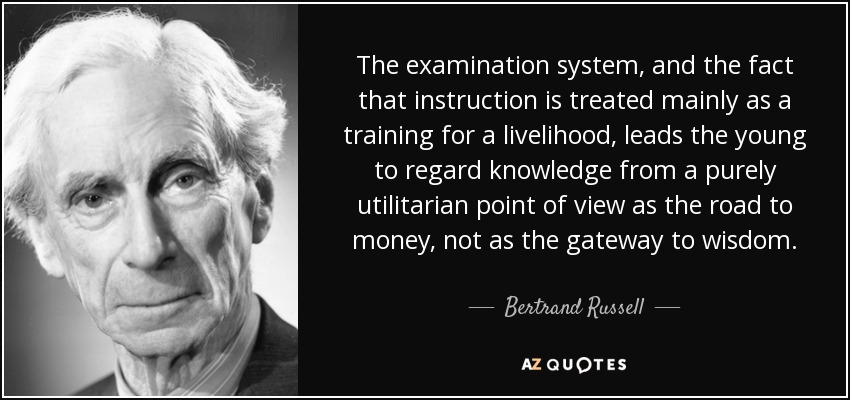
And some of this book reads like your neighborhood populist’s screed against pointy-headed intellectualism, eschewing research and even history. They say the USA hasn’t won a war since Eisenhower was president, which I’m sure will surprise veterans of the first Gulf War in 1991. (I did mention “messy politics.”) The aforementioned Bertrand Russell was a utilitarian at first and then evolved to the next level of trying to attain as much knowledge as possible, so it’s hard to imagine he’d scoff at the latest centrally planned training methods from Germany.
(Thus ends my longest philosophical digression since college, though I did cite Plato and the film Real Genius in my take on Jesus Christ Superstar. Yes, I majored in philosophy (and music), but we mostly read Plato, Descartes and Hume. Ask me about the cave sometime.)
Then we have the basic errors. The “Herman” Trophy. “Demarcus” Beasley — who, incidentally, is going along with the book’s underlying ideals by building futsal courts in his hometown. Author Lewis Carroll is spelled two different incorrect ways — “Carrol” and “Carol.”
And some of the soccer takes are simply incorrect. The authors say MLS tried to introduce the shootout, forgetting the old NASL. (We’ve all seen Once in a Lifetime — some of the Cosmos’ foreign stars actually liked lining up from 35 yards out for a one-on-one tiebreaker!)
(Hello, Mr. Eskandarian! And the upside-down clock is a nice touch.)
They say the 2002 World Cup team had a “nucleus” of players from Bruce Arena’s Virginia and D.C. United teams, which is a bit of a stretch — Carlos Llamosa and Tony Meola were barely involved, and Claudio Reyna was nearly a decade removed from his college days. U.S. Club Soccer becomes “the US Soccer Club Association,” which has “courageously imported coaching expertise from La Liga.” (Wasn’t every NSCAA session a couple of years ago some variant of learning to play like Barcelona?) They say the USA has produced only “second-tier stars in second-tier leagues,” which will come as a surprise to Reyna, Beasley, Brian McBride, Brad Friedel, Steve Cherundolo, John Harkes, Alexi Lalas, Clint Dempsey, Geoff Cameron, Stuart Holden, Tim Howard, Eric Wynalda, Christian Pulisic and Kasey Keller, let alone Mia Hamm, Abby Wambach, Alex Morgan, Becky Sauerbrunn …
Then the interesting ideas are often taken to the point of absurdity and beyond. They start with the notion that playing without shoes can teach players proper technique because it hurts a bit to kick the ball the wrong way. Then they proceed to suggest players lose their shin guards because they’ll steer clear of shin-to-shin contact. Unfortunately, that does little good when it comes to foot-to-shin contact — I’m still wincing from the moment I stepped in to demonstrate something in practice a few weeks ago and got whacked.
They end up almost like the footballing Amish, shunning anything that can’t be hand-crafted on a farm. The words “shiny” and “new” are tossed out as frequent insults (isn’t everything shiny and new at some point in its life cycle?), and one of the notes I scribbled on my Kindle is, “What do these guys have against water bottles?” (Or “smart boards” in school classrooms, another of the unwelcome sociopolitical digressions here. Smart boards rock.)
But the book rewards the patient reader. They aren’t the first writers to use the derogatory term “soccer-industrial complex” — I used it last year, and a search for the term turned up many references in the past decade — but they do well to expound upon its ills. We’re spending a lot of time and money on travel and gizmos (check out the obscene prices on soccer goals sometime) that could be going to actual soccer.
They clearly see a lot of the problems, some of which aren’t obvious to all youth coaches. Our participation rates are down. Coaching education is expensive and incoherent (as I write this, I’m still trying to figure out why U.S. Soccer changed its license courses again this spring). High schools and colleges have the infrastructure, and instead of trying to work with schools to reform their soccer programming, we’re turning away from it. A lot of kids turn up for rec soccer because their parents just want an hour of baby-sitting with exercise, a challenge for all of us who’ve coached U6 soccer. Then kids get to travel soccer, where their parents complain if the kids who torched the Pugg goals at U7 have to play a few minutes on defense. And the more “elite” you get, the more likely you are to be traveling to another state for a game of dubious quality when you could just as easily have a good game across town.
They even give credit where it’s due — sometimes. They see clubs starting pickup soccer sessions. They see U.S. Soccer coaching gurus encouraging individual ball skills at early ages, and the fed is admirably moving to a good mix of online and in-person coaching education.
Their own ideas aren’t bad. Having an older kid join a younger group’s practice to teach by doing sounds great — that mix of age and experience is actually one of the things I love about School of Rock as a children’s activity that we don’t get in youth soccer.
And if the “shoeless soccer” motif seems a little too off-kilter or unrealistic, consider the “street soccer” ideas they present. They’re not the only people pushing street soccer, of course — look back at Kyle Martino’s emphasis on hybrid basketball/futsal courts during the presidential campaign and Martino’s subsequent role with Street Soccer USA — but they build a strong case for some of the lessons that can be learned from playing on a small, hard surface. If you’ve coached young kids who are determined to play magnetball and clump around the ball no matter what, you might be a little skeptical that a fast surface will work wonders as opposed to your local grass (dirt) field, but it’s worth a try.
Nor are they the only advocates of free play. Apparently, in their local schools, kids aren’t playing soccer at recess, which is unfortunate. When I volunteered for the day at my local elementary school, I found myself in an entertaining 10v10 game in an enclosed space. It wasn’t perfect, but they were playing.
Playing shoeless or on pavement probably isn’t for everyone. I can’t imagine many of my old U6 rec players taking to the idea or learning anything from it. The highly motivated player, though, might love it and develop more quickly than he or she would in weekly rec soccer activities alone.
But for all these good ideas, which could indeed push U.S. soccer forward, the book demonstrates so many American traits that will hold us back:
- The obsession with the “quick fix” instead of an honest assessment of the generations of American exceptionalism (which doesn’t make us “exceptional” — it just makes us the “exception” to the rule) that have led us to fall behind in soccer.
- Sloppiness in developing those quick fixes (see the errors above).
- Offhand dismissal of relevant objections. The authors smirk at the injuries that can be sustained if we let our kids play rough on any surface they can find, an odd assertion given the injury (read: ACL) concerns we’re seeing these days, particularly in women’s soccer. They note an Italian club that has no mechanism for informing players of cancellations because they never cancel, which perhaps struck me at the wrong time because, just this week, I was in a basement riding out a tornado warning after informing my team that we would not spend the evening on an open turf field volunteering for a reenactment of The Wizard of Oz.
- Straw men that give the appearance that the speaker alone is wiser than the mob. They seem to think no one else in the USA has noticed the emergence of Iceland or its coaching education. “We fret about the wrong things in US soccer,” they say at one stage. “And our players suffer.” No, we fret about everything in U.S. soccer. Not all of it is wrong. Mathematically speaking, that would be impossible.
- Everything is someone else’s fault. When one of the good professors fails to reserve space on an indoor turf field, and the international soccer club must yield to the local Quidditch team, he blames Quidditch rather than his own organizational skills.
Near the end of Shoeless Soccer, we find a passage that says it all. The authors say “the grassroots proposals in this book require nothing more than a bit of humility.”
We’re Americans. We don’t do humility. We do things our own way, and if that doesn’t work out, we take our ball and go home.
But we can always use ideas, and this book has several worth discussing. Look for a podcast down the road.
 Duresport.com