youth soccer

A Recreational/Most Travel Soccer Manifesto (updated)

A couple of years ago, I wrote a Recreational Soccer Manifesto for SoccerWire. At the time, I was focused more on the younger age groups, having just written Single-Digit Soccerand I was pushing the idea of having no full-time travel soccer (just All-Star tournaments and other interclub matchups) for kids under age 12.

But I did have a few ideas for older age groups, even though I had not yet coached there. Now I’m in my third year of coaching at the U14 (middle school) level, and I’m now coaching at the U16/U19 level (don’t ask — it’s a long story).

And I’ve found that I was right. Somewhat. I’ve learned a few things that have made me want to revise and expand the Manifesto.

One thing I’ve learned that I had not taken into account: You’re simply not going to be able to keep everyone. I have some ideas for giving all high schoolers an opportunity to play without being totally overwhelmed by all the players dropping back to rec soccer after several years of travel, but even then, high school kids tend to explore new activities and/or shift their focus to the activities at which they’re really good. The kids playing multiple sports may choose one. They may choose to run cross-country and march in the band instead. We have to be OK with that.

(Losing kids before age 12 is a different story. When that happens, it usually means the soccer community messed up.)

I’m also seeing in even more vivid detail just how counterproductive it is to have all these different leagues stuck in silos rather than a pyramid. In my area, kids from U11 on up have these choices:

  • The Development Academy, which is taking more and more kids at the younger age groups.
  • ECNL, which is fighting back against the DA. We can talk about that some other time.
  • EDP, which has taken over U.S. Soccer’s regional leagues in the region and offers a lot of tiers for teams to find a competitive level.
  • Club Champions League, a self-appointed elite league with club vs. club scheduling that seems less relevant now that we have three leagues at a higher level.
  • Virginia Premier League, a U.S. Club Soccer league that also does club vs. club scheduling and is at a lower level (with even less parity) than CCL.
  • NCSL, the traditional local promotion/relegation league that still has a handful of good teams and reaches downward to include teams that are demonstrably worse than a lot of “rec” teams.
  • ODSL, which some clubs consider “travel” and some consider “rec.” It’s supposedly a lower level, but after reffing a fantastic U13 game punctuated by a legit bicycle-kick goal, I’m not sure I’d agree.
  • Suburban Friendship League, the interclub “rec” league that has a few teams that would clobber the “travel” teams.
  • Local clubs’ rec leagues.

With so many artificial divisions, is it any wonder these leagues and clubs fail to offer the wide range of programs and competitive levels players and parents want? Several of these leagues try to have multiple tiers, but they don’t have teams to do it.

And these leagues end up imbalanced. Your local rec league may have some juggernauts, with players who’ve stuck together for a few seasons while doing all sorts of extra work. Can we let these friends stay together while giving them a challenge other than destroying the less serious rec teams? Why can’t they play the low-level travel teams who aren’t any better?

So the basic points of my previous manifesto still seem OK to me. But I think I can distill things down to a couple of simple points:

DA/ECNL: With some hesitation, I’ll exempt the DA and ECNL from what I’m suggesting below. They should merge, of course, with a simple compromise — the ECNL accepts the DA’s limits on the number of games each team plays in a weekend or a week, while the DA gets over itself and lets kids play in high school if they choose. That should give them enough teams for two tiers, and at the pivotal age of U16, they could have a truly national league. (After U16, players that are ready to go pro move into the USL or straight to MLS, while everyone else travels less so they can hit the books and get ready for college.)

As for everyone else …

One pyramid in each region: One. The top level would play throughout the region, though we’ll still try to keep travel reasonable — usually 1-2 states, or half a state in California’s case. The farther down the pyramid you go, the wider the base. (In other words, an actual pyramid. Not a ladder.) Professionally coached teams with committed players who practice 2-3 times a week and don’t mind a bit of driving will end up in the upper tiers. Teams we would now call “recreational” will be at the bottom — if they prove to be a bit better than their peers, they can move up a tier or two. Any team can decline a promotion to a level that would require too much travel. (Within reason — if a team is beating everyone 10-0 in Division 9, they should move up to Division 8 or disperse their players.)

Guest players/available subs: In my adult league, we had a roster of full-time players that was big enough to field a team if everyone showed up. They all paid full freight, and so they had first right of refusal for each game. If a few players were absent, we could call on a list of players who hadn’t committed to the team but would be willing to play on occasion. (I’ll draw once again on the curling example — a curling team usually has four players but can go with three or possibly five — so my local club lets teams call in subs who pay a small fee for each game they play.)

Free play, free play, free play: Some kids simply aren’t going to be able to commit to any team, no matter how low the commitment might be. You can still keep them playing on occasion and give your full-time players a fun break from their league schedules by having free-play days.

You could also offer a change of pace for everyone with small-sided tournaments (tiered) open to all.

Speaking of tournaments:

Set up any tournament you like: In the example above, CCL and VPL could reinvent themselves as organizations that offer club-vs.-club tournaments.

The bottom line is this: Offer a wide variety of clearly labeled programs. Parents have no patience for this alphabet soup. What I’ve outlined above is far simpler and friendlier than the dystopian mess of leagues I listed above that.

Clubs may argue that they’re moving from the “team-centric” model to the “player-centric” or “club-centric” model. You’re not fooling anyone. You might move the occasional player up to fill in on the top team, and the DA has provisions for part-time players who can be called up (and there’s no reason to discontinue that practice). But for the most part, you’re handing parents a schedule at the beginning of the season, and they’re scheduling everything else around those games. You’re not going back and saying, “Hey, let’s bump Maddie down to the C team this week. Game time is 8 a.m. Sunday in Farsburg. See you there.”

In any case, we’ll let clubs continue what little internal movement they have with the “guest player” provisions. Your Division 3 team can call up a Division 6 player if needed. But players and parents at most levels of soccer identify with a particular set of teammates. You can’t change that, nor should you.

So we’ll accomplish the following:

  1. We’ll make this more fun for everyone.
  2. We’ll make this less confusing.
  3. We’ll encourage more players to stay in the game.

And we’ll even provide that elusive “pathway” for all. Maybe a kid comes out to one of your free play sessions, decides to join your Division 10 team and catches on to the game. In a couple of years, that kid is in Division 3 helping you win a State Cup and going on to play in college. Stranger things have happened.

For the other 99 percent, youth soccer will be something other than a major annoyance. And that’ll be progress.



us soccer

What I learned reading tons of USSF minutes and transcripts, Part 1 (1998-2009) …

For all the fuss, sometimes justified, over U.S. Soccer Federation transparency, the fed’s site has a treasure trove of information online. That includes:

(Quick note: If you want to skip ahead to 2010, see Part 2)

Not on the site (I think) is an external 2004 report on structure, governance and ethics by the Consensus Management Group. In the wake of this report, USSF followed the lead of other sports organizations and slashed the size of its board from an awkward 40 people to the current size of 15 voting members and two non-voting (the CEO/Secretary General and the immediate past president).

I’ve read, at one time or another, pretty much all of this information. That doesn’t mean I understood it. That doesn’t mean the records are complete — the Board seems to go into executive session over piddly details, while other boards with which I’ve dealt tend to do so only for personnel matters. But I’ve read it.

Quick side note: At one time, I started to compare the USSF structure to similar organizations, both international football feds and other sports federations in the USA. It’s difficult to get apples-to-apples information. The most similar U.S. organization is probably USA Basketball — it’s a substantial participatory sport with a major pro league. USA Basketball is descended from an amateur-only organization that added the NBA when pro players were cleared to play in international competition, and the NBA now appoints three of the 11 voting board members. In England, the Football Association’s board has representatives from the Premier League and Football League, and very few of the board members’ bios mention any significant playing experience. (Also, the CEO came to the FA from United Biscuits, which is so wonderfully English it makes me want to watch some Monty Python videos.)

The other big-picture item: The organization is turning over much, much more money than it used to.

2006 2016
Sponsorship $14,720,385 $49,498,623
Program revenue $28,365,806 $122,655,465
Gross receipts $39,102,876 $126,747,525
Total expenses $35,047,107 $110,011,376

I certainly have some questions left. Many. I hope to get some of them answered in 2018, preferably before the election.

So with that in mind, here’s a full history (abridged) as constructed from the minutes, transcripts and the occasional other document …

1998

Close elections (reported by Soccer America):

  • President: Dr. Bob Contiguglia 57.6%, Larry Monaco 42.4%
  • Vice president: John Motta 50.8% (372 votes), Sunil Gulati 49.2% (361)

Gulati was MLS deputy commissioner at the time. He was pushed out in early 1999 and became managing director of Kraft Soccer (owners of the New England Revolution and briefly the San Jose Earthquakes) later that year.

Also, new bylaws went into effect in September.

2000

A bylaw change put the VP election in Summer Olympic years and left the presidential election in Winter Olympic years. That set the stage for a Motta-Gulati rematch, and Gulati won. Motta would return to the Board in 2013 via the Adult Council; he’s the current president of U.S. Adult Soccer and is a must-follow on Twitter.

Secretary General/CEO Hank Steinbrecher retires and is replaced by Dan Flynn, who still has the job.

The fed begins a five-year sequence of business plans.

2001

Flynn’s first order of business is to freeze 34 open positions and cut travel to turn a projected $2.2 million deficit to a $300,000 surplus.

Other issues at the AGM sound familiar to a 2017 audience: 75% of players drop out by the time they’re 13, grassroots coaches and players will be a priority.

2002 

President: Dr. Bob re-elected to second term without opposition.

2003

All hell breaks loose.

The AGM has 38 proposed bylaw changes. Several people rise from the floor to complain that the pro leagues and athletes are voting as a bloc and outweighing the votes of the state associations, whose combined votes are just short of a majority. Alabama delegate Dan Mikos, also a member of the important Credentials Committee, compares the situation to the American Revolution and predicts “anarchy and revolution” down the road if changes aren’t made.

New York West Youth Soccer had a pointed opinion of the proceedings on its site a year ago, but alas, the link is dead. Some highlights from my notes:

  • The state youth associations, representing roughly 80% of the membership, have only 20% of the vote. (I think it’s closer to 25% today, but it’s hard to put a precise percentage on this group because some are also represented (somewhat) by other organizations such as U.S. Club Soccer.)
  • Among the bylaws that didn’t pass: an audit committee, a new appeals process, a requirement to give 30 days notice of any new policy being put in place.
  • Many state youth association delegates boycotted the President’s Dinner, and U.S. Youth Soccer passed a grievance to go to the U.S. Olympic Committee.

2004

The big governance report mentioned above is commissioned, researched and released. Among the observations:

  • A lot is going well: Finances, staff, etc. Especially finances, with the Fed moving from a $2.5 million deficit to a $28 million surplus in less than six years.
  • “While politics is always a factor in decision-making bodies, the level of vitriol in
    USSF politics is extreme. The amount of talent and energy consumed in
    internecine strife and finger pointing is destructive. There is little tolerance or
    respect for differing points of view, and few venues for addressing differences
    without rancor. Organizational sectors are increasingly isolated from each other.”

    • The Youth Council barely meets to discuss common issues.
    • The Adult Council is just USASA chatting with itself.
    • Some think MLS shouldn’t vote. (Well, the EPL does in England.) Some think the adults should just shut up. Some think the athletes should just go away, though that would violate federal law.
    • The 40-person Board doesn’t work, in part because people think decisions are just in advance. There’s also an executive committee (not any more) that’s poorly defined.
  • “In 1986, 43.14% of Federation revenue came from dues. By 2000, that percentage went down to 9.05%. Because of the recent dues increase, it is estimated that in 2005, 12% of revenues will come from dues. For some constituents, this dues increase, coupled with a real or perceived decrease in Federation services while it enjoys a 70% fund balance (based on a $40 million budget) is an irritant that migrates into the USSF political arena.”
  • There’s also a suggestion for how to find and nominate candidates for officer positions. That has not been implemented.
  • Bloc voting, bloc voting, bloc voting!

cmg

All that said, no bylaws passed because Larry Monaco (remember him from 1998) says they weren’t disseminated on time. Part of the issue is whether they’ve been distributed in writing as opposed to on a disk. This really happened.

monaco

(Bear in mind, this meeting was in March. Previous years’ meetings were in the summer, so they had a shorter turnaround.)

Also, perhaps in response to the bloc-voting accusation of the past year, Peter Vermes gave an impassioned speech on behalf of the Athletes Council, saying all the athletes wanted to be approachable and they all started out as rec players. He was greeted with applause.

Then Steve Flamhaft (remember that name) rose to castigate Monaco for being such a stickler for the rules.

VP: Gulati re-elected to second term without opposition.

2005

A less eventful year, with some governance tweaking in the wake of all that happened in 2003-04:

  • Dr. Bob mentions that, in addition to the governance report USSF commissioned, they’re expecting a report from the U.S. Olympic Committee recommending a smaller board, greater transparency and a few ethics guidelines. Task forces are assigned to working on the governance of the Board and the Youth Council.
  • Failed: A bylaw change (not sure of number) requiring a Soccer Summit to be held every four years.
  • Failed: A term limits bylaw change limiting officers to two terms. Also something having to do with Bylaw 401.
  • Passed: Something having to do with grievances (I really wish the full “book” from these AGMs was available online). Also changes to Bylaws 212 and 213 and some sort of change on referees.

What’s the president’s role? Flamhaft (whose father, Jack, was president from 1959 to 1961) rises to oppose a change to Bylaws 402 (Responsibilities of Officers) and 501 (Appointment of Secretary General) that he says would “dilute and emasculate” the office of the president. Then a curious argument — former VP Walter Giesler died during an AGM (in Flamhaft’s words; a couple of online sources say he collapsed while the 1950 MNT was being inducted into the Hall of Fame, which may well have taken place concurrently in 1976) and Flamhaft’s father was once carried on a stretcher from a FIFA meeting in Zurich, so we need to remember their sacrifices.

Dr. Bob passes the chair to VP Gulati so he can respond, saying it’s simply a reality of the modern world. Other soccer and other sports organizations are relying on CEOs who aren’t subject to election.

Also this from Dr. Bob: “the authority of the organization is not the president. The authority of the organization is the Board of Directors. And so we’re trying to legalize that and make it the way everyone else is doing it in the world.”

It passed.

Most Board policies were quietly affirmed. The exception was a policy on referee assignments and unaffiliated games (such as high school games) that sparked a discussion that went on for pages and pages. Something was finally passed.

Also, the AGM took place during a USWNT Algarve Cup game vs. Denmark, so they periodically got updates. Kristine Lilly had a monster game, as usual, and the WNT advanced to the final, where they would beat Germany 1-0 on a Christie Welsh goal.

Later in the year, the Board:

  • Approved a grant (later matched by the U.S. Soccer Foundation) for the Hall of Fame.
  • Approved Toronto for membership in MLS. (Cross-border applications have to be approved by the Board; in other years, similar applications are heard in various lower-division men’s and women’s leagues.)

2006 

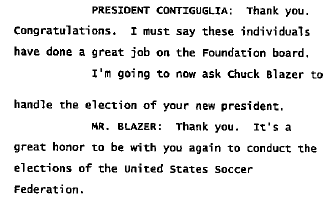
The Sunil Gulati era begins. He’s elected without opposition.

Dr. Bob does not preside over the election itself.

blazer

(Much later in the meeting, Blazer announces that Mike Edwards will be the next vice president, replacing Gulati. Standing ovation.)

Don Garber nominates Gulati. No one opposes him. Then Gulati thanks scores of people, including Sal Rapaglia (12 years before he stepped into a major controversy), Kevin Payne, Soccer America‘s Paul Gardner (!?) and former U.S. coach Bora Milutinovic.

Gulati also talks about how to get better, alluding to what Germany is doing (which would become “Das Reboot”).

He closes with a joke:

bob

And another big change: The Board is trimmed from 40 people to 15. Much self-congratulation ensues — as Gulati points out, people are basically voting to get themselves less power, and the U.S. Olympic Committee only did it “because Sen. McCain was calling fairly regularly.”

They managed to do all that even after lengthy discussions on whether a particular amendment would promote “interplay” between youth leagues and whether USSF should be allowed to file an amicus brief in an arbitration. They even had a few “Wait, what are we voting on?” moments.

Also, Bob Abbott from Louisiana thanks the rest of the Federation for its support after Katrina.

The streamlined Board doesn’t have too much to deal with, though Bob Bradley is named interim MNT coach, and U.S. Futsal runs into trouble and is eventually removed from membership. (A U.S. Futsal group is an affiliate today; I don’t know how much restructuring they did before getting back into the Fed.)

2007

The first independent director — Carlos Cordeiro — is recruited by the Board and officially elected at the AGM.

The other interesting item at the AGM — in the “Good of the Game” segment (just speeches, no votes), there’s a discussion about compensating the president so they can attract a bigger pool of candidates. Sounds familiar, doesn’t it?

The Board is busy with the launch of the Development Academy and the delayed launch of WPS. A motion to establish a USSF nominating committee fails. Meanwhile, Gulati asks AYSO’s Burton Haimes to start a task force on pro league standards.

(Quick side note: Paul Caligiuri was on the Board this year.)

2008 

Unopposed elections: Mike Edwards (first full term as VP), independent director Fabian Nunez.

The Board votes, at Gulati’s urging, to recommend rejection of a proposed bylaw amendment to pay the president.

WPS gets provisional membership.

CalSouth Adult Soccer goes under criminal investigation. CalSouth Youth Soccer applies to take over adult soccer in the state, and the Board approves a task force to investigate. CalSouth is indeed a joint association today.

Other membership issues: MISL dissolves, Missouri Youth Soccer faces a lawsuit, XSL and NISL get provisional membership. Also: WPS requires some waivers to the new pro league standards.

And promotion/relegation is mentioned in the Board minutes! In the president’s report: “There were also discussions at a recent FIFA Congress regarding promotion/relegation and limiting the number of foreign players starting on domestic professional teams.”

2009

Unopposed election: New independent director Donna Shalala, at least filling the third slot, and re-elections for Nunez and Cordeiro.

More foreshadowing: The Pro Council had been unable to agree on how to split votes due to a disagreement between MLS and USL. The final word: 62.5% MLS, 25% WPS, 12.5% USL.

The AGM is pretty quiet, though there’s some conversation about youth soccer mandates, including the age-old question: “So are you just going to stop kids from playing un-mandated soccer?”

The budget had a surplus of $218,000. International games helped pull it out of a projected deficit.

More conflicts: Dueling associations in Wisconsin (this would go on for a while), U.S. Youth Soccer vs. U.S. Club Soccer.

The Pro League Task Force appears. MLS is sanctioned. WPS and the new MISL are approved with some waivers.

We’ll pick up from there in Part 2.

work history

How I got here

Updated July 2025

Or “How did a philosophy and music major end up as a sports journalist?”

The answer isn’t simple, which I why I’ve prepared this narrative as a companion to the simple work history presented in my resume. If you’re not interested in the whole story, the short answer is that my versatility has allowed me to hop between several career tracks in journalism. I’m an experienced editor and writer, a former page designer and an early adopter on the Web. I’m one of the few people to make the jump from print to Web, then back to print, then back to the Web, then halfway back to print. My experience is nothing if not diverse: covering high school basketball in rural North Carolina, designing the syndicated “That’s Racin'” NASCAR page, doing live election coverage in the early days of the Web, coordinating coverage of the Winter Olympics from Salt Lake City, researching a graduate thesis on new media, writing a soccer column that ensures an entertaining stream of e-mail to my inbox and jumping on the emerging sport of mixed martial arts.

Here’s the long version:

chronicle

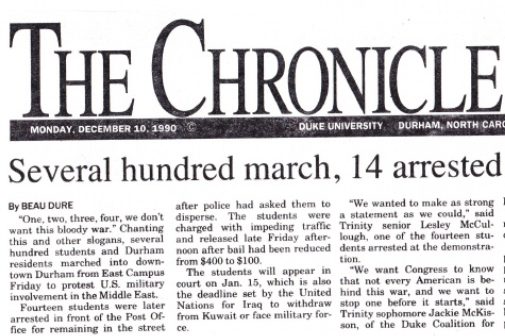
As I went through my undergraduate years at Duke, I wound up spending more and more time working for The Chronicle, the independent student newspaper. As arts editor my junior year, I re-organized the paper’s sporadic coverage into a twice-weekly section with a full calendar. By my senior year, I virtually lived at the office. I spent a semester as managing editor, guided newcomers through their first assignments, edited the monthly magazine supplement Currents and wrote for every section. (In 2017, I joined The Chronicle‘s board as Strategic Committee chair.)

A rational mentor would have talked me into going to law school or graduate school, most likely in music. Fortunately, no such mentor existed. Though I had no professional experience and no journalism professors to recommend me for top jobs, I chased every newspaper lead I could find in the shaky economy of 1991.

nine-toes

I landed on the copy desk of the Morning Star in Wilmington, North Carolina, where I did all the basic desk tasks: editing stories, writing headlines, designing pages and picking wire stories. Thanks to a hiring freeze, I wound up as a stopgap assistant city editor at the tender age of 22. After 18 months, I moved to the sports section. Desk work was still my main responsibility, but in a department of five, I had ample opportunity to write a column and the occasional game story.

After three years in Wilmington, I was ready to move on to a newspaper I’d long admired, the News & Record in Greensboro. Here, I learned much more about page design, which gave me a chance to work in both the news and sports sections. Once again, I took on management duties, scheduling shifts for my co-workers and supervising the editorial assistants.

By 1995, I had joined the ad hoc team that ran the newspaper’s first foray into the Internet. The next year, the paper put together a full-fledged Web site, and I was hired as coordinating producer.

parlow

We were one of the fortunate newspaper site staffs given the freedom to do more than a simple rehashing of the print version. We took turns writing a column about the Internet for the paper, and we helped local groups and businesses develop their sites within our virtual community. I did live scene coverage under primitive circumstances, wandering around during an election or a golf tournament while making frequent trips back to the office or media tent, all using a state-of-the-art digital camera the size of a shoebox. Best of all, I put together original material to cover local sports teams with “Carolina” in their names: Panthers (NFL), Hurricanes (NHL), Dynamo (A-League soccer).

Being in Greensboro also gave me the chance to commute each week to my alma mater, Duke, to work on a master’s degree in liberal studies. I broadened my education in a series of interdisciplinary courses in environmental studies, education, political science, history and sociology. I constantly sought to relate my classes to journalism and often wrote term papers combining my work interests and academic pursuits.

In 1998, I was ready to move on. More importantly, I was engaged, and we were ready to move somewhere near Washington. My fiancee landed a job first, and I moved up with her to find a job. To my surprise, I ended up back in print, designing and editing a daily page of national and world news for Knight Ridder Tribune News Service (now McClatchy-Tribune). The page was canceled after six weeks, and I moved on to the weekly “That’s Racin'” page of auto racing news, along with other design projects and regular shifts on the news desk. Here, I started a weekly column on Major League Soccer and wrote a few pieces on the Women’s World Cup in 1999. I also continued my graduate studies, doing an independent study on the history of objectivity in American journalism. All this, of course, was balanced with my wedding plans.

A year later, I was back on the Web at USATODAY.com, where I helped to develop the site’s interactive features. We started with message boards and moved on to chats. I continued to write a soccer column and filled in for the paper’s soccer writer when the MLS playoffs overlapped with the 2000 Summer Olympics. I also helped the Web site with its coverage of the Sydney Games, all part of a tough two-month stretch in which I was doing three very different jobs. Meanwhile, I finished my graduate studies with a thesis on the changing role of journalists in new media. (The thesis is available online.)

When it was over, the sports department needed me more than the interactive department. I was asked to take over coverage of Olympic sports and soccer while also taking supervisory shifts and continuing to write my column.

The exciting job of planning Olympic coverage, a crucial task for USA TODAY, grew more difficult as the economy went sour. The staff was reorganized one month before the Games, and golf was added to my plate.

My immediate task was to keep our Salt Lake City coverage on track despite all the changes at the site. A couple of months later, I was responsible for our coverage of the World Cup, though I did not travel with the newspaper staff to Korea.

More changes came in August 2002. I took over our hockey coverage and gave up golf.

In 2004, I cut my hours to spend more time with my baby boy. My job for the first eight months was to build our coverage of the Athens Olympics. I worked with designers and programmers to get our site and the results feed in order. I also developed original content such as the Olympic Athlete of the Week awards, the 10.0 series of athlete interviews, brief bios on U.S. athletes and introductions to each sport.

After the Olympics, I moved into a role developing projects and original content for all sports. For the better part of a year, I worked on an overhaul of our automated feeds, which segued neatly into development of the results feed for the Torino Olympics. I went to Torino to do live coverage by blog.

I didn’t take a second trans-Atlantic trip for the World Cup, but I still blogged about the event. (Sadly, the archives for Torino and the World Cup were wiped out.) I spent the next 18 months focused on our new general sports blog, Sports Scope, while contributing features to USA TODAY’s soccer coverage.

lrg15

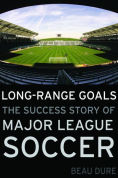
In 2008, I took a quick leave of absence from USA TODAY to work on my first book, Long-Range Goals: The Success Story of Major League Soccer. When I returned, my job was redefined once again. Among my many gigs, I was the beat writer and online content developer for soccer and “emerging sports.”

The sport that “emerged” was MMA, and it quickly became a big part of my job. My assignment was to follow the surging UFC and the other organizations trying to surge along with it.

Soccer never left my desk, nor did Olympic sports. In 2008, I helped to get the online section running, then raced all over Beijing and surrounding cities to cover soccer and many other sports.

The next 18 months were fantastic and fulfilling. I did legitimate multimedia journalism, adding video and audio to my work. In 2010, I was assigned to Whistler for the Winter Olympics, covering the Nordic sports and biathlon.

But the job also ate into my family time. I had two kids. I had a lot of projects I wanted to do. It was time to leave.

So after 10 years, 4 months and a few days, I left USA TODAY at the end of March 2010, having gained invaluable experience in soccer, MMA, Olympic sports, golf, hockey, high school sports, horse racing, XSL, automated stats, blogs, video, audio, Twitter, Flash and some other things I’ve probably blocked from my memory.

germany-opening

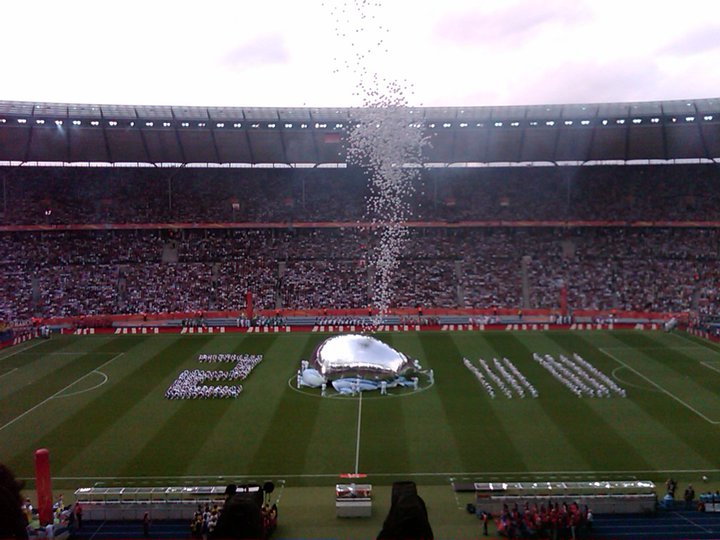
The next year, I got the call to make another extended trip — this time to the Women’s World Cup in Germany, which I covered for espnW and ESPN. I kept up steady freelance work with ESPN through early 2012, covering the demise of Women’s Professional Soccer.

My next project was a book on MMA that was nearly landed a substantial publishing deal, but the publisher was terrified of UFC president Dana White and dropped out. I later repurposed much of it for the blog Bloody Elbow.

Next: For the third time, a professional women’s soccer league sprang up in the United States, and I decided to follow the Washington Spirit for the book Enduring Spirit: Restoring Professional Women’s Soccer to Washington.

In the mid-aughts, I also wrote a short book on youth soccer called Single-Digit Soccer: Keeping Sanity in the Earliest Ages of the Beautiful Game. I did a presentation for youth soccer clubs on how to build an effective website, then expanded that into the book The Soccer Site Doctor Guide to Healing Your Club’s Website. I also kept writing for outlets such as The Guardian, Four Four Two, Fox Soccer, OZY, Popdose and The Huffington Post. For the most part, I kept covering sports, but I also wrote much-cited stories on Millennials leaving small towns for big cities and the growing but splintering Flat Earth movement.

I experimented with podcasting in sports (Ranting Soccer Dad) and pop culture (X Marks the Pod).

In 2019, my second major book was published. Why the U.S. Men Will Never Win the World Cup: A Historical and Cultural Reality Check is a thoroughly researched deep dive into the historical and sociological factors that hold back U.S. soccer.

When the pandemic struck, I occupied myself with an oral history project on the year between the demise of Women’s Professional Soccer and the launch of the National Women’s Soccer League — 2012: The Year That Saved Women’s Soccer.

But a few other things happened that changed my career arc.

When local schools re-opened from the pandemic, they needed additional staff. I figured I could put my freelance projects on hold and work in schools for a bit. I wound up becoming a substitute teacher, which keeps me busy through much of the school year.

I still write, especially for The Guardian, and I just might finish my novel at some point.