My latest for The Guardian looks at the start of a possible player exodus from the NWSL while the U.S. women’s national team negotiations — which directly affect the league — race toward the year-end deadline.
On Thursday, Hope Solo’s assault case will be officially remanded to the trial court, Kirkland Municipal Court … unless Solo’s counsel decides to appeal again.
That’s the upshot of the stack of paper I managed to procure and have shipped cross-country to me in an effort to figure out the status of her case. Two words, court system: Electronic records. Please.
I reached out to Solo’s two listed lawyers to ask whether they would once again seek a review in the state’s Court of Appeals. They did not answer.
But barring a successful review of the review of the appeal of the case being reinstated, Solo will be in court sometime in … 2017? Maybe?
The irony here is that Solo’s counsel got the case thrown out at one point because a judge sympathized with the argument that she shouldn’t have to choose between due process (adequately questioning all the witnesses) and a speedy trial, and now the case has dragged out far longer than it should have. The primary delaying force, though, is simple bad luck. Solo’s lawyers have had several valid reasons to delay the case — you’d have to be rather heartless to deny a motion for an extension to a lawyer whose wife was just diagnosed with breast cancer.
Here’s how we reached this point.
June 21, 2014: Solo is arrested on charges of fourth-degree assault after an incident with her half-sister, Teresa Obert, and nephew, identified in court papers as C.O. because he was a minor at the time. ESPN reports in October 2015 that she was belligerent toward arresting officers.
December 2014-January 2015: Several delays in the defense’s attempts to get depositions from Obert and C.O. One delay is procedural — do you need a subpoena or just a “notice of deposition” to compel someone to appear? When they are deposed, C.O. cites doctor-patient privilege in response to a couple of questions about his medical history and medication. On Dec. 30, the court orders Obert and C.O. to appear on Jan. 2; the response is “I don’t know if we can make that.” And they don’t. The court tries again Jan. 6 to get them to appear Jan. 8, but Obert’s husband says they’re out of the state. (All of this is reconstructed from the Court of Appeals ruling of July 7, 2016.)
Jan. 13, 2015: Kirkland Municipal Court judge dismisses charges against Solo. The factors are “pattern of the City’s witnesses’ failure to cooperate with defense interviews” and an amended witness list of Dec. 29. Solo’s counsel had said the new witnesses on the list had refused to talk.
Feb. 9, 2015: Kirkland lawyers file in King County Superior Court to reconsider the case. Again from the 7-7-2016 ruling: “The City argued that the trial court improperly conflated the City’s obligations with the witnesses’ conduct.”
Oct. 2, 2015: Superior Court Judge Douglass North reverses lower court’s decision, sends case back to lower court. The ruling, included as an appendix to an Oct. 29 filing I obtained, says North heard motion from Kirkland “to remand this case back to the trial court for an abuse of discretion under 8.3 and 4.7. IT IS HEREBY ORDERED that this case be remanded back to the trial court for a trial. Court finds there was an abuse of discretion.” More detail from the 7-7-16 filing: “The court reasoned that dismissal ‘requires willful or arbitrary action on the part of the government, not on the basis of the witnesses.’”
Oct. 29, 2015: Solo’s counsel asks state Court of Appeals for a discretionary review of North’s Oct. 2 decision. This docket report is online.
Nov. 6, 2015: Solo gets extension on filing full motion until Dec. 28. Reasons given: Todd Maybrown, Solo’s lawyer throughout this case, is prepping for the murder-for-hire trial of James Perry Henrikson. The legal team has added James Lobsenz, but he was not present at trial and is getting up to speed while he has six other appellate briefs due.
January 2016: Solo gets another extension to Jan. 15, but “no further extensions.” Three documents were filed through the month — presumably Solo’s motion (Jan. 12), then definitely Kirkland’s response to her motion (Jan. 22), then Solo’s response to Kirkland (Jan. 29). I don’t have these documents, but I have a Feb. 1 document about the dates in which they were all due.
March-May 2016: After some back and forth about whether the motion should be heard by oral argument, the motion was indeed heard May 27.
June 7, 2016: Solo’s motion for review is denied by Court of Appeals Commissioner Masako Kanazawa, whose ruling is “essentially upholding the superior court’s ruling,” according to the Seattle Post-Intelligencer.
The last paragraph of Kanazawa’s ruling (note: Solo is using her married name, Stevens, in this case):
July 7: Kanazawa grants motion for extension of time to file a motion to modify until August 8. Counsel’s wife just learned she had breast cancer and needed surgery.
August 5: Solo’s motion to modify is filed. The basic idea: Please “modify” the ruling denying my discretionary review by entering a ruling granting discretionary review. Quite a modification — legalese is fun!
Solo’s counsel reiterates the delays in Obert and C.O.’s deposition but also hits the prosecution for adding four witnesses late in the process — two doctors, Jeffrey Obert and a Corey (or Cori, depending on the document) Parks, who lives in Florida. The motion says these witnesses have refused to be interviewed by defense.
Kirkland’s response, if it chose to file one, would be due August 15. The city decided not to respond. That’s confidence.
Oct. 4: Motion denied — there will be no modification of the ruling denying the motion for discretionary review. The order has three signatures with last names matching Court of Appeals judges Michael Spearman, Ronald Cox and Stephen Dwyer.
The cover letter sending the order to Kirkland and Solo counsel reads, “The order will become final unless counsel files a motion for discretionary review within thirty days from the date of this order.”
Nov. 3: The Court of Appeals docket says “Certificate of Finality: Due.”
Though, in this case, it would really be the beginning, sending the case back to trial court just as Solo makes plans to go to North Carolina (as stated in her Fullscreen documentary) or even overseas, as she recently hinted.
Most of the time, journalists are able to put aside personal sentiments in sports and just do their jobs. Most of the time.
Readers’ accusations of bias are usually wrong. I’ve been on a sports staff in which we were all accused of attending one or another of the local high schools, even though we all grew up elsewhere. That’s typical.
When I regularly covered MLS in my USA TODAY days, people assumed I was a D.C. United fan. I generally tried not to be, and I think I was successful. Sure, you’d prefer to have a playoff game to see without traveling, so it was in my own interest to see United make the final eight or 10 or 37 or however many teams get home playoff dates in MLS. But at every game I attended, I went to the visitors’ locker room. I wanted to know the whole league. I have more vivid memories of speaking with Landon Donovan and Jimmy Conrad than I have of talking with any D.C. United players.
And I had something less obvious tugging at me as a fan. Real Salt Lake represents one of my favorite places in the world, and for several years, they had two Duke grads in charge — Garth Lagerwey and Jason Kreis. I like Utah, I liked the team’s staff, and I liked the style of play. If RSL had faced DC in an MLS Cup final, I’m not sure which way I would’ve leaned.
I have other sports in which I’m content to be a fan and not a journalist. I had hockey-editing responsibility at USA TODAY for a couple of years, but since then, I’ve been able to be a Washington Capitals fan with my family. That means I really enjoy the regular season and then try to go into hiding in April.
My relationship with the Washington Spirit is unique. I wrote a book about their first season, and it certainly would’ve been better for book sales if they had (A) won a few games or (B) had something interesting to say about not winning a few games. It’s tempting to look back on that experience with a grimace and have no investment in how well they do.
But I can’t. I met too many great people in the process of writing that book. And the Spirit did a great job of getting out in the community — I’ve taken my kids to clinics and open practices, and I know people who’ve played or coached in their Super-Y youth system.
And that first season was a long run of calamities. No one deserved to go through all of that. Those players — and the staff and the incredible fans of the Spirit Squadron, who may be outnumbered by their Portland counterparts but more than hold their own in every other way — deserve some good fortune.
Not that I think fortunes ever even out in soccer. I’ve said it 100 times — soccer karma does not exist. I could break the WordPress servers with tales of woe from my youth soccer parenting and coaching experience, all of which makes me quite sympathetic to the 2013 Spirit (or the 2016 Breakers).
That said, two of my youth teams have won postseason tournaments after finishing near the bottom of the league. So I can also appreciate what Western New York did this year or what Sky Blue did in the 2009 WPS season. Sure, Seattle fans have a right to feel aggrieved by the eccentric NWSL schedule, which saw the Reign play Portland four times while the Flash beat up on the Breakers. But the Western New York youngsters put things together at the right time, and we reward that trait in American sports with good reason.
But I know that for every scrappy underdog that wins in the last minute, there’s a favorite that feels deflated.
And for those reasons, I’m glad I didn’t have to write anything in the immediate aftermath of Sunday’s NWSL final, in which the Spirit gave up a goal in time that should not have existed. (I’m sorry — who adds four minutes of stoppage time to a 15-minute extra time session unless an ambulance was called onto the field?)
The final proof that soccer karma does not exist — the three players who missed penalties for the Spirit were the three players who have been with the team since its dreadful start in 2013. That’s actually enough to make you think there is someone up there pulling the strings to determine who wins what, and it’s someone with a sick sense of humor.
Also, we in the D.C. metro area have suffered quite enough, thank you. We’d all like to get rid of our local NFL team’s mascot and owner, though we’re sick of transplants to the region showing us up every Sunday wearing their Giants and Eagles gear. (We get it. You’re jerks. Thanks for reminding us.) D.C. United won a lot of trophies before Seattle and Portland invented soccer, so no one remembers. The one really good team in the D.C. area over the past 10 years has been the Washington Capitals, where Oveckhin, Backstrom and Holtby will break your hearts right around the peak viewing time for the cherry blossoms.
So to have a heavily favored team like the Spirit, with so much talent that Jim Gabarra was desperately trying to invent the 5-5-3 formation to play everyone, lose in the fashion they did is simply the most D.C. thing that could ever happen.
And so I’m heartsick for Tori Huster, who has made my kids smile at clinics and open practices. And for Diana Matheson, who exemplifies the polite, intellectual Canadian but is also a fierce competitor. And for Ali Krieger, who hasn’t always been at her best in her Spirit tenure but shut up her critics with an excellent season and strong commitment to the team. And for Joanna Lohman, who persevered through several Dark Ages of women’s soccer and suited up once upon a time for D.C. United Women, the amateur forerunners of today’s Spirit.
I sometimes wonder why I put up with this sport. Sunday’s game was excruciating to watch. The ref called the game as if he were paid by the whistle or by the minute — some clear-cut instances in which the advantage principle should’ve applied were interrupted instead, and as much as I hate seeing refs let “physical” play go, some of Sunday’s calls were baffling. I also saw yet another painful youth soccer game. And this year, the soccer Twitterati took a hateful turn that made the promotion/relegation wingnuts seem like Zen masters by comparison.
But …
Well, I haven’t come up with anything yet. But I’m sure I will. I don’t know if I’ll continue to be a fixture in the Spirit press tent, but I’ll still be going to games. I’ve used my new Sirius XM subscription to listen to Jason Davis and Eric Wynalda today, and I’m watching somebody play a World Cup qualifier now. I’m not even sure who it is.
Maybe that’s not healthy. That’s OK.
Besides, the saving grace of being a long-suffering soccer fan is the knowledge that others are suffering with you. And maybe celebrating on occasion. Or at least commiserating.
It’s been a season of controversy, but Sunday’s NWSL final is a compelling matchup between a team of polished veterans and a bunch of scrappy youngsters
A few years ago at the NSCAA Convention, a prominent ACC men’s soccer coach gave a presentation on one of the hot topics of the year: “Development vs. Winning.”
With video, he shamed an opponent that beat his team with a long throw-in. At his program, of course, they teach proper development, not little tricks like that to win games.
A few days later, I saw someone score a Premier League goal off, you guessed it, a long throw-in. So I started to wonder what level of play was above the Premier League, because he’s apparently preparing his players for that.
Yesterday in Portland, Jessica McDonald’s long throw-in was a potent weapon for the Western New York Flash in its shocking 4-3 extra-time win over the Portland Thorns, eliminated the regular-season champion from the NWSL playoffs. The commentators marveled, and I’m sure some purists howled.
Surely no one would tell youth coaches to ditch the “footskills” emphasis and start training U-9s to turn their arms into trebuchets. But beyond the youth level, long throw-ins are simply part of the game.
And it’s not as if the Thorns play on a narrow field — at least, not any more. We see some tiny fields in the NWSL and MLS (see NYCFC at Yankee Stadium), but this field is a substantial 75 yards wide unless someone ordered a surprise re-painting of the lines.
The Flash did a few unpalatable things to reach the final, abetted by a referee who either didn’t see or didn’t care about some of the jiu-jitsu Western New York employed to slow down the Thorns. Coach Paul Riley probably didn’t plan to be sent off, but his efforts to work the refs were certainly not in vain. And we could argue that it’s unfair for the Flash to be in the playoffs in the first place given Seattle’s much tougher schedule.
But long throw-ins are simply something all teams have to defend. The Washington Spirit surely will be aware of the danger when they face the Flash in the final.
Carli Lloyd says she “doesn’t do drama.” And yet that’s her entire book. Indeed, it’s much of her career, and she devotes a lot of ink here toward rehashing the various reasons she has long played with a chip on her shoulder.
So, like prior books by Hope Solo and Abby Wambach, When Nobody Was Watching presents a more complicated — and more realistic — view of the athletes who sacrifice so much of themselves in pursuit of excellence.
Abby Wambach has written a deep, dark (and occasionally funny) confessional that will challenge your perceptions of female athletes. Or athletes in general.
The answers, even within the politically homogeneous circles of women’s soccer Twitter fandom, have been diverse:
No, because it’s all about her and now her spat with Bill Lynch, which revved up when she called him “homophobic.”
Yes, because we’re talking about it.
How dare you ask that, you dumb white man?!
(OK, they’re paraphrased.)
I should point out that I have had a good discussion on race myself. Not on Twitter. I spoke with a former football coach and former Marine (well, once a Marine, always a Marine, so let’s say “a Marine veteran”). He’s African-American and older. (But not old.)
A conclusion we reached was interesting. When Barack Obama was elected in 2008, a lot of Americans unfortunately got more racist, and they actually used the president as an excuse. “Hey, our country elected a black man,” they’d argue, at least implicitly. “So racism is dead, and you can’t call me racist.”
Interesting point? Others can judge.
Now — was that conversation a direct or indirect result of Colin Kaepernick, Megan Rapinoe, Brandon Marshall and others deciding not to stand when the old English drinking song with Francis Scott Key’s lyrics of unlikely flag survival is played? (Marshall, incidentally, has paid for his stance with lost sponsorships, which I find sad and ridiculous.)
Maybe. But he and I have had good talks on race before. And we covered familiar ground in the same conversation, including a good scornful laugh at the people who took Gabby Douglas to task for not putting her hand over the heart for the anthem in Rio, only to fall mysteriously silent when a succession of white track and field athletes stood the same way the next week.
Related to that today: I’ve put up a poll asking people to put themselves in Rapinoe’s shoes when she wears a U.S. uniform next week:
As of this writing, it’s 51% kneel, 44% stand/repping USA, 5% stand/avoid controversy. I’m going to link it on Facebook later, and my guess is the “stand/repping USA” will surge into the lead.
No, I’m not Facebook friends with a bunch of wingnuts. A couple, yes. My high school didn’t exactly turn out to rally for Mondale.
But I also went to a college renowned for “political correctness.” Right-wing mags of the day spilled much ink denouncing our English department, among other things.
While I was there, I wrote a column ridiculing “political correctness” critics. I said many of the things some people consider “politically correct” are just good manners. If you’re going to say or do something that offends other people, you’d better have a good reason. Frat parties with sexist or racist themes? That’s not a good reason.
And yet, I often saw how easy it was for a well-intentioned political campaign to go off the rails.
It often boils down to people trying to outdo each other and forgetting what’s best for the cause. The most extreme case I saw in college: People trying to prove their anti-racism bona fides by hyping a speech by a speaker of color … who happened to be virulently anti-Semitic.
And so I’ve received some pushback on Twitter. Some of it is frank, honest and reasonable. Some of it is simply driven by a desire to one-up me in the anti-racism department — ironically by telling me to quit asking difficult questions. Or by telling me it looks bad for a white man to tell black people how to protest — which surprised me because Megan Rapinoe is most definitely white.
There’s also a basic problem within our politically homogeneous group of WoSo fans who follow each other on Twitter. Implicit throughout the discussion is the idea that only some bigoted jerk would take offense at a demonstration during the national anthem. (A notable exception: A veteran who gave it serious consideration.)
I don’t take offense. But I recognize that my feelings on patriotic symbols are unusual. This is one of my favorite Rush lyrics:
Better the pride that resides In a citizen of the world Than the pride that divides When a colorful rag is unfurled
(Please don’t tell my right-wing friends on Facebook. That’s not politically correct in their circles.)
But I recognize this: There are reasonable people who wish Rapinoe and company would find a different means of protesting, at LEAST while she’s wearing the U.S. uniform.
So I have questions:
Are the anthem protests more effective than, say, the Minnesota Lynx’s T-shirts? (In that case, I have to say that while I’m generally reluctant to tell people when they can or can’t be offended, the police who walked off the job in that case looked like idiots.)
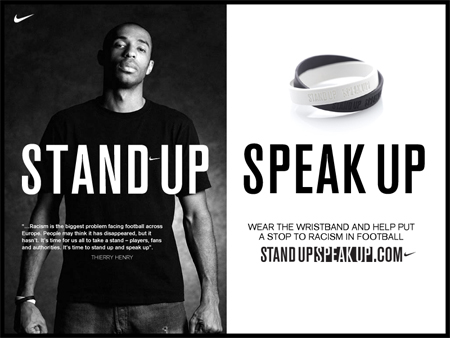
Do the anthem protests need to continue to be effective? Or should we call that Phase 1 and evolve into a next phase with T-shirts or bracelets (see above) that would help people spread the message in their daily lives without incurring backlash, not just from Bill Lynch but from plenty of people who are more reverential toward the anthem than I am?
Related to the last question: Which approach is better, more confrontational or less confrontational?
When Rapinoe says she thinks Bill Lynch is homophobic, does that overshadow whatever she’s trying to say on race?
I’m not pretending to know the answers. Matthew Doyle asked a good question on Twitter about how the gay rights and civil rights movements moved forward. I’m not sure. When I think of the civil rights movement, I think of brave but nonviolent leaders such as Martin Luther King and the Freedom Riders. I have no idea how the gay rights movement has made such strides — 12 years ago, John Kerry was considered ahead of the curve by advocating for “civil unions,” but today, a Twitter follower of mine says that’s homophobic. If you had told me 20 years ago that you’d be seeing Republicans (no, not all, of course) reaching out on gay marriage, I’d have said we’ll be on Mars first.
But I think the questions are a valid part of the discussion. And if you try to score Twitter points by questioning my sincerity in asking … what, exactly, are you contributing to moving the discussion forward?
So I’m going to keep asking. Because electing a person of color in 2008 clearly didn’t solve everything. We’ve got a long, long way to go.
Not another 1,000-word essay, but too complicated for 140 characters on Twitter …
The Spirit game this weekend at Seattle will surely be interesting. But I think all eyes are going to be on Columbus on Thursday, when the USWNT plays Thailand.
I have to distinguish between two sentiments here:
Personally, I would have no issue with Rapinoe or her teammates taking a knee during the anthem. And if I were covering the game, I’d happily ask her afterwards if she feels she’s making any progress getting the country to learn and talk more about race.
Pragmatically, I fear the worst if Rapinoe kneels during the anthem. We have to recognize that some people are offended by protests during the anthem, whether we agree with them or not. To do so while wearing a U.S. uniform raises issues that don’t exist when she’s representing the Seattle Reign. It’s like arguing within a family vs. arguing about your family in front of other people. I know plenty of people in the non-Twitterverse — including many who would otherwise sympathize with everything Megan Rapinoe says — who would have a serious problem with protesting during the anthem while repping the country.
Again (repeating because I feel people really want to focus on the parts with which they disagree, which is actually an extreme example of what I talked about in last night’s post), I have to stress that I personally would not be offended. Though it’s not a First Amendment issue (the Constitution does not guarantee employment), I think the free expression of kneeling outweighs the symbolism of the national anthem. (Which, in my eyes, is not a memorial to fallen veterans, and I think it’s a stretch for Bill Lynch to construe it as such.)
But pragmatically, would kneeling during the anthem at a USWNT game further Rapinoe’s cause of trying to open a discussion of race relations? That discussion has been … well, hijacked. What’s the next step forward? Bow in prayer as Mahmoud Abdul-Rauf did?
I’m open to being convinced that it would work. Maybe she would be like Tommie Smith and John Carlos at the 1968 Olympics — vilified at the time but now seen as taking a heroic stand.
I’m skeptical. But I’m ready to listen.
I know some people would say, “Damn the consequences! Speak and act as you see fit!” But that’s what Bill Lynch did Wednesday, and I don’t think it did any good at all. PR consultants may get a bad rap, but sometimes, we need to listen to them.
I’ve been pleasantly surprised by the Twitter debate over my Guardian piece on the Washington Spirit derailing Megan Rapinoe’s protest last night. Granted, in nearly 30 years of journalism, I’ve resigned myself to a low bar. If I don’t have a high school cross-country coach running into the newsroom to yell at me about something I didn’t even touch or a gaggle of Alex Morgan fans threatening to kill me “twice” or buy my book to slap me with it, it’s a good day.
Low bar notwithstanding, I think people have raised some good questions. I’ve seen some tangential debate on why we play the national anthem before domestic sports events in the first place.
As one Guardian commenter put it: “They don’t do that in Europe or in most other countries around the world. Only when there’s an international game are the country’s national anthems played. In fact at some football clubs like Dortmund, Liverpool and Celtic, they have their own “national anthems” i.e. You’ll Never Walk Alone.”
I read — and now I forget where, perhaps a message board somewhere — an interesting take pointing out that Rapinoe’s decision to kneel for the anthem, like Colin Kaepernick’s decision not to stand, isn’t starting a conversation about race relations. It’s starting a conversation about Megan Rapinoe and Colin Kaepernick. (To add to that point: I don’t even remember why NBA player Mahmoud Abdul-Rauf declined a traditional observance of the anthem. I just remember that he did, and it was controversial.)
When I mentioned that on Twitter, I got a couple of good responses that boiled down to “Whose fault is that?” The media’s? The athlete’s?
Good question.
When Rapinoe first took a knee for the anthem, I was optimistic that the conversation would go beyond Colin Kaepernick — who, frankly, might not be the best person to lead the discussion. The one-time QB sensation has lost his starting job in San Francisco and may come across as bitter for reasons that have nothing to do with the nation’s problems with race. “OK, now someone else is doing it,” I figured. “Now it’s not just about Kaepernick.”
Last night, things changed. And if you hang out in my circles on Twitter, it’s pretty unanimous that the Spirit blew it. If you chat with people I know on Facebook or BigSoccer, including people whose politics would never be described as “conservative,” it’s a different story.
No, I don’t agree with that, as my Guardian piece should make clear. But within the echo chamber of women’s soccer fans on Twitter, I’m still going against the groupthink because I think Rapinoe undermined her own protest by calling Spirit owner Bill Lynch “homophobic.”
I also said it made little sense to use that term on someone who willingly bought a women’s soccer team and made a special effort to bring in players who were “out” well before Rapinoe was. Some people have challenged me on that point, saying the Spirit have been the only club not to go along with other NWSL teams on hosting LGBTQ Pride events or cheering decisions in favor of gay marriage.
One person decided to lighten the mood on Twitter.
But seriously, such litmus tests can be tricky. When the first Gulf War broke out in 1991, basketball teams raced to put American flags on their jerseys. Some refused to wear them because they opposed the war, and they were ostracized. Some opposed the war but wore the flag anyway. And veterans’ opinions were not as one-sided as one might think: Princeton coach and Korean War veteran Pete Carril was outspoken in defense of players who were not wearing the Stars and Stripes. (I can’t find any record of it, but I recall one of the last college teams to give in to the pressure to wear the flags was Duke, coached by West Point alum Mike Krzyzewski.)
Still, for sake of argument, let’s say Lynch isn’t as progressive on gay rights as the WoSo community would like. If I were the Spirit’s PR consultant, I’d be yelling at Lynch every day to follow the crowd on such things.
But is “homophobia” something Rapinoe should bring up?
Upon watching the video (see below), I found a subtle distinction. Rapinoe didn’t bring it up. It was brought up by Think Progress reporter Lindsay Gibbs, who asked about it (around the 11:15 mark).
So if you’d prefer to blame the media for sidetracking the discussion, fine. Blame Gibbs if you like (though it was certainly not her intent, and she couldn’t have foreseen Rapinoe’s blunt answer) for raising a question that wound up overshadowing the rest of the conversation as surely as the Spirit’s ham-fisted decision to reschedule the anthem overshadowed everything else last night. (Not that ESPN would’ve led SportsCenter with Crystal Dunn’s goal under any circumstances, but still …)
Not that Rapinoe had to take the bait. And she didn’t have to say she thinks Bill Lynch is homophobic in such direct terms.
The follow-up question tried to steer things back to race relations. And Rapinoe gamely tries to expound on it. But within a few seconds, she’s talking about being a woman and fighting for equal pay.
Rapinoe readily concedes that she doesn’t have all the answers. That is, as a lot of philosophers have said, the sign of a wise person. And I have to stress here that we’re looking at all of this — Lynch’s decision, Gibbs’ question, Rapinoe’s answer — with the benefit of hindsight. (I wasn’t even there. I had to coach a youth soccer team. Practice was canceled for the same reason the Spirit-Reign game was delayed, but by the time we cleared the field, it was too late to make the epic weeknight drive to the Plex.)
But we have to use this hindsight to ask whether Rapinoe’s protest is effective. As it stands now, it’s not. We’re not talking about race relations. We’re talking about Rapinoe, Lynch, homophobia accusations, overshadowing the Spirit’s big win (which wasn’t THAT big — they were likely to clinch a home playoff berth in the next week or so anyway), etc.
That’s absolutely not entirely Rapinoe’s fault. Nor is it entirely Lynch’s fault.
I wouldn’t even say it’s entirely the media’s fault. The point I tried to raise in the Twitter conversation that prompted this post is that it’s human nature to focus on what’s most controversial. I’ve been tweeting today about the Paralympics. I debuted a new feature finding interesting live sports around the Web. I retweeted the Landon Donovan news.
But guess what people want to talk about.
Like Rapinoe, I don’t have all the answers. I don’t know the next step. Should the entire WNT take a knee during the national anthem of their upcoming friendly? (My gut says that would backfire horribly on the grounds that when Rapinoe kneels as a member of the Reign, she’s making a point internally, but if she does so while wearing the U.S. uniform, she’s showing up her countrymates in front of others. As they said in Animal House, only WE can do that to our pledges.)
Should Rapinoe try harder to steer the conversation to race relations? Should the Reign, who have issued sharp, professional statements in support of Rapinoe without flinging mud at anyone else, establish a partnership with a group working to end racism?
So far, Rapinoe’s actions aren’t working. But that’s no reason to give up.



 Duresport.com