soccer

Simulating a 48-team World Cup (nerd alert!)

With FIFA talking about backing away from the truly dreadful concept of three-team groups at the World Cup, I came up with a couple of alternatives — the four-team group under discussion but with a 24-team knockout round rather than 32, and a double-elimination tournament — for a Soccer America article.

The commenters don’t seem enamored of the double-elimination tournament, but that didn’t stop me from running simulations. Take a look at the Google workbook.

I did two types of brackets:

  1. A straight 48-team double-elimination bracket
  2. Double-elimination groups of 6, with the winners advancing to the quarterfinals

Then I simulated each one using different simulators:

  1. https://www.footysimulator.co.uk/ for the straight bracket
  2. A combination of Elo ratings and random numbers for the 6-team groups

If you’d like to play around with the simulations yourself, just make a copy. You could even simulate a different qualifying process — in my suggested systems, most qualifying is done in 6-team groups from which the group winners advance and are eligible for byes, the runners-up advance, and certain third-place teams advance to fill Africa’s ninth spot (based on FIFA’s new quotas) and an intercontinental playoff.

soccer

Grant Wahl: 1974-2022

The first time I met Grant Wahl was at an MLS playoff game in Kansas City in 2000. He was there because it was near his family in Kansas. I was there because I had a choice of games to cover and chose that one.

As the game meandered back and forth before a small crowd scattered in Arrowhead Stadium, Grant turned to me and said, “Are you sure you chose the right game?”

Grant got soccer. He understood the rhythms of the game and of its supporters. We’re a bantering bunch, sometimes cantankerous. He could disagree without being disagreeable. He had the acerbic wit we journalists strive to maintain, but he never drifted off into cynicism.

I didn’t always agree with his analysis for one simple reason. We’re soccer journalists. We don’t agree with each other 100% of the time.

But I enjoyed his company 100% of the time. The memory that has been in my mind today is of traveling at the 2008 Olympics and wandering around a distant stadium a few hours before game time. I have two memorable photos from that day. First, he and I marveled at a bunch of fish in some sort of feeding frenzy.

Second, he took what is, to this day, my favorite photo of myself.

I’m not showing this picture out of vanity. I think he simply composed it perfectly.

After that game, I had the Big Olympics Travel Misadventure that resulted in me taking a standing-room-only overnight train back to Beijing. He, of course, was nestled nicely in a hotel in Qinhuangdao. That was emblematic of the difference between Sports Illustrated and USA TODAY. He also reminded me of the difference in our publications at a media availability later in the Olympics in which he asked me to give him space to do a one-on-one chat with Hope Solo. He was working on a magazine feature-length piece, and USA TODAY was going to give me a tiny space in which to summarize everything.

I would have been mad if not for two things. First, he was right. USA TODAY was still in its milquetoast days, cranking out brief content for hotel-goers nationwide. Second, he was so damn nice. He had gone out of his way to tell me I was one of the people in soccer journalism who knew what I was talking about, praise that I still cherish.

And though his magazine, boasting a formidable 1-2 combo with him and Brian Straus, was more glamorous than USA TODAY, he and I bonded over our status as soccer writers before the “soccer writer” job existed. We had other responsibilities. He was a great basketball writer, too. We had to push for more soccer coverage, not just so we could focus on the sport we loved but because we felt the sport we loved deserved more love.

This may sound like Grumpy Old Man talk here. But this gets to why yesterday’s news is so shocking. Grant wasn’t old. He wasn’t even 50. I’ve written my share of remembrances — my mother (well after the fact, because she didn’t live long enough to see the internet), my father, my dog, my music teacher, Duke’s jazz ensemble director, Duke’s Wind Symphony director (aged 101), etc. I was in tears when I wrote one for my stepmom because she was too young, and I had just attended a memorial service that reminded me what she meant in my hometown.

The only time I’ve written one for someone younger than I am was the one for USA TODAY’s Dave Teeuwen, and that was mostly one anecdote that hopefully captured his spirit a little bit. Dave’s death was tragic but less of a surprise. He had dealt with cancer for several years and had defied his doctors by continuing to live.

The only time I’ve written one for someone whose passing came from out of the blue was for Dan Borislow, whose complexities I attempted to capture. As I said in the opening, I couldn’t make sense of his sudden death, and I still expected him to text me to gripe about the media.

In Grant’s case, I keep thinking that I should send him a message to express my sympathy. I can’t process that the fact that he can’t answer. When my wife came running up to say, “Grant Wahl died,” I heard what she said but couldn’t understand those three words in that order.

I try to make these things positive and uplifting. This one is difficult. I hope I’ve captured a bit of his spirit. As easygoing as he was, he could also be tenacious, as exemplified best in the last days of his life when he stood up to the discrimination and cruelties of Qatar.

As ridiculous as it is to hold a World Cup in Qatar, he couldn’t miss it. But in a just world, he would’ve seen the next one, and the next one and many more after that.

Instead, in all of these World Cups, we’ll be the ones missing out. We’ll be missing him.

soccer, women's soccer

How a sprawling US Soccer investigation affects USA Curling

Some time ago, in the in-fighting between USA Curling and the GNCC, GNCC officials asked for USA Curling CEO Jeff Plush to be set aside from the proceedings while everyone awaited results of investigations into sexual misconduct allegations involving National Women’s Soccer League coaches during his tenure as that league’s commissioner.

At the time, that suggestion was a bit premature. There was little reason to think Plush did anything other than fail to investigate claims any more than he could at the time, given the lack of resources at an underfunded NWSL office. The US Center for SafeSport was officially launched, by complete coincidence, the month he left the NWSL (March 2017).

Now that a two-year investigation has yielded a 319-page report, is there anything in Plush’s tenure that should cause USA Curling any concern? Or maybe the hiring of CFO Eric Gleason, who is also mentioned a couple of times in this report?

Here are the 39 mentions of Plush in the report, with my annotations in italics …

p. 10: “Certain witnesses—including the former Commissioner of the NWSL, Jeff Plush—never responded to our outreach.”

I had figured Plush might not be willing to speak on advice on counsel. But I think this report would have said whether he had given them such a response. Instead, it says “never responded.”

The first case of note here

PAUL RILEY

p. 15: “The following year, in 2015, Meleana Shim emailed the Portland Thorns’ front office and Jeff Plush, NWSL Commissioner, reporting Riley’s persistent and unwanted advances and his retaliation against her when she asked him to stop. Plush shared Shim’s email with USSF leadership.”

Meleana Shim is also known as Mana Shim, and her accusations in a story in The Athletic were a bombshell that led to former Thorns coach Paul Riley — until then, one of the most respected coaches in youth and pro women’s soccer — being fired as coach of the North Carolina Courage.

These revelations led me to write a piece about whether those of us in the media at the time — primarily cis hetero men — should have known. The tl;dr — I wish players would have felt comfortable telling people like me rather than waiting a few years and speaking, but I fully understand if they were more comfortable speaking with people who weren’t middle-aged cis hetero men.

The Thorns let Riley go but said nothing about the charges at the time. His record with the team was mildly disappointing, so letting him go didn’t raise any eyebrows.

p. 15: “Within a few months of being terminated from the Thorns, in early 2016, Riley was coaching again in the NWSL, this time at the Western New York Flash (“WNY Flash” or “the Flash”). In an email to Gulati, Flynn, and Levine, Plush conveyed his understanding that Gavin Wilkinson (Thorns General Manager) told the Flash that Riley was “put in a bad position by the player,” and that Wilkinson would “hire [Riley] in a heartbeat.” Although Plush, Gulati, Flynn, and Levine all had received Shim’s detailed complaint—and Plush and Levine received the 2015 Thorns Report—none appeared to provide the Flash with additional information.”

The Flash would later move to North Carolina to become the Courage.

This seems to reflect more poorly on Wilkinson than it does on Plush, but it does raise a question of the role of a commissioner in making sure teams are apprised of such things.

p. 30: “Jeff Plush, former Commissioner of the League, and B.J. Snow, former Head Coach of the U-23 National Team and Director of Talent Identification for the National Team, did not respond to our repeated outreach.”

In case you missed it before.

p. 43: “In 2016, NWSL Commissioner Jeff Plush and Levine took initial steps to devise a set of workplace policies, including an anti-harassment policy, and engaged an external firm to provide initial drafts.”

The report goes on to state there’s no evidence this was ever distributed beyond the front office of the NWSL and NWSL Media in 2017. Reminder: Plush left in 2017. Lisa Levine, the longtime NWSL general counsel, left under pressure in 2021.

p. 71-72 (detailing the Shim complaint in September 2015): “Shim forwarded her email complaint to NWSL Commissioner Jeff Plush a few hours after sending. Within minutes of receiving the email, Plush forwarded it to Levine, commenting: “See below. Not good.” An hour later, Plush forwarded the complaint to Gulati and Flynn; the following day, he forwarded it to USSF CFO Eric Gleason. All agreed it was important to monitor the situation. Plush spoke with the Thorns (with Paulson) the evening he received the complaint, and the following morning (with Wilkinson). Plush emailed Paulson: ‘“Let’s stay in close communication going forward.'”

Gulati is longtime USSF president Sunil Gulati. Flynn is longtime USSF CEO Dan Flynn. They’re no longer in those positions. Flynn retired. Gulati left soon after the US men’s failure to qualify for the 2018 World Cup led to a plethora of candidates for the presidential election a few months later. Paulson is Merritt Paulson, owner of the Portland Timbers (MLS) and Thorns (NWSL). His father is former Secretary of the Treasury Hank Paulson.

p. 76: “On September 22, 2015, the day before Riley was terminated from Portland, Sky Blue expressed interest in hiring him. When Paulson informed Wilkinson that Sky Blue had reached out to Mike Golub to ask to interview Riley, Paulson responded: “Good and thanks.” That same day, Plush (NWSL) emailed Dan Flynn (USSF), Sunil Gulati (USSF), and Lisa Levine (USSF) regarding “Coaching Updates,” and noted that the Sky Blue General Manager, Tony Novo, had asked about approaching Riley. Plush noted, “[o]bviously [Riley’s] situation is [] complicated.” Gulati responded, “Let’s make sure we are up to speed on how the Portland situation is being handled/investigated.”

Sky Blue is now NJ/NY Gotham FC. I don’t make these names.

p. 77: “After Riley was terminated, Plush and Levine discussed the need to inform Sky Blue about the reasons for Riley’s termination. Levine’s notes from the call reflect that a player had “alleged sexual harassment against Riley,” as well as the investigation’s conclusion that Riley had “engaged in inappropriate conduct” and “violated [a] directive to maintain professional distance from players.” That day, Levine called Novo, and shared this “confidential” information. According to Levine’s notes, Novo stated that he “think[s] this changes direction for us,” and would not share this information beyond his club’s ownership.”

It’ll be interesting to see how this differs from Western New York’s hiring process.

p. 78: “On February 16, 2016, Plush emailed Gulati (USSF), Flynn (USSF) and Levine (USSF), stating, “Western New York will announce Paul Riley as head coach on Friday. Not good news.” Plush explained that he gave the Thorns President’s phone number to the WNY Flash General Manager (Rich Randall) and that his “guess is that Gavin [Wilkinson] helped Paul with Aaron [sic] Lines.” Gulati responded, “we need to discuss.”

Side note: Aaran (the correct spelling) Lines is the former Flash coach who moved into an executive job. While with the Flash, he coached his wife, Alex Sahlen, who is the daughter of then-Flash owner Joe Sahlen. It was an unusual situation but not THAT unusual — plenty of women’s soccer players married coaches. In this case, I know of no complaints from Flash players about the situation.

p. 78-79 (cont.): “On February 19, 2016, the WNY Flash publicly announced Riley as the newest Head Coach. That same day, Plush followed up with the group of USSF executives to report on his discussion with WNY Flash Vice President Lines. Plush explained that Lines had “spoken in depth” with Thorns General Manager Wilkinson who “specifically brought up the ‘human resource issue.’ Gavin [Wilkinson] told [Lines] that he felt Paul ‘was put in a bad position by the player’ and he ‘would hire him in a heartbeat.’” Plush further wrote that “Aaran [Lines] spoke directly with Paul about the situation and Paul said ‘I shouldn’t have put myself in that situation.’ Aaran specifically told him he can not [sic] allow that the of [sic] situation to happen again. They are very comfortable with the situation at this point.”

Wilkinson was suspended from his duties in the wake of the Riley allegations going public but was reinstated when an investigation by DLA Piper turned up no wrongdoing. We’ll see if he keeps his job now.

p. 79 (cont.) “Besides this conversation between Plush and Lines, it does not appear that anyone from the League or the Federation communicated directly with WNY Flash regarding their hire of Riley. Levine noted that she did not recall any requests to provide the 2015 Thorns Report to the WNY Flash, or any consideration that this might be important. (Indeed, she could not recall if it came up or crossed her mind to share the 2015 Thorns Report outside of USSF or NWSL at any point.) Levine did not believe NWSL Commissioner Plush shared the 2015 Thorns Report externally, which she stated was not the responsibility of the League or USSF. Gulati and Flynn both do not recall speaking with anyone at the WNY Flash regarding Riley.”

I’d like to see a definition of “externally.”

p. 79-80: “No further action was taken regarding Riley’s hire. As Levine recalled, the League’s and USSF’s collective view at that time was that their role in coach hiring was limited. (“Club staff was club staff.”) Dan Flynn (USSF CEO), however, responded to the chain: “didn’t we discuss the need for a league policy and training?” Plush confirmed there was a prior conversation, and later that month Levine began compiling anti-fraternization and anti-nepotism policies from other professional sports leagues for use in the NWSL.”

Here’s where your opinion of Plush’s actions or inactions may vary. Should he have taken a bolder stance at this point? Or, given his general counsel’s laissez-faire attitude and no further action from US Soccer, did he feel he had little power to act?

I’ll say, from my experience covering the league, that I don’t think the commissioner had a ton of power. The league was still under the USSF thumb at this point, and it wasn’t exactly swimming in sponsorship money that would help it build a more robust front office. (It has more money now, and still, the public relations staffs throughout the league aren’t really dynamos.)

p. 82: “Johnson also spoke to NWSL Commissioner Plush early in the process. According to Johnson, Plush (like Flynn) focused on an ongoing issue Riley had with referees that might lead to a “likely” suspension.”

Johnson is North Carolina Courage president Curt Johnson, a veteran soccer executive.

Plush focusing on referees is … certainly bad optics. Maybe he could have addressed that if he had spoken with the investigators.

p. 82: Passing mention of Plush passing along a phone number that shouldn’t be some sort of secret. Both of the people are NWSL team executives.

p. 83: “Malik stated he followed up with Plush to request a copy of the report that allegedly “cleared” Riley. Malik’s best recollection was that Plush either demurred that he would look into it or declined to share the 2015 Thorns Report in light of confidentiality issues.”

p. 83: “Duffy, too, recalled discussions in 2017 with Paulson, Flynn, Gulati, and
Plush about whether to share the 2015 Thorns Report with Malik.”

Duffy is Amanda Duffy, then the NWSL Managing Director of Operations and de facto boss after Plush left. She’s a highly respected veteran of several leagues and clubs.

p. 93: “In her interview with this investigation, Levine stated that she did not understand why these players were reaching out again about events from 2015. Specifically, Levine said that Shim and Farrelly had been given the opportunity then to speak with the Commissioner (then Plush).”

Again, Levine was forced out years later.

Second case …

RORY DAMES

Another coach who, until allegations were made public, was considered one of the best in the business. Players raved about him, as they did about Riley. In November 2021, a sports psychologist said Dames had “created a culture of fear and engaged in emotional and verbal abuse which is psychologically and emotionally harmful to players and staff.”

Some concerns had been raised years before.

p. 117: “A few months later, on February 25, 2015, Bailey forwarded internally at NWSL (to Jeff Plush, Commissioner) her October 2, 2014 email to Whisler.”

Not much context to add here.

p. 118: “On November 13, 2015, Jeff Plush (NWSL Commissioner) emailed Jay Berhalter (USSF CCO), Jill Ellis (National Team Head Coach), and Dan Flynn (USSF CEO) the 2015 NWSL Player Survey results. Plush stated, “The comments section provides the most specific information . . . some is quite disturbing . . . .””

And that’s about it. The other mentions are in a footnote.

So Plush knew about the accusations about Riley and Dames. He made sure other people knew. Should he have done more?

It’d be nice if he would address the question.

soccer

The Timbers/Polo saga—what did we learn?

On June 3, 2021, a woman who wasn’t sure whether to pursue misdemeanor harassment charges against her husband sat in her home with two people pledging to help, along with a good friend who was serving as translator.

In an audio recording of the session, the two visitors come across as kind and compassionate, trying their best to solve her interconnected problems. She’s dependent on her husband financially and otherwise. She needs to get her kids to school. She wants to go to school herself and get a job. All of these things are difficult, and the visitors offer solutions.

Here’s the problem … 

The husband is Andy Polo, then a player for the Portland Timbers. The two visitors are Jim McCausland, a retired Portland police detective now serving as the Timbers’ director of security, and Christine Mascal, a lawyer retained by the Timbers to represent Polo. McCausland and Timbers executive Gabriel Jaimes also raced to Polo’s home May 23 while police were still on the scene gathering evidence, having been called to investigate a report of a man hitting a woman. 

Anyone who has listened to the June 3 recording would agree that the friend and translator is a saint. But she is not a lawyer. And she is not a social worker sitting there on behalf of a government agency.

So the advice Génessis Alarcón received for dealing with this dire predicament came from two people who, well-intended or not, were representing parties Alarcón would later sue — Polo and the Timbers.

The Timbers are free from that suit, thanks to an undisclosed settlement in late March. Polo, not the Timbers, is the primary target for Alarcón and her lawyers in the United States and Peru, where Polo returned after his dismissal from Portland in February. 

The club also won’t face any further punishment from MLS, which turned to Proskauer Rose to investigate the Timbers’ actions. The law firm, which counts MLS as a frequent client, said the team didn’t induce Alarcón to forgo pursuing charges. MLS fined the Timbers a pittance of $25,000 for not realizing they were supposed to report the Polo incident to the league under the MLS Constitution, as improbable as that seems for a club that employs a general counsel as well as an HR staff. 

But this isn’t going away so easily. 

Start with Madison Shanley, who has frequently sung the national anthem before Timbers for more than a decade and for their wildly popular NWSL team, the Portland Thorns, since the women’s league launched in 2013. On April 3, she sang while wearing a T-shirt with the message “YOU KNEW,” directed at the organization over its handling of the Polo incident and of the case of Paul Riley, the former Thorns coach who was allowed to leave the club and sign elsewhere without anyone revealing that he had been accused of abuse and inappropriate behavior. Last fall, two players came forward to accuse Riley of sexual coercion. 

Shanley has since said she won’t sing the anthem again until she’s satisfied the club has made solid institutional changes. At the Timbers’ April 22 home game, supporters made it clear that they support Shanley and not team management. 

The club did indeed release a list of changes, including community initiatives and anonymous reporting lines. Those changes, though, don’t address the circumstances that put the Timbers in such a terrible situation in the first place. 

Nor do we see any reason to believe the Timbers or any MLS club — for that matter, any employer anywhere — learned a lesson about when and when not to intervene when police show up at a player or employee’s home while a spouse or partner is pleading for help. And to understand why, we have to ask a few questions about the Proskauer Rose report, which reads more like a list of excuses than the result of an exhaustive investigation. 

The Proskauer Rose report had no contact information, and a media spokesperson for the firm did not return an email. The Timbers declined to comment beyond what is publicly available.

To be sure, the Timbers did a few things right. The club had been helping Alarcón adjust to life in a new country well before the May 23 incident. When McCausland and Mascal visited June 3, they urged Alarcón to seek more help from the Department of Human Services and/or Catholic Charities.

But the Proskauer Rose report takes these actions as proof that the Timbers didn’t offer a quid pro quo for help. That might be literally true, but anyone looking at the situation from Alarcón’s perspective might have felt underlying pressure to back off. Mascal points out in the June 3 meeting that Polo could face a year in prison. She may not have meant that as an implied threat. But would anyone blame Alarcón for hearing “one year in prison” and thinking that if she pursues charges, she’ll lose her financial lifeline?

That’s one of several head-scratchers in the Proskauer Rose report: 

“Ms. Mascal explained to the investigators that she had not been provided with a copy of the police report from the May 23, 2021 incident, and therefore wanted to talk to Ms. Alarcon to better understand what had happened from Ms. Alarcon’s perspective.”

Reporters have a copy of the police report. Mascal couldn’t get it? 

Also, Proskauer Rose said its investigators spoke with six Timbers employees (including the CEO), Mascal, Polo and Alarcón while also checking out Alarcón’s audio recordings and “text messages, emails, and other relevant documents provided by the Timbers.” The report says nothing about speaking with the police or the DA. 

(Worth noting: Mascal resigned from the board of the Oregon Crime Victims Law Center in 2019 for what was seen as a “victim-blaming” approach to representing sexual abuse defendants. One sample question she asked in court: “You don’t bring up threesomes with someone you just met, or is that who you are?”) 

“Mr. McCausland and Ms. Mascal each provided credible reasons for being present at the [June 3] meeting.”

Fine, but again, what was the “credible reason” for proceeding with no one representing Alarcón but a good friend who was translating?

The Proskauer Rose investigation was limited to (a) whether the Timbers tried to induce Alarcón not to pursue charges and (b) the Timbers’ failure to report the incident, so it didn’t cover the reason for Alarcón’s since-settled complaint against the club. That document shows another thing from which the Timbers and anyone similarly situated simply have to learn a lesson.

Polo didn’t go to jail May 23. He was given a citation and a June 23 court date. Police were satisfied that Alarcón’s friend and the Timbers staff could keep the couple safe. And that meant, Alarcón’s lawyer argued, that the team assumed responsibility for the situation. 

“Mr. Polo was permitted to be released to his household in part because of the safety plan that was promised by the Portland Timbers,” the complaint read. “Ms. Alarcon and law enforcement relied on the promises above made by the Portland Timbers management. The Portland Timbers failed to honor their responsibilities and duties outlined above, and further abuse and incidents and domestic disturbances occurred within the household after May 23, 2021, causing Ms. Alarcon continued pain and discomfort and significant emotional harm.”

In another action with unfortunate optics, MLS, under pressure from the MLS Players Association, paid his contract in full even though he was terminated and set free to return to Universitario de Deportes, his first pro club in Peru. You’d think that would mean Polo has plenty of money to hand over to Alarcón, but even though Universitario originally said he had to sort things out with her before making his debut, reports from Peru say he turned down one deal and hasn’t settled anything

“We have more than a decade of outstanding work in the community and off the pitch of which we are extremely proud,” read a Timbers press release when the investigation report was made public. “However, we are not perfect and will make mistakes occasionally. When that happens, corrections will be made, and we will learn from them.”

Those corrections can only be made if the mistakes are fully understood. From all available evidence, that is not yet the case. 

When it comes to legal liability, the Polo case may be closed. But it’s not going away.

MLS, the Timbers and all soccer clubs need a serious rethink of what they can and can’t do to assist players’ families, particularly when their relationships turn abusive. If they don’t learn from the past, they’ll be condemned to repeat it.

And then we’ll see more supporters groups holding “YOU KNEW” banners.

Cross-posting to beaudure.medium.com

soccer, women's soccer

US Soccer money (and bylaws!), 2022 edition

With the settlement of the WNT lawsuit (pending CBA) and the upcoming AGM, it’s time to CYA and BYOB and too many abbreviations.

Let’s try that again …

The women’s lawsuit is over as long as they can finish up their contract. Also, the Annual General Meeting is coming up, where the big event will be the alliterative presidential election between Cindy Cone and Carlos Cordeiro, but other orders of business include some intriguing proposals.

How to digest this?

First: Read my Guardian story on the lawsuit settlement and why there’s still a lot to do it. I won’t rest easy until the CBA is signed.

Second: Check out the women’s pay resource page, which has a lot of analysis that gives the lawsuit’s history and an analysis of why the suit was doomed. I’ve added a tl;dr high-level summary.

Next: Dig through the updated financial numbers as best you can. They’ve completely changed the way they report the numbers in the AGM book this year, so I just punted on that part, but you can still compare 990s and Audited Financial Statements for the last … many years.

Observations on those numbers:

  • There’s a case to be made that the Cindy Cone/Will Wilson cuts were too drastic. Yes, revenues fell by more than 50%. But so did expenses. Funny how that happens when the national teams aren’t playing.
  • The answer to the “will sponsors pay less in the COVID year?” question is “Yes,” though not as much as you might think. SUM paid $22.2m, down from $30.25m. Nike paid $17.644m, down from $22.65m.
  • Jurgen Klinsmann is, at least, no longer on the federation’s books. But others such as former executive Brian Remedi got severance packages.
  • Former CEO Dan Flynn and former WNT coach Jill Ellis are now listed as “ambassadors” making considerable sums of money. Where’s the embassy?
  • The legal bill in FY 2021 was barely half of the FY 2020 bill. I’m guessing it’s because fewer things were filed. The WNT case had the summary judgment. The NASL case has been on hold like a caller trying to reach the cable company.
  • One massive line item cut in FY 2021: Travel dropped from $34.1m to $5.2m.
  • Aside from that, it’s the wrong year to draw any conclusions.

And some notes from the AGM book

  • The Athletes Council has put forward a bylaw proposal to pay the president $125,000 a year. That has pros and cons, but the primary rationale is that there are only so many people who can do the job for free. Maybe they don’t want to have so many economists running the fed now.
  • A couple of longtime board members/life members are pushing for stricter term limits.
  • The UPSL is applying for recognition as a National Affiliate. As far as I can tell, its peer organizations are not, but they might not be in enough states. The UPSL is now in 38 states.
  • I don’t see non-Para players on the Disability Soccer Committee. It’d be nice to see someone from the MNT or WNT take an interest.
  • Nicole Barnhart is on a couple of financial committees now.
  • Becky Sauerbrunn is on the Rules Committee, which reviews the bylaw and policy proposals and comes up with polite ways of saying “you seriously can’t expect this to be passed.”
  • John O’Brien continues to be the only member of the Sports Medicine committee without “Dr.” in front of his name.
  • Lori Lindsey and Oguchi Onyewu are co-chairs of the Technical Development committee.
soccer, women's soccer

Cordeiro, the states, sexism, the WNT, etc.

First order of business: It is vitally important that you read my story for The Guardian on Carlos Cordeiro’s surprising candidacy for US Soccer president.

Done? OK, let’s move on …

You read a lot about the Cordeiro record in that piece. To wit …

  1. Business relationships turned sour.
  2. He failed to assemble a management team and left a void, which may partially explain how the legal brief that forced him to resign got through. You could make a case that the USSF president, an unpaid volunteer, should be more focused on vision-setting than day-to-day work like reading legal briefs. But Cordeiro didn’t delegate well, according to many of my sources, and even if he wanted to, he didn’t have people in place to help out.
  3. His public statements were tone-deaf. When he was vice president, that wasn’t an issue. But the presidency is a public-facing job. Maybe the federation doesn’t want another outspoken person like Sunil Gulati, but the president has to be able to communicate with the masses.
  4. He didn’t settle any part of the lawsuit with the women’s national team. Cone did.
  5. According to the US Soccer Foundation, he picked an unnecessary fight with them that wound up in court. And he didn’t settle it. Cone did.

So you may still be wondering why state associations are supporting Cordeiro.

First, let’s give credit where it’s due. State associations train coaches and refs. They run player development programs. They run TOPSoccer for players with disabilities. They maintain lists of suspended coaches and players. All of this is important, and it’s only getting more complicated as other organizations come in with competing programs, the vast majority of which are designed for the “elite.” My experiences with Virginia’s youth association have been overwhelmingly positive, as have my conversations over the years with representatives from other states.

So when they complain that their needs aren’t being met, those complaints deserve a hearing. Whether Cone is hearing them is difficult to judge from afar.

But what I can tell you is that some misinformation is affecting some states’ judgment, and I’m a bit confused in some cases about what the states want.

The states

Grant programs: The Innovate to Grow program is relatively new. It started with $467,303 in FY 2018 and grew to $3m annually.

Dave Guthrie from Indiana Soccer says that program was cut. Cindy Cone says it was redirected to COVID relief and is now back in place.

Either way, one thing to consider is that if sponsors bail, programs like this will be more difficult to fund.

General programming: Spending on players, coaches and referees increased under Cordeiro. But this was planned before Cordeiro took office — in fact, he mentioned it during the 2018 campaign.

Development Academy: Guthrie also pointed to the DA as something that was cut with no warning and left states in a lurch. The communication angle of it is worth questioning. Cutting the program — to me, at least — was a no-brainer. It wasn’t working on the girls’ side because the ECNL was already so firmly entrenched, and having a big program for boys without a comparable program for girls … well, that’s not going to fly.

And the DA undercut a lot of other programs and added to a plethora of “national” leagues and tournaments — which, coincidentally, I just wrote about. (Not yet published.)

Voting power: This is a case of misinformation and mistrust, and Alan Rothenberg said he thinks Cordeiro is tapping into resentment over something that was forced by Congress via the US Olympic and Paralympic Committee.

Athletes need to have 33.3% of the vote. Congress still hasn’t updated archaic language referring to national team players as “amateur athletes,” and I have indeed encountered some people who think “amateur” means “over-30 player for the Milwaukee Bavarians” rather than “recently retired women’s national team player” or “Paralympian.” In any other context, yes. In Congress, no.

Let’s run through USOPC bylaws, shall we?

p. 4:

ee) “10 Year Athlete” means an athlete who has represented the United States in a Delegation Event, World Championships, or another event designated by the USOPC (together with the AAC) and the relevant NGB (together with that NGB’s athlete advisory council) as an elite-level event for purposes of this definition, within the previous 10 years; and

ff) “10 Year+ Athlete” means an athlete who has represented the United States in a Delegation Event, World Championships, or another event designated by the USOPC (together with the AAC) and the relevant NGB (together with that NGB’s athlete advisory council) as an elite-level event for purposes of this definition, but not within the previous 10 years.

p. 42

i) Athlete representatives will equal at least 33.3% of all NGB boards of directors, executive Boards, and other governing Boards.

a. At least 20% will be 10 Year Athlete representatives; the remaining will be either 10 Year or 10 Year+ Athlete representatives

p. 2

“Delegation Event” means, individually or collectively as applicable, the Olympic Games, the Olympic Winter Games, the Paralympic Games, the Paralympic Winter Games, the Pan American Games, and the Parapan Am Games;

So there’s no wiggle room to define an “athlete” as you or me (unless you’re a former national teamer, in which case, hi and thanks for reading).

Yes, there’s some squabbling over the remaining 66.7%. For the National Council, the main voting body, the Youth Council, Adult Council and Pro Council were equally whacked, down to 20% each.

Some states would be happy to cut the pros down a bit more. I think that’s a hard case, though you could (and the progressive association in West Virginia did) make a case that the men’s and women’s Division 1 leagues should have an equal share of that vote.

The elephant in the room, frankly, is the Adult Council vote. Barring a Vardy-esque ascension from the UPSL to the national team, no elite-level players will come from this group. Elite players come from the youth ranks, as do the lion’s share of recreational players. Registration revenue from the various youth associations runs roughly five to eight times that of the adult associations.

So why does the Adult Council have an equal vote to the Youth Council? Why don’t state associations have 40% of the vote, allocated to each association (whether youth, adult or combined) according to number of registrants?

But I digress. There are two more quotes from Guthrie I’d like to share:

On whether some issues were more of an issue with the CEO, or lack thereof: “The President of U.S. Soccer sets the vision, the strategy, the plan and the priorities. A lot of members are very frustrated with Cindy because she’s basically ignored us. We don’t seem to be part of her vision. She clearly doesn’t see us as a priority. Just look at how she cut the DA and gutted grants for youth and adults. Even worse, in the debate over the board structure, we were made to feel like we didn’t belong. We deserve a president that includes us, and that’s why we’re backing Carlos.”

On whether sponsors would bail if Cordeiro is elected: “Actually, we should thank Carlos. He was the one who created the Commercial Committee under an independent director, which ultimately recommended that the commercial rights be brought back in-house. That means 2026 will bring huge opportunities for the Federation. We believe that, given his business background, Carlos is the best person to drive our commercial strategy over the coming years. I haven’t heard of a single sponsor getting involved in this election and, frankly, I don’t think it would be appropriate for them to get involved. The decision of who is our president belongs to the voting members. Our Federation is bigger than any one person, and all of us—including Carlos—are focused on one thing: making sure 2026 is a huge success.”

Women’s national team and sexism

Is sexism playing a role here?

It’s difficult to dismiss, especially when states that supported Eric Wynalda and Kyle Martino are suddenly saying USSF needs someone with “business acumen.”

Is resentment toward the WNT playing a role here?

Obviously, no one’s going to say so publicly. Maybe some voters have done the math and are concerned that their programs will suffer more cuts if the federation has to shell out a massive settlement, or they’re concerned that they’re already being cut because the federation has to pay for lawyers to face off against the armada of lawyers the women have assembled.

But this much is clear: The WNT does not hold sway over the rank-and-file of US Soccer. If it did, no one would’ve called Carlos Cordeiro to come back.

The media

Cordeiro has never been at ease with the media. I’ve certainly seen it first-hand. I had to work pretty hard to get comments from him for my story, and I’ve seen complaints elsewhere that he hasn’t talked with other reporters.

That said, I got no response whatsoever from the women’s national team’s players association or a PR rep from an NWSL team. None. We’re talking about people whose job it is to respond to such queries. And this was an opportunity for these people to tee off on Cordeiro. (Or to surprise me and say they suddenly support him.)

Bottom line: People in soccer are getting more and more brazen about choosing sympathetic, unquestioning audiences. It’s one thing to do that when you have deeply personal stories to tell, and you’re more comfortable telling someone who can more directly empathize for reasons of age, gender or any other commonality. It’s another when it’s your job to be held accountable.

Finally, FIFA

Cordeiro touts his relationship with FIFA — he’s FIFA’s senior advisor for global strategy and governance — and how that would help with the World Cup. Rothenberg argues that Cordeiro is essentially FIFA president Gianni Infantino’s right-hand man, and that’s more of a conflict of interest than an asset.

Cone says her priority is wrapping up the selection of host cities, which she expects in the second quarter this year, and then working with those host cities on the goals of growing the game. FIFA is taking a more active role in overall organization of World Cups than it used to, regardless of the host.

us soccer, women's soccer

No, the WNT didn’t lose in court because the MNT lost in Couva

The court ruling that decimated the U.S. women’s soccer team’s lawsuit had a peculiar irony that didn’t escape the sharp eyes of many who read the case: The women’s earned more than the men, not just over the course of five years but per game, because the men failed to qualify for the World Cup and therefore missed out on a ton of bonus money. And that fact was Point No. 1 in the decision.

Image by Mdesigns from Pixabay

Yes, that could be another verse for Alanis Morissette to consider.

No, it didn’t cost the WNT the case. It just saved Judge R. Gary Klausner a bit of time. “The Court need not address the remaining elements of Plaintiffs’ prima facie case,” Klausner wrote, surely with a sigh of relief that he didn’t have to delve into anything more complex than that.

Both sides presented plenty of hypotheticals; e.g., whether the MNT would make more under the WNT deal or vice versa. This period of time just gave the judge a scenario that he couldn’t dismiss as implausible — because it actually happened.

In any case, a lot of analyses are overlooking the more damning part of Klausner’s ruling. The women willingly traded higher bonuses for greater stability. They can’t turn around and complain that they would have been paid more under a deal they didn’t actually want.

That fact also saved Klausner some time. He didn’t have to walk through the four-part test of the WNT’s legal burden that Elon professor Andrew Haile, a former Davidson soccer player, spelled out in an Oregon Law Review piece. Klausner only really addressed No. 2: Rate of Pay.

The judge didn’t deal with No. 1: The “Same Establishment,” on which U.S. Soccer had a legitimate argument that the MNT and WNT “effectively operate in different markets,” as Haile said. Nor did he address No. 3: “Equal Work,” on which Haile was more bullish on the WNT winning. The USSF had plenty of sound arguments on No. 4: Pay differences for reasons “Other Than Sex” — including revenue generation.

Here’s where we find another irony, one that acts as a bit of a counterweight to the first one. Yes, the men’s failure to qualify for the World Cup suppressed their pay. But it also suppressed the team’s revenue, which had been running well ahead of the WNT’s in the years before this all started in 2016. (The exception was a World Cup year, but that difference hardly made up the differences in 2011-15.)

So if the case had gone to court back when the EEOC complaint that became this lawsuit was filed in 2016, before the men’s disastrous World Cup qualifying campaign, U.S. Soccer would have had that much stronger of an argument that the disparity is due to reasons “other than sex”: Just look at the revenue.

That’s not necessarily fair. U.S. Soccer is a nonprofit charged with growing the game in the United States. That’s why it pays for things like Paralympic soccer and development programs that are guaranteed to lose money. They should be supporting women’s soccer even if they lose money. (In the strictest sense, they do, but the women’s team certainly helps bring in the sponsorship and marketing money that is by far the biggest revenue-driver in the USSF budget.)

Which brings us back to the point you’ve seen from so many knowledgeable people in women’s soccer such as Andrew Das, Kelsey Trainor and Julie Foudy: Any more progress the women make will be made at the negotiating table that they’ve avoided for a while. (It’s certainly possible that U.S. Soccer made that table unpleasant at times.)

So the suit may have served a purpose beyond any settlement the WNT may get on the remaining points on support for the team aside from paychecks. That’s the conclusion of Caitlin Murray, who literally wrote the book on the WNT and points out that the suit sparked a strong wave of public attention and pressure that has forced U.S. Soccer to address a few issues already.

Unless the women appeal, which would be an appalling decision akin to when MLS players — also represented by Jeff Kessler — dragged out their case two unnecessary years, everyone has a chance to avoid embarrassing situations.

The WNT can avoid having their case picked apart in court. They can avoid having Meghan Klingenberg, Kelley O’Hara and union chief Becca Roux called by the Federation, which found items in their depositions that they believe favored their side.

The Federation can avoid the optics of cross-examining beloved celebrities. Even if they’re not asking the insulting questions about skill and physical abilities that prompted USSF President Carlos Cordeiro’s resignation and an abrupt reshuffling of their legal team, USSF lawyers surely would love to avoid questioning Alex Morgan (pending pregnancy) and Megan Rapinoe while journalists who don’t know the details of the case sit with poised skewers.

And the Federation finally has the opportunity to wriggle out of a situation it created by accident — an MNT contract with World Cup bonuses they’ll never need to pay the men and can’t afford to pay the women.

The MNT won’t like hearing this, but World Cup bonus money is the whole reason the Federation is in this mess. When U.S. Soccer agreed to a deal that would pay the MNT north of $25 million if they won the Cup, a significant but not overwhelming chunk of FIFAs $38 million prize money, they didn’t anticipate that the women would see the same money, which would have given the Federation a loss of more than $20 million on FIFA’s laughable $4 million prize money for the Women’s World Cup.

In Australia and Norway, the federations have reached “equal pay” deals because women accepted equal percentages of prize money, not equal payouts. The USWNT certainly wouldn’t have accepted that calculation in their request for back pay. U.S. Soccer probably would have.

FIFA has pledged to double the prize money for the 2023 Women’s World Cup. But unless they double that figure and then double it again, we’ll still have a large disparity in the winnings available for the MNT and the WNT.

Everything outside the World Cup bonuses can and should be as equal as possible. U.S. Soccer might not accept the argument that the SheBelieves Cup would be as important as the Gold Cup or Copa America if only they asked FIFA to recognize it as such, but the details aren’t impossible to work out.

Seriously — the women made that argument about the SheBelieves Cup. If you want another bit of irony, just bear in mind that U.S. Soccer created that competition for the sole purpose of boosting the women’s game.

And that’ll give us one last opportunity to look at the women’s court filings and see the contortions their lawyers made. These are from the Plaintiffs’ Statement of Additional Genuine Disputes in Support of Their Motion for Partial Summary Judgment:

Disputed that the “results of friendly matches, such as those in the SheBelieves Cup or Tournament of Nations, are not as heavily weighted in FIFA’s team rankings as those in non-friendly competitions such as the Gold Cup, Copa America, or the FIFA Confederations Cup.” This purported “fact” is only Mr. Gulati’s opinion.

Sunil Gulati would need very little time to produce the documents backing up this “opinion.” Actually, the women also get more heavily weighted rankings from continental competitions than they do from the SheBelieves Cup.

Disputed that “in the world of international soccer there is more prestige involved in winning an official continental championship, such as the Gold Cup or Copa America, than winning a friendly tournament such as the SheBelieves Cup or Tournament of Nations. This additional prestige results from factors such as the number of participants in the tournaments, the fact that the continental championships are continental championships in the first place (and not friendly matches), the fact that they include knockout rounds and a final match, and the comparative age of the tournaments.” This purported “fact” is only Mr. Gulati’s opinion.

Good luck disputing that in court.

USSF has acknowledged that it has not attempted to register the SheBelieves Cup and the Tournament of Nations, tournaments it hosts, with FIFA, and that FIFA’s recognition may not be needed.

What does that even mean?

How much money did both sides have to pay their lawyers to come up and refute such ridiculous points? Billable hours aren’t cheap.

The women might not get as much back pay as they wanted. But we can turn to the future and figure out how to solve this.

Let’s go back to Julie Foudy again for her solution: Pool everything together and split it …

The arguments against:

  1. If the MNT made a decent World Cup run, they’d end up making less money than they would under their own deal.
  2. Each team, likely within each union, would need to figure out how to split their money.

The arguments for:

  1. Figuring out how to split that money within each team may be a good thing. In the WNT, we’d have to hope they do more to get money to more people in the talent pool. As it stands now, the difference between being the 23rd player and being the 27th player in the pool can be the difference between a solid six-figure payout and the need to find a side hustle.
  2. One Nation, One Team. While the MNT union has mastered the art of being performatively woke in its statements backing the WNT, even though a $66m payout to the WNT — especially given the COVID-19 budget cuts — would effectively kill any hope they have of getting a raise in the new deal to replace the one that expired 16 months ago, there’s a rift between some MNT fans and WNT fans. Shockingly, bashing the MNT apparently didn’t sit well with a lot of supporters. Split the pot equally, and then every MNT success helps the WNT and vice versa.
  3. No more lawsuits. Equal pay. Surely no more strike threats either. As revenue increases, player pay would increase as well.

So if you’re looking for a way to inspire the next generation of women’s players, make a deal that ensures labor peace and equal pay (however they can define it) now and down the road. And try to leave a bit of money to develop the younger players who’ll form the generation after that.

us soccer, women's soccer

U.S. women’s soccer case: Witness list

If the U.S. women’s team lawsuit proceeds to trial, it’ll take a while. The parties have just released their witness list, and it’s a nice 25 pages. (That means I spent $2.50 at PACER, so please buy one of my books as compensation. You can now read the details for free at RECAP.)

Here we go …

PLAINTIFFS

Plaintiffs reserve the right to call more. USSF is seeking to exclude Cook and Goldberg.

Asterisks are witnesses on both plaintiffs’ and USSF list. Time estimates are combined (in other words, when USSF says 1.25 hours, that should be total).

  • *Alex Morgan (live – time expected: 1.25 hours plantiffs, 1.25 USSF) — but due to pregnancy, Christen Press may be called in her place. If Press is called, USSF expects only 0.75 hours.
  • Megan Rapinoe (live – 1.25/1.25)
  • Carli Lloyd (live – 1.25/1.25)
  • Becky Sauerbrunn (live – 2.5/1.25)
  • Finnie Cook, economics expert witness (live – 3/2)
  • Caren Goldberg, human resources expert witness (live – 3/2)
  • Roger Noll, economics expert witness called for rebuttal to USSF experts Carlyn Irwin and Justin McCrary (live – 2/1.5)
  • “USSF through designees Jay Berhalter, Sunil Gulati and Tom King” (by deposition video — 5 hours plaintiffs, 3 hours USSF)
  • *Sunil Gulati (live or deposition video – 3/4)
  • Jay Berhalter (live or deposition video – 1/1.5)
  • Carlos Cordeiro (live or deposition video – 2/1.5)
  • *Tom King (USSF managing director of administration, live or deposition video – 3/4.5)
  • Pinky Raina (USSF’s relatively new chief financial officer, live or deposition video – 1/2)
  • Jill Ellis (live or deposition video – 1/1.5)
  • *Rich Nichols (Hope Solo’s lawyer, but more relevant to this case is his role as former WNTPA executive director, by deposition video – 0.75/2)
  • *John Langel (WNTPA executive director before Nichols, by deposition video – 1.25/2.5)
  • “The Coca-Cola Company through designee John Seiler” (by deposition video – 1/0.25)
  • “Visa U.S.A. through designee Ashley Fisher” (by deposition video – 0.75/0.25)

USSF

USSF reserves the right to add more. Plaintiffs are seeking to exclude Moses, Marsteller, Hopfinger and Levine.

Asterisks are different here — these are witnesses USSF will call “only if need arises.” Is USSF that confident?

  • *Kay Bradley (USSF brand director, live – 1.5 USSF/1 plaintiffs)
  • *Jill Ellis (see above)
  • Sunil Gulati (see above)
  • Amy Hopfinger (USSF director of events, live – 1.5/1)
  • Carlyn Irwin (forensic accounting expert, live – 3.0/1)
  • Tom King (see above)
  • Meghan Klingenberg (video deposition – 0.75/0.5)
  • John Langel (see above)
  • *Lisa Levine (former USSF general counsel, not the one involved with recent controversies, live – 1.5/1)
  • Paul Marstellar (USSF director of event revenue, live – 1.5/1)
  • Justin McCrary (economics expert witness, live – 3/2)
  • Philip Miscimarra (labor economics expert witness, live – 2/1)
  • Alex Morgan (see above)
  • Ross Moses (USSF director of analytics and research, live – 1.25/1)
  • Rich Nichols (see above)
  • Kelley O’Hara (deposition designation – 1.25/0.5)
  • Christen Press (see above – note that USSF doesn’t distinguish that she would be called only if Morgan can’t testify. “Her testimony includes her own admissions,” USSF says.)
  • Pinky Raina (see above)
  • Rebecca Roux (WNTPA executive director, live or video deposition – 1/1)
  • *Russ Sauer (retired lawyer who represented USSF in CBA talks – 1.5/1)

So a few thoughts:

Klingenberg, O’Hara and Roux – seems interesting that USSF is calling them and plaintiffs are not.

Coca-Cola and VISA – relevant because plaintiffs, in motion to exclude evidence of Soccer United Marketing revenue, make the case that these sponsors inquired about sponsoring only the WNT but were told SUM bundles MNT, WNT and everything else.

women's soccer

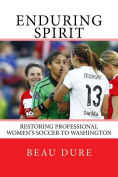
Revisiting ‘Enduring Spirit’

Enduring Spirit failed.

Not just because not many people read it and I lost money on it. I had another book, Single-Digit Soccer, that didn’t sell a lot, but I didn’t incur any real expenses — the cover photo was my kid’s untied shoe with the laces draped over a ball — and I had reasonable expectations. I also have reasonable expectations for my new mini-book, How the Hell Did I End Up Cageside?, which is just a fun look at how I ended up watching people kick, punch and choke each other.

For Enduring Spirit, I paid twice for the cover photo — once for the ebook, once for print. I also paid out of pocket for editing, and I racked up a lot of travel expenses. At least all of that was deductible.

But that’s not the main reason I call it a failure. Nor is the fact that, in the process of writing the book, I made a few enemies. More on that in a bit.

No, Enduring Spirit failed because I didn’t do what I set out to do.

The minimum salary in the first season of the NWSL was $6,000. (Granted, that’s infinity percent of my net proceeds on the book.) I figured I could get players to talk about the challenges of living on what was basically a stipend while they played professional soccer. For whatever reason, I never got much of a handle on that.

The players never seemed to mind my presence, but neither were they eager to share the tribulations they were willing to endure to chase their dreams. I was surprised at times how little interest they had in the fact that someone was writing a book about them. If I’d written about a men’s team, I think a lot of players would’ve been eager to chat me up, get a sense of what I was writing and give me good material for the book. (The only person who did that while I was writing this was Mark Parsons.)

So it didn’t deliver what I was hoping for, and it apparently didn’t deliver what many fans were hoping for. Readers raised complaints about a lack of insight / investigative skewering right away, to the point that I felt compelled to do a blog post in response. Some just wanted a bit more behind-the-scenes insight. Some wanted the pages to run red with the blood of owner Bill Lynch, general manager Chris Hummer and original coach Mike Jorden. The team only won three games, two of them near the end of the season after Jorden was replaced. But players weren’t confiding in me about some horrible secret I couldn’t see, and I doubt there’s anything scandalous beyond simply not doing that well.

In re-reading the book today, I realized one reason I might not have had more to tell. I was there for a practice just before the season opener, and players were a bit more candid during the session than in the midweek training. Lori Lindsey exploded at one point. Ashlyn Harris took issue with the height of the wall they were setting for free kicks — Diana Matheson (not tall) was giggling a little.

For the rest of the season, though, the Spirit laid down one rule: I was not to come to the final practice before a game. Who knows what else I missed?

The Spirit certainly whiffed a bit on free agents and discovery players. Aside from Chapman and eventually Toni Pressley, a good player upon whom the Spirit placed too many expectations, they had too many players who were young, local and overwhelmed. Aside from that, though, I didn’t have any dirt that people were seeking.

The front office’s personnel mistakes were compounded by some bad luck. Candace Chapman was a great defender who couldn’t get healthy, and she had plenty of company among the walking injured. The draft picks seemed pretty good with the available info at the time — if you’d told women’s soccer talent scouts that no one out of the trio of Tiffany McCarty, Caroline Miller and Stephanie Ochs would develop into a potent NWSL attacker, they would’ve scoffed.

But players loved the SoccerPlex, especially the majestic carpet of grass on which they played their games. I didn’t hear complaints about living arrangements. Putting Diana Matheson, Robyn Gayle and eventually Conny Pohlers in a retirement home was certainly unusual, but even a year later, Matheson seemed to have enjoyed it.

I did have one controversy to report, and unfortunately for a lot of fans, it wasn’t about the supposed evil overlords. It was the movement to have Ali Krieger’s father, Ken, to come out and “help” coach the team while Jorden was there. (Must be said, though, that Jorden missed some time with a back injury, so another coach wouldn’t have been a terrible idea — especially given German Peri’s frequent absences for reasons I still don’t understand.) As far as local coaches go, Ken Krieger had as good a resume as anyone — certainly a ton more experience than Parsons, who wound up taking over the team at an age when some people are still living in their parents’ basement but turned out to be such a good coach that the big-spending Thorns lured him away.

Which leads to one thing I hadn’t anticipated: The fan base was changing.

Sure, some fans have stuck around since Hamm, Foudy, Chastain and company introduced a lot of the country not just to women’s soccer but to soccer in general. But there’s also a new generation with different expectations. They’re more demanding. They’re not inclined to heed the counsel of people who experienced the Dark Ages. They’re more cynical. Whatever you write about Ashlyn Harris and Ali Krieger — good, bad or completely neutral — is going to make you a few best friends and a few sworn enemies.

Social media also has dramatically changed things. Amanda Vandervort’s effort to get WPS players on Twitter (Kati Jo Spisak!) has been superseded by players sharing much more of their lives on Instagram — and a lot of fans turning into voyeurs.

You can’t say these fans are worse than previous generations. They’re more devoted. That’s why the boom of 2019 looks stronger than the boom of 1999. Their passion may lead to a lack of perspective and some over-the-top vitriol, but that passion is going to make NWSL pretty strong whenever we can all venture out of our houses again. They’re not really looking for the amusing or mildly colorful anecdotes that I gathered over the course of the Spirit’s season.

And I think that’s fair. Some of the criticism was ridiculous. (“Fan fiction”? Really? What part of this was fiction?) But I really didn’t get much below the surface, scandalous or otherwise, and it’s frankly not my best writing. The game reports that I posted on my blog throughout the season were more entertaining and easier to read.

On Twitter and on my blog, I was accused of being too much of a Spirit apologist at times, and that’s understandable. Seeing a team train can skew someone’s perception of how good it is, and yes, some of the free agents and discovery players were expected to be much better than they were. But I still maintain that if any of the young attackers had panned out and Alina Garciamendez had some to Washington instead of Germany, the season would’ve been considerably better.

And yes — there was always at least one bad call per game involving Tori Huster. Ask anyone else who covered the team that year.

I’m more aggravated that more recent work of mine has been dismissed by large segments of the fan base and even fellow reporters — not just the bevy of younger reporters (some of them quite good) who’ve come from non-traditional backgrounds but also some people in the “mainstream” media. I’ve spent eons digging into financial documents, augmented with a couple of decades of experience and conversations with knowledgeable people, and I can tell you there are some dangers in the women’s team’s (and men’s team’s) pay demands. Someone has to stick up for future generations — it’s ironic that it’s the resident old guy in a women’s soccer community.

But I digress …

So is anything in Enduring Spirit worth reading? I think so …

  • Heather Cooke’s story, from The Real World to the Philippines
  • The aforementioned training session before the opening game
  • Chantel Jones on playing professionally in Iceland
  • Teresa “Lupita” Worbis adjusting to the U.S. at her first practice (and scoring both in practice and a game in front of her parents)
  • Players who turned up on trial
  • Mike Jorden’s insightful use of the word “lollygagging”
  • Several glimpses of the training methods of well-regarded goalkeeper coach Lloyd Yaxley (who, I just discovered, is now also coaching a high school team)
  • The mysterious Ingrid Wells waiver and pickup, which I still don’t understand to this day
  • The water balloon fight (some people found it frivolous, but I thought it was a good way to unwind after training)
  • Several takes on a couple of personnel changes
  • One of my favorite quotes, from Yaxley after being kept awake by some basketball players at the team hotel: “Why would anyone invent a sport so noisy?”
  • A look at the ridiculous postgame routine teams had to go through at Sky Blue

The other thing I noticed on re-reading: I had forgotten how long it took the team to turn around after the coaching change. Everyone loved Parsons from the get-go, and injuries didn’t help, but some of those games were as one-sided as you’ll see in an American professional league. The next year, when Parsons was able to make some personnel changes, the Spirit got a lot better.

And I found one reason why the book seems worse than it is. The last week or so just drags. I understand why I emphasized it so much — the team was finally winning, and it was my last chance to gather material — but that could’ve used some editing.

I’ve slashed the price to $2.99. Judge for yourself while you’re stuck at home.