soccer

Alex Morgan and the Bedbugs That Ate the NWSL

As with many other Internet shoutfests, it all started with an innocuous tweet:

Can’t blame Sinclair for venting there. Bedbugs are every traveler’s nightmare. The big hype about bedbug resurgence came about a couple of years ago, and I’m still putting my bags up on hard surfaces to minimize the risk of anything hitching a ride back to my place. (I draw the line at the “pry the headboard off the wall, put your bags in the bathtub and wrap anything that you own in several layers of Saran Wrap” survivalism that was en vogue for a while.)

So we have one incident in which a hotel — one with a fairly notable brand name — had bedbugs. This won’t escalate into any sort of —

Uh oh.

Morgan’s since-deleted tweet says “There’s no other way to address continuing problems.”

If you go around and ask NWSL people, you’ll get the response, “What continuing problems? This was a one-time thing. It’s been handled.”

And bedbugs are, frankly, luck of the draw.

For the record, I was wrong about MLS. Alexi Lalas has clarified.

Morgan also mentioned mold, which should actually raise larger long-term concerns about this hotel because (A) it can make you sick and (B) given proper maintenance, it simply should not appear.

None of these nuances, of course, made it into the Twitter response.

https://twitter.com/alassadee13/status/633423425457946624

But some on Twitter at least shifted blame from the NWSL:

https://twitter.com/et_home13/status/633731045456609280

And there were these clever ones:

https://twitter.com/nathan_scott35/status/633714466232864769

And there’s this angle:

https://twitter.com/THEADMIRAL6/status/633425957311766528

The mainstream media, on the other hand, pretty much took the ball and ran:

(From that story: “The bed bug fiasco is just one example of the inequalities between male and female professional soccer players. As a simple point of comparison, the all-male New York City Football Club announced its partnership with the four-star Grand Hyatt back in March. No bed bugs have been found there…yet.” Yeah, that’s a fair comparison.)

https://twitter.com/STERLINGMHOLMES/status/633685515330392064

Well that’s fair and balanced.

Let’s be real clear ourselves here — no one is saying anyone should take a vow of silence over a bedbug encounter. And no one is saying we don’t wish women’s soccer players had it better. If it were up to me, women’s soccer players would live in Dan Borislow’s condos but have a professional training staff at all times. Best of both worlds.

But let’s also acknowledge this — professional women’s soccer is fragile. If you think living conditions and wages for the Ella Masars and Chantel Joneses of the world are grim, consider what Lori Lindsey, Sarah Huffman and Becky Sauerbrunn did when they played amateur ball. We can’t change this just by yelling at people.

You can certainly blame the media. They’ve added the “s” to “bedbug-ridden hotel” without making the slightest effort to clarify what Morgan was talking about with “continuing problems.”

And no one even asked the NWSL. It took me all of 12 minutes to get this response:

“During a recent road trip, a Portland Thorns FC player reported finding bed bugs in her hotel room at the team hotel in Kansas City. The hotel apologized, quickly provided a new room, and insisted the problem had been corrected. Upon learning of the situation, the League immediately spoke with both clubs, and FC Kansas City had already addressed the issue. For the remainder of the season, rooms have already been secured at another hotel. Player safety and comfort is important to all teams of the NWSL, and we are always seeking ways to improve our club and League operations. We regret this situation and apologize to the player involved.”

In any case, the damage has been done. The NWSL is now the league with the bedbugs. And if you care about conditions for players, you might also wonder if this was the best way to go about business for a league that still needs sponsors and a real TV deal to turn the corner.

Little wonder Morgan deleted the tweet. She knows the power of her words with her 2 million Twitter followers. If she didn’t before, she surely knows now. Because as much as we question the national team players’ dedication to the NWSL, they don’t want it to disappear. Right?

So maybe the next time something good happens in the NWSL, she might consider mentioning it?

soccer

“Rock ‘n’ Roll Soccer” vs. NASL revisionism

Want a better U.S. soccer league? Try global dysfunction.

Yes, that’s a cynical clickbait headline. But it’s empirically true.

In Ian Plenderleith’s rollicking Rock ‘n’ Roll Soccer: The Short Life and Fast Times of the North American Soccer League, we learn a few reasons why international players were drawn to the USA in the late 70s and early 80s.

  1. Pay, of course. At the time, wages were limited in Europe, and the NASL could outbid most top-tier clubs, let alone the lower divisions.
  2. Mood of the country. “There is little doubt that in the 1970s the United States was a more glamourous and opulent place to live than Great Britain, with its endless strikes, shutdowns, power cuts and three-day weeks,” Plenderleith writes. In Northern Ireland, of course, things were much worse, with fear of terrorism and police brutality rampant. And if you wanted to leave England or Germany, where else were you going to go? The Soviet Union?
  3. Playing conditions. Yes, the NASL played on thin artificial turf in a lot of cities. In England, where groundskeeping had not yet advanced to today’s state, they played in cold mud. The sun and the stable surfaces were great NASL recruiting tools.
  4. Dour playing styles. The NASL’s heyday coincided with the final decade of the 2-1-0 points system, giving teams that much more incentive to “get a result.” Two draws equaled one win, and a lot of teams were content to get that. The NASL, Plenderleith says, gave players a fresh new slate. (And weird rules with bonus points for goals, etc.)

So if you want to re-create the old NASL’s drawing power to bring today’s Franz Beckenbauers and Rodney Marshes to the USA, you can’t just spend a little more money. The USA today isn’t a considerably better place to live than many places in Western Europe. The big leagues of Europe have immaculate grounds, stable countries, diverse play, and money, money, money.

And even in the glory days, it wasn’t as if the old NASL brought European stars to the USA at any younger of an age than MLS brings them today. Pele was already retired and in his mid-30s, with more than 700 competitive games on his resume, by the time he joined the New York Cosmos. Beckenbauer and Marsh were in their early 30s. George Best also was in his early 30s but had punished his body with hard living, playing his last pre-NASL season with Cork Celtic and second-tier Fulham. Thierry Henry, Kaka and David Beckham were also on the good side of 35 before crossing the pond.

The “retirement league” label, which seems more than fair to apply to the NASL in Plenderleith’s telling, is one of several reasons why it’s so strange to see fans of the latter-day NASL pushing for more traditional / authentic club cultures and league systems. A lot of players talk openly about their relief to find a place with a little less pressure than Munich or Manchester.

And the NASL was as far removed from soccer traditions as any league that has actually taken the field. (That rules out League One America.) They had the shootout, the 35-yard offside rule, six points for a win, bonus points for goals scored, additional points for wearing fringe, etc. (OK, not the last one, unfortunately for the Colorado Caribous.)

Moving into the present day … how in the world has NASL 2.0 become the beacon of traditional soccer with promotion/relegation and the works? Or to be more precise, could the pro/rel crowd have chosen a less likely brand on which to make its stand?

NASL teams didn’t bother with the Open Cup. (And yes, there was a second division — the ASL — which had a few teams that might have been able to claim some NASL scalps in a Cup.) They tinkered with every rule. Pro/rel? Ha!

So hitching your “the way the rest of the world does it” wagon to the NASL brand is a bit like taking the most artificial, Autotuned pop star on today’s radio and declaring him/her the standard-bearer of modern punk rock. (Somewhere, someone is trying to write the article declaring T-Pain and Ke$ha the modern answer to the Clash and the Sex Pistols. I’d love to read that just to see contortions involved.)

But Plenderleith’s look back is a fond one. Some of the rule changes won over the players who had battled in the top European leagues, and though they’re not in common use today, they were an important part of the global discussion on opening up the game. We’re used to 3 points for a win and restrictions on passing back to the keeper, two of the soundest ideas that emerged from this bundle of ideas.

And the NASL did indeed bring together some quality players onto diverse teams. That was revolutionary. At the time, English clubs were English and Scottish, with the occasional Irish or Welsh player tossed in. German clubs were German, with the faintest smattering of players from outside.

That’s yet another reason why a modern-day Cosmos can never be quite the same as the old. When the English clubs are picking from England and you’re picking from the rest of the world, you might have a chance of compiling a team that can compete with the best from England. Now that the clubs in the Premier League, La Liga and the Bundesliga can simply buy the world’s best talent, the gap is much larger. The novelty factor of a cosmopolitan club is dead in the post-Bosman age.

If you’re expecting a lot of rock ‘n’ roll in Rock ‘n’ Roll Soccer, you’ll be disappointed. Plenderleith dismisses the fun Cosmos documentary Once in a Lifetime, and this is not a collection of stories of Pele, Chinaglia and Mick Jagger at Studio 54.

Instead, you get an entertaining but level-headed look back at a league that broke a lot of rules and a lot of barriers. It’s fun to remember it for what it was rather than what it wasn’t. And it’s safe to say there will never again be a league quite like it.

The book is available for pre-order at Amazon, or if you can’t wait, get the UK edition from a third party at Amazon.

soccer

The NASL, NPSL, and why there’s no pleasing pro/rel advocates

If you read all my tweets and replies on Twitter, you may have noticed that I’ve eased up a bit on ignoring the crowd that pushes for promotion and relegation in U.S. soccer. It’s intentional. I think we’re starting to see some ideas that go beyond shouting anti-MLS slogans. And given the scarcity of MLS content I’m writing these days, it’s almost like tripping down Memory Lane, like going back to a high school reunion and chatting amiably with the guy who was a total jerk and bully the whole time.

Wait a minute. Scratch that. That guy still doesn’t get it. Hope he gags on the hors d’oeuvres.

And that’s kind of how it is in the pro/rel world. Today’s conversation was a perfect demonstration.

Start with this intriguing story:

https://twitter.com/Rborba23/status/631482183895674882

So the NPSL, the mostly amateur league that shares unofficial fourth division status with the PDL and recently drew more than 18,000 fans for its final in Chattanooga, would work something out with the NASL, which has long (well, at least in Bill Peterson’s tenure) made noises about wanting promotion/relegation in U.S. soccer.

Easier said than done, of course. The NPSL uses mostly young amateur players, many of them in college. So most of their teams are bound by NCAA restrictions on how they can assemble their teams, maintaining amateur status, and wrapping up the season early so kids can dash back to their college teams for preseason. Then you add U.S. Soccer’s onerous second-division standards (one owner has to have $20 million, which has always struck me as absurd), and you can see a few hurdles.

But if you really want to see promotion/relegation make the transition from “hot-button Internet cult shoutfest issue” to “something that might actually happen,” you’d think this would be good news. And so, consistent with what I’ve said earlier about the best path to pro/rel being a strong NASL forcing a merger, I said the following:

I even went back and dug up my own pro/rel plan:

And so we all joined hands, sang a few songs of praise, and talked about the details of what a future U.S. pro landscape might look like.

Oh, wait. No, we didn’t.

One hint of the problem was a tweet that came in just as I was writing mine:

And indeed, the man who has devoted the last 6-8 years of his life tweeting about pro/rel fantasies was not happy with a proposal to actually talk about actually doing it.

(That said, the NASL tossed cold water on this idea itself:)

But to be fair, he has long insisted that leagues shouldn’t go it alone, and that the federation should drive it. I don’t see why, personally, but he is indeed consistent.

And so is the vitriol I received from elsewhere:

When I have my midlife crisis and form a Husker Du cover band, I might call it “Antiquated Zealotry.”

https://twitter.com/American_red13/status/631487748260646912

(And yes, I made a typo. At this point, I was tweeting about as quickly as I could type. That’s not good.)

https://twitter.com/TheSoccerDcn/status/631488195440607237

So he’s not reading what I’m tweeting, he surely didn’t notice that the last substantial piece I wrote about MLS was ripping the league for its stance in collective bargaining, and yet he feels he can sum up my opinions. OK.

Yeah, he clearly skipped my proposal on Brazilian-style state leagues. And my tweet on the NASL/NPSL thing.

I get all this flack from the pro/rel crowd for a few reasons. First, I’ve pointed out a few inconvenient truths on the matter:

1. Soccer was an ignored and often despised sport in this country through much of the 20th century, giving the rest of the world a bit of a head start. Read Offside: Soccer and American Exceptionalism or the definitive U.S. soccer history Soccer in a Football World for the full story. 

2. The people willing to take the risk to do professional soccer at a strong but sustainable level had to appeal to investors by minimizing risk (I wrote a book that mentions all this, a bit), hence the “single entity” system and cost containment.

3. More investors have bought into MLS with the implicit understanding that they are buying into the USA’s first-division league.

4. Many investors have bought into lower-division leagues with the implicit understanding that they’re aren’t going to jump up to a Division I or Division II budget if they win too many games.

5. Promotion/relegation would be cool, but it’s not necessary. Barcelona isn’t Barcelona because they fear relegation. They fear losing the championship to Real Madrid. As they should. Real Madrid is the club of the old corrupt monarchy. But that’s another rant.

And so on — see all the previous posts.

Second, I have actually engaged with a lot of these people and continue to do so even as most journalists — you might say the saner, more intelligent journalists — have cut off contact.

(I once had someone tell me I should take it as a compliment that these folks go after me instead of Big Name Journalist X because they find me a lot smarter and better than Big Name Journalist X. I’m really not. I just have bad compulsive behavior, as illustrated here:)

But let’s get back to today’s conversation, summing up as follows:

Me: “Hey, neat promotion/relegation idea.”

Them: “Shut up, you MLSbot antiquated zealot turnip walnut.”

The underlying lesson from this conversation:

There is no pleasing the promotion/relegation zealots.

You might say it’s just me, and no matter how many schemes I put forward, no matter how many times I say I really could see the NASL building up with a pyramid that forces a merger with MLS down the road, they won’t listen.

But no. It’s not just me.

These are the people who have to be different. They have to feel superior. They’re the ones who saw R.E.M. have hit songs and make real videos and smirked, “They’ve sold out.” They’re the ones who only like the U.K. version of The Office — not that they’ve ever seen any of the U.S. episodes past Season 1.

Their greatest fear is that someone will do exactly what they want. Because then they’d have to find another cause.

Like Jason Street when he was paralyzed or Tim Riggins when he finished school, they would lose their identity.

And that identity is more important to them than the cause itself.

They know we aren’t likely to see MLS integrated into a promotion/relegation system for all the reason I’ve listed above and more. So they’re safe.

And that’s why, even as we see occasional glimmers of reason in the national pro/rel discussion, we’re a long, long way from any of this being taken seriously.

soccer

NWSL, Spirit-Flash report: We want more of this &*&&%ing league

Tonight’s Washington Spirit-Western New York Flash game was infuriating, frustrating, bizarre, comical and downright baffling. And I’m pissed off.

I’m pissed off because … the season is almost over. And I want more of this.

I don’t want to see a bunch of national team players who’ve already had a ticker-tape parade and endorsement deals strutting around on a dadgum “Victory Tour” playing meaningless exhibitions. Not now, anyway.

I don’t want to see sycophantic pseudo-journalists and radio hosts booking these players for interviews in which every question is some variant of “So how did it feel when you got that medal?”

I want to see Crystal Dunn racing toward the goal, stopped only by the skill, speed and impeccable timing of Whitney Engen.

I want to see Chantel Jones atoning for a howler by flinging herself across the goal and to the upper corner to swat away Dunn’s best shot of the night.

I want to see Franny Ordega turning a defender one way, then another, then another.

I want to see Christine Nairn blasting 35-yard shots that either go in or rattle the crossbar.

Farther afield, I want to see Christen Press challenging Becky Sauerbrunn. I want to see Alyssa Naeher single-handedly keeping the Boston Breakers from utter catastrophe.

I want to see stuff like this:

And I want to see players develop. I want to see Nairn shake the habit she showed tonight of getting caught in possession. I want to see Kealia Ohai pushing herself to make that extra move to create chances. I want to see Julie Johnston trying to organize a back line to contain Dunn, Ordega and Diana Matheson.

Last and not least, I want to see referees develop. I want to see Kari Seitz and Margaret Domka come back from the accolades of a World Cup or Olympic assignment and be humbled by botching a domestic game. (I can only hope their assessors are honest with them.) I want to see PRO called to account for refs who think grabbing an opponent’s shoulder and shoving her down is a legal shoulder charge.

There’s some debate over a play late in tonight’s game in which Ali Krieger tried to take a quick restart, only to find Michelle Heyman standing in her way. Krieger kicked, and the ball wound up on a Spirit arm. The call: handball on the Spirit. I thought it was an atrocious call, figuring Heyman deserved yellow for delaying the restart. At the time, I based this solely on that old standby of referee critics: “What I recall seeing in other games.” Others have told me Krieger was supposed to ask ref to give her the 10 yards.

I think I’m right, based on this passage from the U.S. Soccer Advice to Referees:

Typical examples of causing a delay in this way are kicking the ball away when a decision has gone against them, picking up the ball and not giving the ball to the attacking team or to the referee, moving to retrieve a ball some distance away and then walking slowly to bring the ball back, and standing so close by the ball as to effectively interfere with all reasonably likely directions for the restart. These ploys must be met with an immediate response because, as a result, a delay is no longer theoretical; it has been forced and the challenge to Law 13 must be dealt with swiftly.

Heyman was practically on top of the ball, so I think the part in bold applies.

But the part that had Mark Parsons engaging in a lengthy postgame rant was just basic control of the match. It wasn’t even so much this match as it was his team’s last two or three, where he says referees have just let obvious fouls go. This match, he says, wasn’t proper soccer and was difficult to watch. Parsons went out of his way to say the ref didn’t decide the outcome of the game. Just its quality.

Refs, like players, aren’t going to get better prancing around the country like the Harlem Globetrotters. They’re going to get better when they’re on the field for a domestic league game that matters.

A game that makes fans stand up and applaud when a Nigerian player leaves the field after a terrific effort. A game that makes fans in the USA’s capital embrace a Canadian. A game that rattles coaches’ senses so strongly that Flash coach Aaran Lines thinks he had a perfect view of the goal line when he’s 70 yards away on a bench. (And thinks his team had momentum at the end of the game.)

Bottom line: This NWSL season is ending far too quickly. Players need more. Refs need more. Fans need more.

So next year, my advice would be to take a break for the Olympics. Play a few friendlies — give the non-international players a couple of games to stay sharp and the fans a nice discounted night out. But then play longer into the fall.

That might cut down on players spending their offseasons elsewhere, but maybe that’s not a bad thing. Tori Huster has been going back and forth between the NWSL and Australia, and now she’s banged up and not starting.

Regardless of how long the season goes, it deserves more attention. You want development? It’s here. You want drama? It’s here.

And I’ll give the reminder I always give the posers who’d rather sit around eating meat pies in their basements watching soccer on TV instead of going out to see the supposedly lesser games live … nothing beats live soccer.

TV isn’t going to do Crystal Dunn’s slicing offensive moves any justice. YouTube certainly won’t. You have to be there.

Not just once every couple of years, when the national team decides to come to your town to walk through a game, graciously accept your applause and then sign about 8,000 autographs. Several times a year, whenever you can make it to the stadium. (Weeknight driving to the SoccerPlex is not fun.)

You’ll see drama. You’ll see development.

The Spirit only have one more home game left this season.

And that pisses me off. Not that I think they deserve a home playoff game — based on their current results, they don’t. I just want to see more.

soccer

Single-Digit Soccer: Book available for pre-order

Single-Digit SoccerIf you can’t wait to read Single-Digit Soccer, here’s good news: You … only have to wait a couple more weeks. But you can be ready to read it the second it’s available if you pre-order now.

The electronic version will be available August 27. I’m hoping to have the print version ready the same day, but I can’t promise that just yet.

If you check today, you may find the book is listed at 27 or 32 pages. It’ll be longer than that — somewhere in the high 100s. That page measurement was taken from a place-holding sample.

I’ll link to each outlet as the pre-ordering availability comes online. Here goes:

1. Amazon (the print edition will also be here at some point)

2. Barnes and Noble (new, August 7)

3. Apple/iTunes

4. Kobo (they’ve actually pulled a small sample from the rough draft)

5. Scribd (not yet as of August 7)

6. PageFoundry (not yet as of August 7)

7. Oyster (not yet as of August 7)

I’ll update this list as I see new links.

This book, like coaching youth soccer, has been difficult but rewarding. I’m so grateful to everyone who has helped out. Here’s a partial list:

People I interviewed (the last four indirectly): Sam Snow (U.S. Youth Soccer), Christian Lavers (U.S. Club Soccer), Rick Wolff, Robin Fraser, Julie Foudy, Tiffany Weimer, Garth Lagerwey, Alexi Lalas, Kofi Sarkodie, Andrew Driver, Mike Chabala and Bobby Boswell.

People who helped me gather interviews: Monique Bowman (NSCAA), Lester Gretsch (Houston Dynamo).

People who’ve kicked around ideas with me: Kate Markgraf, Brandi Chastain, Joanna Lohman, Charles Boehm, Jon Townsend, and tons of anonymous people at BigSoccer.

Editors who’ve put up with my self-indulgent soccer writing: Boehm, Chris Hummer, Deb Barrington, Steve Berkowitz and Gary Kicinski.

Editor who is making this book much cleaner and coherent: Laurel Robinson.

People at my club: Mike Allen, Pete Wacht, Jane Dawber, Eddie Lima, Mike Gurdak, Ryan Phair, Andrew Ritter, Lee Chichester, Jason Steiner, Damon Lee, Michele Sullivan, Chris Hegedus, Rob Lancaster and Mike Lyons.

My workplace: Mary and the crew at Starbucks at Vienna Marketplace.

Every player and parent on my teams, especially my two sons and my remarkably patient wife.

soccer

Big heart makes women’s soccer special

Yes, women’s soccer can be frustrating. Two U.S. leagues have disappeared in the past 12 years, and the third is redefining “low profile.” Fans (and sometimes players) argue on social media about the strangest stuff. (This 18-month-old Alex Morgan dis was favorited tonight.) The U.S. national team sometimes looks like it was selected five years ago — the tactics sometimes look as if they were drawn up 15 years ago.

Let’s forget all that for a minute and back up.


One bias I’ve always had is for the players who fought their way through the Dark Ages of the mid-2000s. Kevin Parker wrote about the ones who passed through Washington, and Jen Cooper covered it in her Mixxed Zone podcast about “the 99ers and the 90 percent.” The “90 percent” refers to the players who aren’t national team stars but make a pro league competitive, providing challenges that the national team players need to stay sharp. And without them, you don’t have local teams that give fans a chance to see these players in person more than once every couple of years.

Some players don’t have a sense of that shared struggle. Some do. Tonight at the SoccerPlex, they did.

Start with the autographs. I don’t really “get” autographs, to be honest, and I’ve seen a few fans who are a little too demanding, insulting players who aren’t the big stars. But you have to be impressed when players sign for as many fans as possible, trying to make that connection. Tonight, Carli Lloyd from the visiting Dash signed a lot. So did Meghan Klingenberg. So did Spirit stars like Ashlyn Harris and, I think, Ali Krieger.

Lloyd even signed one of the cockroach banners the Spirit Squadron held up in reference to … something I missed on Twitter. I didn’t quite get it, but Lloyd did.

Then there’s this:

Typo in Jen’s tweet — she has ALS, sometimes called Lou Gehrig’s disease.

Lloyd did indeed make time to go over to see her. So did Krieger.

But this fan got much more. As Spirit players left the field one by one, they went over to her. She wound up with as many eight players at a time all chatting with her. She may not have full control over her body any more, but she had a huge smile.

The Spirit players got her up out of her chair for a picture. Then Crystal Dunn, all five-foot-nothing of her, carefully placed her back in the chair before everyone started smiling and laughing again. If laughter’s the best medicine, then this woman is going to pull a Stephen Hawking and live with ALS for decades to come.

In case you forgot, Dunn also did this tonight …

And she scored twice more in the 3-1 win, including a header off a corner kick. Again, she is not tall.

Back to the postgame — I’m in awe of athletes and other celebrities who meet ailing people. Imagine what it’s like to be presented with a person who has been told he or she might live much longer. Now you’re responsible for creating a magical moment. No pressure.

When you see the way these players interact with fans, you see how special they are in ways beyond their skills. It’s almost unfair that these people who have been blessed with talent and determination also have the social graces and kind hearts to make others feel special as well.

And you can see it in how they interact with each other. Houston defender Niki Cross played her final game tonight, and in deference to the time she spent with the Spirit, she was honored with a pregame bouquet courtesy of Ashlyn Harris, who has been close with Cross since they were teammates in the early days of WPS. Fans chanted her name when she came onto the field as a second-half sub.

So women’s soccer is in that sweet spot right now — popular enough to have sought-after stars but still maintaining a sense that we’re all in this together.

You may not guess it from Twitter, but I’m an optimist. I think women’s soccer can maintain this spirit even as the sport matures and the mainstream media picks up the tactical and technical debates the hard-core fans and bloggers are doing now.

The players can handle it. They want to be pros. They deserve to be pros. They deserve the attention not just of the autograph hounds or the pundits who turn up out of the woodwork every four years, but the everyday sports fan.

So I left the SoccerPlex feeling pretty good about the sport. Both teams played dynamic, attacking soccer. They didn’t take advantage of the referee’s lack of attention. It was a great show with a wonderful display of heart.

Tomorrow, we’ll get back to the criticism and debate. It’s all meant to be constructive. We all care. We all see something special in this sport, and tonight reminded us why.


soccer

‘Crossing the Line’: Are small-town soccer and courts this corrupt?

A judge thinks a high school girl bit another high school girl in a soccer game. When you read Jonathan Coleman’s Crossing the Line: How One Incident in a Girls’ Soccer Match Rippled Across Small-Town America, you’ll doubt such a thing ever happened.

You’ll also doubt school administrators and the people who hire them.

You’ll also doubt whether small towns have sufficient checks and balances to keep one person from being able to run roughshod over others to settle a selfish vendetta.

It’s so stark in its portrayal of evil that you have to wonder if there’s another side to the story. At all.

What does Greg Domecq have to say in response to the accusations that he went several stages beyond the “bad sports parent” stereotype (along with other misdeeds) and turned a high school soccer rivalry into a series of games in which the kids were playing for some sort of vindication of his family’s athletic superiority? And what does he say in response to the idea that he went even farther, concocting a tale of a rival player biting his daughter and intimidating her boyfriend into lying to cover it up?

And what does Judge Rick Moore have to say after rendering a guilty verdict even though no witnesses saw it happen and 10 witnesses, including game officials, testified that they noticed nothing amiss during the game? (This part of the story is well-substantiated beyond the confines of Coleman’s book, and one story goes on to add that the judge misapplied the law by finding her guilty even though he thinks the alleged bite may have accidental.)

The case was due to be appealed, but Domecq asked the prosecutor not to continue. He says harassment and misbehavior between the two schools has ceased, and it’s time to forgive. The defense lawyer has a different take, pointing out that she had witnesses from Domecq’s school ready to testify in the appeal. Domecq’s seemingly magnanimous gesture may be just a way to maintain power in this incident, which forced the girl he accused to change colleges and hide out from the community for months, without allowing her to win her day in court. (Also covered in the news.)

Surely there’s another side to this story. Right? Or has Coleman found a stunning miscarriage of justice that the media should trumpet to the heavens so that Domecq can finally be called to account for the damage he inflicted on others?

Domecq, Moore and anyone else with an interest in this case are welcome to post here to try to restore my faith that Albemarle County has some underpinnings of decency.

olympic sports

Please don’t come to Boston; or, don’t give up on the Games

Contrary to popular belief, a city or country can be a financially responsible host for a major sports event.

While we fret about the cost of the Olympics, Toronto just hosted the Pan American Games, which has more sports and more events than the Summer Olympics, and early reports suggest the city is still standing. Maybe even ready to bid for the Olympics.

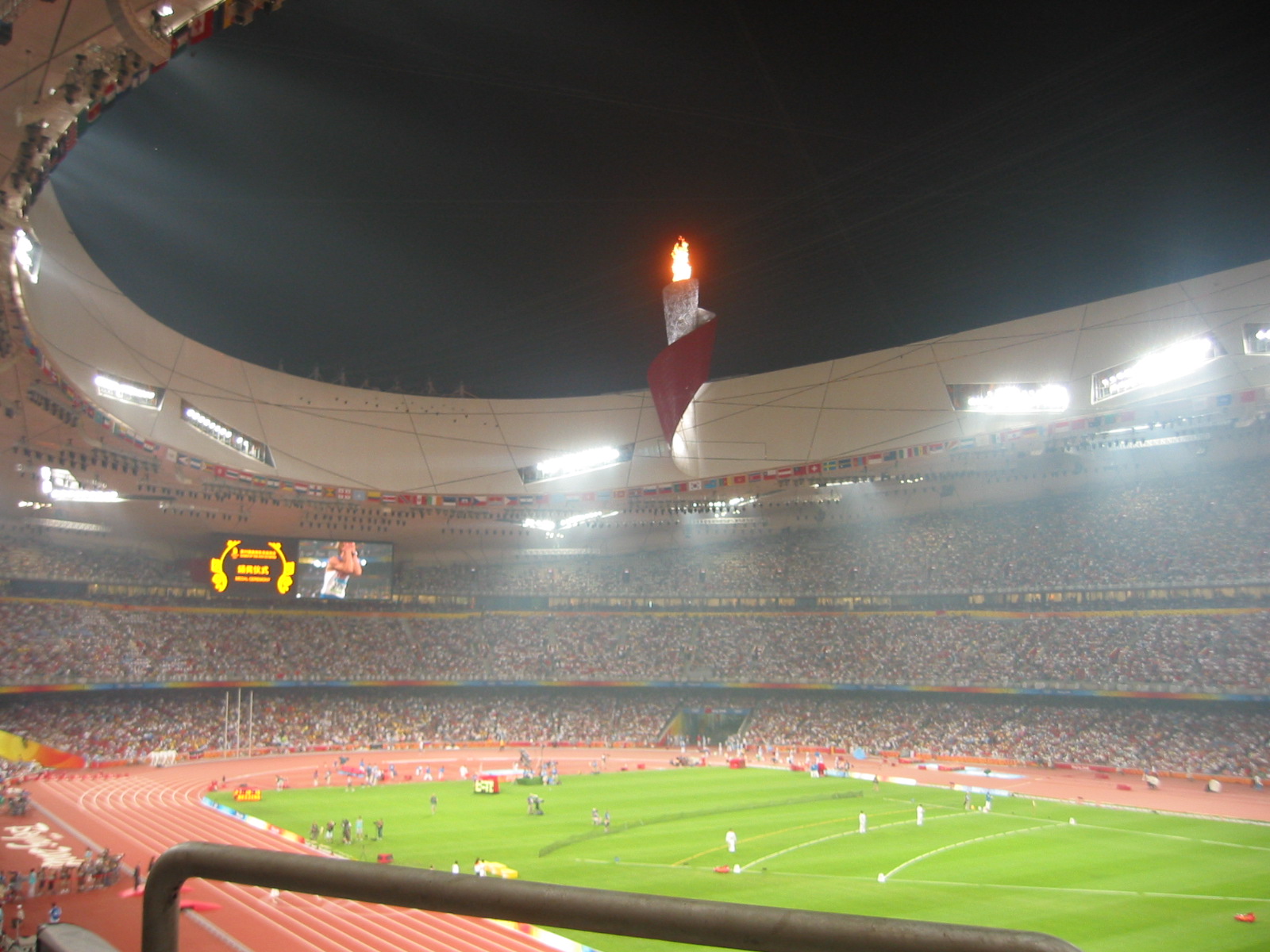
Yes, we know. The Sochi Olympics were a giant boondoggle, though not the $50 billion sinkhole that’s commonly reported. We know Beijing’s Bird’s Nest stadium (a twisted photo of which is in the SportsMyriad header) has no regular tenant, though it’s a fun place to visit and will soon host the track and field World Championships.

The Olympics can be badly planned. That’s the consensus on the 2004 Games in Athens, though some argue otherwise.

They can also be planned well, and venues can become thriving spots for, say, London tourists.

oly-entry

After the 2022 bidding debacle, in which the IOC’s overbearing insistence on regal treatment drove away every place that has viable snow and a world-class sliding track, everyone’s back in for 2024. Back to Paris? Rome?

It won’t be Boston, for which the blame game is in full swing. Christine Brennan says heads should roll at the USOC. Alan Abrahamson contrasts the lack of political will in Boston with the strong support in …

Los Angeles! They did it before, albeit in a different era and without the Soviet bloc.

Want a good litmus test for hosting? Here’s one from Toronto Star columnist Bruce Arthur: “An Olympics is only worth it if it leaves your city better off than it found it, for a reasonable enough price.”

And it occurs to me that Los Angeles needs another soccer stadium, anyway …

olympic sports

Around the world

Olympic sports don’t get the coverage they deserve, especially in the USA. Even at the Olympics themselves, too many good stories go unreported. I’ve expended a lot of effort trying to rectify the situation, within the context of a major news organization and outside of one, but one person can only do so much.

At SportsMyriad, I’ve done medal projections for the 2012 and 2014 Olympics, and I rounded up some volunteers to do event-by-event coverage of the Sochi Olympics.

IMG_3558 I’ve also found good feature stories. In 2008, I wondered how a tiny country like Iceland could be making such a big run in handball. I went out to explore and found a lively bunch of players with unusual quotes. I went back out to see then again in the semifinals and wound up meeting the president and first lady of Iceland. (Sadly, I was unable to cover the final, which they lost.)

I didn’t travel to the 2012 or 2014 Olympics, and 2016 looks unlikely. But I’d like to get back to it one of these years and do another whirlwind tour, finding and reporting good stories everywhere.

In the meantime, I’ll continue to do projections, and I’ll keep an eye out for good stories.