soccer

The Timbers/Polo saga—what did we learn?

On June 3, 2021, a woman who wasn’t sure whether to pursue misdemeanor harassment charges against her husband sat in her home with two people pledging to help, along with a good friend who was serving as translator.

In an audio recording of the session, the two visitors come across as kind and compassionate, trying their best to solve her interconnected problems. She’s dependent on her husband financially and otherwise. She needs to get her kids to school. She wants to go to school herself and get a job. All of these things are difficult, and the visitors offer solutions.

Here’s the problem … 

The husband is Andy Polo, then a player for the Portland Timbers. The two visitors are Jim McCausland, a retired Portland police detective now serving as the Timbers’ director of security, and Christine Mascal, a lawyer retained by the Timbers to represent Polo. McCausland and Timbers executive Gabriel Jaimes also raced to Polo’s home May 23 while police were still on the scene gathering evidence, having been called to investigate a report of a man hitting a woman. 

Anyone who has listened to the June 3 recording would agree that the friend and translator is a saint. But she is not a lawyer. And she is not a social worker sitting there on behalf of a government agency.

So the advice Génessis Alarcón received for dealing with this dire predicament came from two people who, well-intended or not, were representing parties Alarcón would later sue — Polo and the Timbers.

The Timbers are free from that suit, thanks to an undisclosed settlement in late March. Polo, not the Timbers, is the primary target for Alarcón and her lawyers in the United States and Peru, where Polo returned after his dismissal from Portland in February. 

The club also won’t face any further punishment from MLS, which turned to Proskauer Rose to investigate the Timbers’ actions. The law firm, which counts MLS as a frequent client, said the team didn’t induce Alarcón to forgo pursuing charges. MLS fined the Timbers a pittance of $25,000 for not realizing they were supposed to report the Polo incident to the league under the MLS Constitution, as improbable as that seems for a club that employs a general counsel as well as an HR staff. 

But this isn’t going away so easily. 

Start with Madison Shanley, who has frequently sung the national anthem before Timbers for more than a decade and for their wildly popular NWSL team, the Portland Thorns, since the women’s league launched in 2013. On April 3, she sang while wearing a T-shirt with the message “YOU KNEW,” directed at the organization over its handling of the Polo incident and of the case of Paul Riley, the former Thorns coach who was allowed to leave the club and sign elsewhere without anyone revealing that he had been accused of abuse and inappropriate behavior. Last fall, two players came forward to accuse Riley of sexual coercion. 

Shanley has since said she won’t sing the anthem again until she’s satisfied the club has made solid institutional changes. At the Timbers’ April 22 home game, supporters made it clear that they support Shanley and not team management. 

The club did indeed release a list of changes, including community initiatives and anonymous reporting lines. Those changes, though, don’t address the circumstances that put the Timbers in such a terrible situation in the first place. 

Nor do we see any reason to believe the Timbers or any MLS club — for that matter, any employer anywhere — learned a lesson about when and when not to intervene when police show up at a player or employee’s home while a spouse or partner is pleading for help. And to understand why, we have to ask a few questions about the Proskauer Rose report, which reads more like a list of excuses than the result of an exhaustive investigation. 

The Proskauer Rose report had no contact information, and a media spokesperson for the firm did not return an email. The Timbers declined to comment beyond what is publicly available.

To be sure, the Timbers did a few things right. The club had been helping Alarcón adjust to life in a new country well before the May 23 incident. When McCausland and Mascal visited June 3, they urged Alarcón to seek more help from the Department of Human Services and/or Catholic Charities.

But the Proskauer Rose report takes these actions as proof that the Timbers didn’t offer a quid pro quo for help. That might be literally true, but anyone looking at the situation from Alarcón’s perspective might have felt underlying pressure to back off. Mascal points out in the June 3 meeting that Polo could face a year in prison. She may not have meant that as an implied threat. But would anyone blame Alarcón for hearing “one year in prison” and thinking that if she pursues charges, she’ll lose her financial lifeline?

That’s one of several head-scratchers in the Proskauer Rose report: 

“Ms. Mascal explained to the investigators that she had not been provided with a copy of the police report from the May 23, 2021 incident, and therefore wanted to talk to Ms. Alarcon to better understand what had happened from Ms. Alarcon’s perspective.”

Reporters have a copy of the police report. Mascal couldn’t get it? 

Also, Proskauer Rose said its investigators spoke with six Timbers employees (including the CEO), Mascal, Polo and Alarcón while also checking out Alarcón’s audio recordings and “text messages, emails, and other relevant documents provided by the Timbers.” The report says nothing about speaking with the police or the DA. 

(Worth noting: Mascal resigned from the board of the Oregon Crime Victims Law Center in 2019 for what was seen as a “victim-blaming” approach to representing sexual abuse defendants. One sample question she asked in court: “You don’t bring up threesomes with someone you just met, or is that who you are?”) 

“Mr. McCausland and Ms. Mascal each provided credible reasons for being present at the [June 3] meeting.”

Fine, but again, what was the “credible reason” for proceeding with no one representing Alarcón but a good friend who was translating?

The Proskauer Rose investigation was limited to (a) whether the Timbers tried to induce Alarcón not to pursue charges and (b) the Timbers’ failure to report the incident, so it didn’t cover the reason for Alarcón’s since-settled complaint against the club. That document shows another thing from which the Timbers and anyone similarly situated simply have to learn a lesson.

Polo didn’t go to jail May 23. He was given a citation and a June 23 court date. Police were satisfied that Alarcón’s friend and the Timbers staff could keep the couple safe. And that meant, Alarcón’s lawyer argued, that the team assumed responsibility for the situation. 

“Mr. Polo was permitted to be released to his household in part because of the safety plan that was promised by the Portland Timbers,” the complaint read. “Ms. Alarcon and law enforcement relied on the promises above made by the Portland Timbers management. The Portland Timbers failed to honor their responsibilities and duties outlined above, and further abuse and incidents and domestic disturbances occurred within the household after May 23, 2021, causing Ms. Alarcon continued pain and discomfort and significant emotional harm.”

In another action with unfortunate optics, MLS, under pressure from the MLS Players Association, paid his contract in full even though he was terminated and set free to return to Universitario de Deportes, his first pro club in Peru. You’d think that would mean Polo has plenty of money to hand over to Alarcón, but even though Universitario originally said he had to sort things out with her before making his debut, reports from Peru say he turned down one deal and hasn’t settled anything

“We have more than a decade of outstanding work in the community and off the pitch of which we are extremely proud,” read a Timbers press release when the investigation report was made public. “However, we are not perfect and will make mistakes occasionally. When that happens, corrections will be made, and we will learn from them.”

Those corrections can only be made if the mistakes are fully understood. From all available evidence, that is not yet the case. 

When it comes to legal liability, the Polo case may be closed. But it’s not going away.

MLS, the Timbers and all soccer clubs need a serious rethink of what they can and can’t do to assist players’ families, particularly when their relationships turn abusive. If they don’t learn from the past, they’ll be condemned to repeat it.

And then we’ll see more supporters groups holding “YOU KNEW” banners.

Cross-posting to beaudure.medium.com
Uncategorized

Appeals court lets travesty stand, leaving soccer trainer in prison

Photo by Melody Ayres-Griffiths on Unsplash

Maybe their hands were tied. Maybe they couldn’t hold the overzealous prosecutors, prodded by influential snowplow parents (snowplows are indeed useful in upstate New York), responsible for soccer trainer Shelby Garigen’s plea deal.

In any case, the Second Circuit Court of Appeals snuck a decision past me in late January, deciding they didn’t need to take a real look at the shenanigans that landed Garigen in jail because she was planning to have sex with someone of legal age in New York but made the mistake of getting him to send nude pics to her.

Here’s the decision:

A few points:

Specific assertions the appellate judges addressed

The judges first say these points don’t fall “within the ‘very circumscribed’ exceptions to the validity of an appellate waiver,” so they’re already setting a high bar to clear.

Point 1: Because the meetup (which proved to be a setup to arrest Garigen) and the sentencing took place after the person in question turned 18, Garigen’s appellate lawyer argues that the person in question should’ve been the one speaking, if he so chose, at Garigen’s sentencing. Instead, his parents spoke. Rephrased in the appellate ruling: “(Garigen asserts that) the parents of a victim (“Victim 1”) made false and biased statements against Garigen and should not have been allowed to speak at her sentencing.” The father’s theme continued when he offered his apparent expert opinion on appellant’s psychiatric diagnosis.” Garigen’s lawyer: “First, Victim 1’s father is not a psychiatrist.”

The appellate court says the lower court was within its rights to hear the parents of the “victim” (again, a legally consenting young man who wanted to have sex with an older woman) as long as Garigen was able to respond at the sentencing. They do NOT address, as far as I can see, the question of whether the father of the “victim” should have been allowed to offer expert opinions on Garigen’s mental health. Nor do they address the topic of whether a more competent lawyer would have offered a more robust response.

Re-phrased by the appellate court as “(Garigen asserts that) Victim 1’s father had improper control over the prosecution of Garigen’s case.” The father is a former prosecutor who has worked on cases of sex crimes. (The mother works for the Erie County DA’s office.) Garigen’s appeals lawyer: “The father advised the court that he ‘helped the U.S. Attorney’s Office prosecute this case.’”

The appellate judges say the record doesn’t support Garigen’s claims. They do not support their assertion.

Garigen’s lawyer further argues that the father’s words imply that he had read the Presentence Report, and that document is supposed to be read only by the court and respective counsel.

The appellate judges wave this accusation away, not convincingly, taking a statement out of context from the 28th paragraph of Garigen’s appeal.

What the appellate judges didn’t address

Given their insistence that there’s nothing to review here because Garigen should’ve known the risks of accepting her plea deal, it’s not surprising the appellate judges didn’t address the fact that the parents of the “victim” presented several arguments that are, in fact, hogwash.

From what I’ve written before: The parents claim their son has fallen out with a friend who was also 17 when he sent pictures to Garigen, and they say that’s Garigen’s fault. Garigen’s lawyer retorts: “(The mother) fails to note the real possibility that her 17-year-old son may have withdrawn from friends and family because the FBI became involved by interviewing both him and his friend, Victim 2. Notably, Victim 2 declined to provide a Victim Impact Statement and requested no further law enforcement contact.”

And: The parents, in the characterization of Garigen’s lawyer, focused on Garigen “luring” their son — again, a consenting adult — to have sex. They don’t harp on the fact that the only charge she faces, “child pornography,” is the direct result of their son sending her dirty pictures.

Again, perhaps those aren’t questions for the appellate court to address.

I find it hard to believe, though, that this argument should be ignored:

Garigen’s lawyer draws a distinction between pictures a young man posts to Snapchat and what we would normally call child pornography: “Sending a self-picture of an ‘unidentified’ penis (i.e., Victim 1’s face was not in the picture) to a self-deleting application would not in any way ‘create a market’ for child pornography and contribute to the victimization of minors.”

In other words … the entire basis for the prosecution of this case may have been built on a misapplication of the law.

If that’s not in the appellate court’s jurisdiction, it should be. If the appellate court can’t do more to right wrongs that were done because Garigen’s original lawyer failed to object in time, that needs to change. Time to rewrite some laws in New York.

We all know what happened …

  • A teenager of consenting age started flirting with his trainer, and things progressed to where they started talking about having sex and eventually agreed to meet up for that purpose.
  • The teenager’s well-connected parents got wind of it and refused to assign any responsibility to their kid. All her fault, they decided.
  • A terrified, ill-informed woman took a plea deal but hoped for a reasonable sentence.
  • Those well-connected parents took advantage of their connections to bulldoze her lawyer.
  • An 80-year-old judge barely took the time to consider the motion by her replacement lawyer.

Maybe the appellate court can’t address it. It’s a pity we don’t have more watchdogs in the media who can get to that courthouse, the FBI’s Buffalo office and the U.S. Attorney’s office to ask if it’s really necessary to take up prison space for this. Probation? Sure. A ban from working in soccer? Already happened. But prison? I’m sure taxpayers are thrilled.

I’ve asked before if anyone wants to comment on this case. I’ll do a follow-up post if so.

https://platform.twitter.com/widgets.js

Previous posts:

And meanwhile …

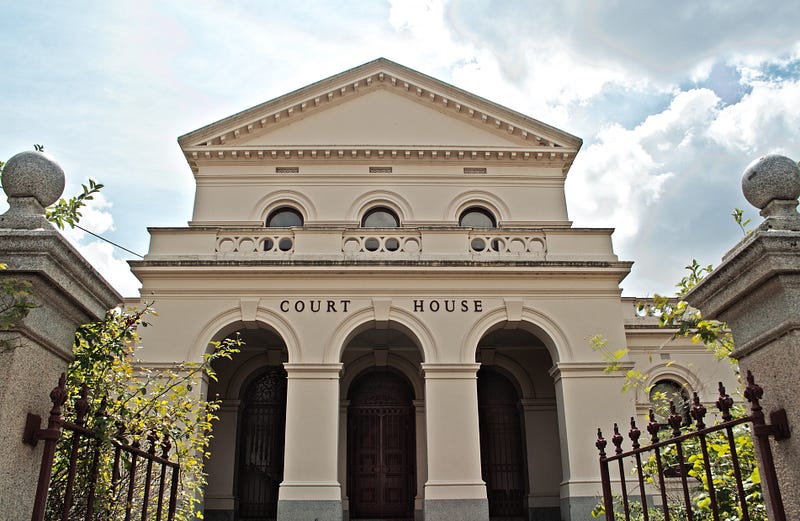
More than five and a half years after his arrest, Juan Ramos might finally be forced to go to court to answer the allegations that he began a sexual relationship with a player when she was 13. Maybe the court date is set for April 11 at 9:30 a.m. in Room 4810 of the Broward County Courthouse.

I say “might” because Ramos already managed to skate by when he and his counsel, Kevin Kulik, were no-shows at a calendar call in October. A capias warrant was issued, but Kulik won the day with the “we didn’t know” defense.

So this document doesn’t instill confidence:

If you have a sharp eye, you may notice that the 500 S. whatever in Fort Lauderdale is not the address Kulik listed on his “my client and I didn’t know” brief. That was 1293 North University Drive #204, Coral Springs, FL.

That’s the address of a UPS Store. I’ve verified that his office is in that store.

One thing Ramos and Garigen have in common is that they’re listed as “ineligible” in the SafeSport registry. They may never work in soccer again — assuming people do the most basic of background checks. And that’s fine.

But there’s no question which crime is less serious and which crime has been more seriously prosecuted. And they’re not the same one. Juan Ramos has been walking around free since the Obama administration, and Shelby Garigen is in prison.

New in the SafeSport registry …

As long as I’m checking, here are the latest names added to the database. Maybe I’ll end up investigating some of these as well.

Disclaimer: There is, of course, the minute chance that there are two people with the same name and the same town, one of whom was arrested and another of whom is in the SafeSport registry. I’ve taken extra care in a couple of cases as mentioned below. In other cases, I think the chance of mistaken identity is virtually none, and even if that were to happen, the people in question were either in the SafeSport registry or facing criminal charges.

March 28: Martin Pantoja, San Mateo, Calif. — Criminal Disposition — Sexual Misconduct; Criminal Disposition — involving a minor. Ineligible (subject to appeal). Pantoja was arrested in February. I found one Martin Pantoja in San Mateo but I’m not linking here just in case there are two Martin Pantojas of roughly the same age in the area.

March 25: Jonathan Ledesma, Highland, Calif. — Allegations of Misconduct. Temporary Suspension. Arrested March 17; charged with numerous counts of sexual assault on a minor. Police say he started coaching her at age 9 in AYSO.

March 24: Kristen Wessel, Colorado Springs, Colo. — Allegations of Misconduct. Temporary Suspension. Court date April 28. Charge is listed as a felony count of “failure to comply.”

March 24: Allan Hilsinger, Cincinnati, Ohio — Allegations of Misconduct. Temporary Suspension. Arrested in March on two counts of gross sexual imposition involving a 10-year-old girl.

March 18: Timothy Harrison, Babylon, N.Y. — Allegations of Misconduct. Temporary Suspension. A Timothy Harrison of Babylon was arrested in March over an alleged sexual relationship with a minor in 2013, but the stories list him as a special ed teacher who coached lacrosse and basketball, which raises the question of why U.S. Soccer and not the other sports federations are listed with that name in the SafeSport database. If it’s the same guy, then he should also be suspended from the other sports.

March 16: Dennis Doyle, Beaverton, Ore. — Allegations of Misconduct. Temporary Suspension. Doyle founded a club called Westside Metros and was still vice president of the since-renamed Westside Timbers until he was arrested on child pornography charges. He was also mayor of Beaverton for 12 years.

March 10: Eric Eskelsen, Blackfoot, Idaho — Criminal Disposition. Permanent Ineligibility. I didn’t find anything about him.

March 7: Evan Thornton, Mount Pleasant, S.C. — Criminal Disposition — Sexual Misconduct; Criminal Disposition — involving a minor. Ineligible. Substitute teacher and soccer coach was arrested in December on charges of unlawful sexual activity with a 16-year-old student. He was a varsity high school coach before age 23 for some reason.

Feb. 28: Walter Jones III, Roseville, Calif. — Criminal Disposition — Sexual Misconduct; Criminal Disposition — involving a minor. Ineligible. I didn’t find any details. There’s a Walter Jones arrest listed in the Placer County inmate records, but if it’s the same guy, the only thing the records add is that he’ll have a May 11 court date.

Feb. 28: Ian Ebert, Irvine, Calif. — Criminal Disposition — Sexual Misconduct; Criminal Disposition — involving a minor. Ineligible. An Irvine coach by that name was arrested in 2013, so that’s either a belated addition to the database or an astounding coincidence.

Feb. 14: Rory Dames, Oak Brook, Ill. — Allegations of Misconduct. Temporary Restrictions: Coaching / Training Restriction(s), Contact / Communication Limitation(s), No Contact Directive(s). You may have heard of this one.

Feb. 9: Eduardo Pinuelas, El Paso, Texas — Allegations of Misconduct. Temporary Suspension. No Contact Directive(s). I’m checking to try to match up a name I found.

Jan. 20: Amilcar Velasquez, no city listed — Criminal Disposition — involving a minor. Permanent Ineligibility. I found a soccer coach by that name, and I found someone by that name who was arrested, but they’re thousands of miles apart.

Jan. 10: Dylan Cline, no city listed — Allegations of Misconduct. Temporary Restrictions: No Unsupervised Coaching / Training, Contact / Communication Limitation(s), Travel / Lodging Restriction(s), No Contact Directive(s). There are several Dylan Clines out there.

Jan. 7: Brian Kohler, Warsaw, Ind. — Allegations of Misconduct. Temporary Suspension. No Contact Directive(s). Didn’t find details.

I hope people take an interest in this. The pro coaches understandably get the publicity. But while the names above represent a tiny percentage of the people involved in youth soccer, these cases deserve scrutiny. Of all parties.


Originally published at http://mostlymodernmedia.com on April 5, 2022.