non-soccer rant

My rebuttal to the dudes claiming Katie Nolan used “alternative facts” about WNBA

ESPN’s Katie Nolan recently argued that WNBA players are underpaid.

Now, you could argue that they aren’t, given the WNBA’s inability to bring in a lot of revenue. That’s a discussion worth having.

This rebuttal video claiming Nolan used “alternative facts,” on the other hand, is full of ad hominem arguments and alternative facts of its own.

I commented on the video. I’m not sure what happened to the comment. It’s certainly buried by a bunch of the usual nonsense that would be right at home on an incel Reddit.

I saw a t-shirt the other day and it read: Marriages don’t fail. wives fail

Who needs facts when you can wear makeup.

HA HA HA HA HA girl athletesWomen should just stay in their lane. Cook, clean, and raise the kids.I don’t care what profession, or talent it is MEN are better at it.Since the dawn of time the best writers, philosophers, scientists, engineers, athletes, doctors, lawyers, politicians, soldiers, carpenters, psychologists, bankers, etc. have all been MENHell even the best chefs in the world are MEN.Face it ladies, it’s a mans world. Always has been, always will be. Now go make me a sammichLMFAO

Women always have their hand out to men expecting us to provide. It has been that way for thousands of years. If the really want to make NBA money they should go try out for the teams. There is no law restricting women or anyone from trying out.

but Katie Nolan is hot so……. I didn’t listen to her anyway (joke)

Put some panties/booty shorts on and we’ll talk

And there’s the usual “liberals don’t like facts / SJW” nonsense and the complaints that the NBA is trying to “shove the WNBA down our throats.” Yeah, OK.

You should be able to get to my rebuttal by following this link, though it apparently glitches in Twitter.

In any case, here’s what I said …

I don’t mind a factual analysis. You take it too far by saying Nolan “lied” or “hasn’t done any research.”

Your historical notes are flat-out wrong. NBA teams give away tickets, too. I once went to a Wizards game on company tickets and had a fun conversation with another guy across 10 empty seats. We both were there for free, and they couldn’t even give away the seats between us. The announced attendance was close to a sellout — just as it often is in many sports.

Also, better pay WOULD help the talent level in the WNBA. A lot of players worldwide don’t bother with the WNBA. (I’m tempted to say “you didn’t do any research,” but no — you just didn’t realize this point.)

And you’re DEAD wrong about the Mystics and the WNBA final.

http://mystics.wnba.com/news/mystics-advance-to-the-wnba-finals-for-the-first-time-in-franchise-history/

https://www.washingtonpost.com/news/dc-sports-bog/wp/2018/09/05/all-aboard-the-washington-mystics-bandwagon/?utm_term=.bfb9f41ee4c0

Other points are strong. I’d again say she didn’t lie or fail to do any research. You just found some other points that are also valid, and it’s up to us to weigh the evidence.

And while your personal attack on Nolan at the end is unwarranted and comes across as male insecurity (not to mention an ad hominem argument, a logical fallacy — and we men are supposed to be good at logic, yes?), it’s fair to ask why women don’t do more to support women’s sports. Why are most NWSL owners men, for example? (Granted, men have a lot more money in general, but there are indeed some women — far richer than Nolan — who can help out.)

But your commenters are douchebags. Waaah, waaaah, feminists are ruining my life. (They’re not. You guys are just snowflakes.) And “lesbos”? “Broads”?

Look, you’re threatened by smart women. Deal with your insecurities and quit taking them out on the rest of us. No one’s forcing women’s sports down your throats. You don’t have to watch. You can still watch every NBA game you want.

So no — these aren’t “blatant lies.” You’ve just got issues, dude.

A day later, I think I was too nice.

youth soccer

Exciting news and a meditation on the mercy rule

I’ve been lucky in recent years to write for a publication I’ve long loved, The Guardian.

Now I’m lucky again to write for a second publication that sustained the small U.S. soccer community in the pre-Internet era and continues to be a vital source of news and perspective … Soccer America.

My debut piece is about the mercy rule in youth soccer. It’s often essential but also often misapplied.

pro soccer, us soccer, youth soccer

NPSL turnover and why we need youth clubs to build up, not vice versa

Stop what you’re doing and read the excellent SocTakes analysis of turnover in the NPSL.

Are you back? OK.

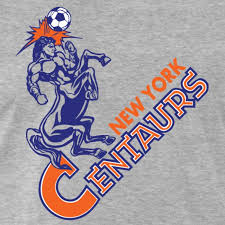
centaurs
I want this shirt.

If you’ve followed lower division soccer over the years, you know this isn’t a recent phenomenon. Go back and look up the names in the old A-League on Wikipedia, where some kind soul listed each team’s dates of birth and death. For many of the teams, that doesn’t tell the whole story — the Carolina Dynamo existed and thrived for several years before the A-League and USISL merged, and they retrenched as a successful PDL team. But if gives you an idea.

If you wanted to do a spreadsheet akin to the one SocTakes did of NPSL teams, you’d run into a lot of complications along those lines. Teams rebrand, change leagues, go on hiatus, etc. I thought about it and then realized I had other things I really had to do. (I’m doing live curling commentary on Friday. Check it out.)

OK, fine, I did one.

This should cover every team that played in the nominally professional USISL/USL leagues (which launched in 1995) and the NASL. It does not include long-standing teams that have only played amateur soccer in the PDL or elsewhere (apologies, Des Moines Menace). Nor does it include APSL teams (apologies, San Francisco Bay Blackhawks) that didn’t stick around to play past the USISL/A-League merger.

I cross-checked Dave Litterer’s archive, Wikipedia and official team sites until I was blue in the face. If you see any corrections, please let me know. Going back to, say, 1990 or even 1985 would be the next logical step.

I’ve also ignored MLS reserve teams, including MLS Project 40, which existed.

The next step was the toughest. I tried to figure out how many of these teams have or had youth programs. I’d be happy for any crowdsourcing help here. As it stands, it’s not all that easy to figure out if a club named, say, “Dragons” is (A) a youth program that existed when the Jersey Dragons played in the USISL in 1994-95, (B) a youth program named after the Dragons, or (C) just coincidentally using the same name.

Then try to figure out whether the youth program preceded the senior team. I’m not even completely sure whether that’s true for the Richmond Kickers, a gargantuan youth program with a senior team attached. Both have existed since the mid-90s. Which came first?

So I’ll keep plugging my way through it. I’m pretty sure I have all the relevant teams and their histories, though perhaps some of them are still plugging away in amateur leagues. I’ll happily take help on that and youth programs.

But what I’d conclude so far:

Having multiple options is a good thing. Self-relegate if needed — note all the teams that dropped out of the pro ranks and started playing PDL or other amateur leagues.

My hypothesis: Teams are better off if they’re organic outgrowths of a existing club.

Or maybe the whole club is formed at once.

That’s the idea. Input welcome.

non-soccer rant

NSR (Non-Soccer Rant): Why the Caps’ Cup means so much

You don’t know what this means. How could you?

Unless you’ve lived in metro D.C. for a while, you can’t know.

You might think you know about basic sports ineptitude. Cleveland gets that, as do a few other cities. Atlanta has only that lone World Series win from the decade of great Braves teams. But Cleveland broke through when LeBron came home. And even the Cubs and Red Sox have won the World Series — in cities that have plenty of NBA and NFL championships to tide them over.

But there’s more to the story in D.C.

We’re hated. Unreasonably so. Not like Philadelphia fans who earn their reputation and seem unworthy of the excellent and charitable Eagles. Even in that case, people just hate the fans. People generally don’t hate Philadelphia itself. It has Reading Terminal Market. How bad could it be?

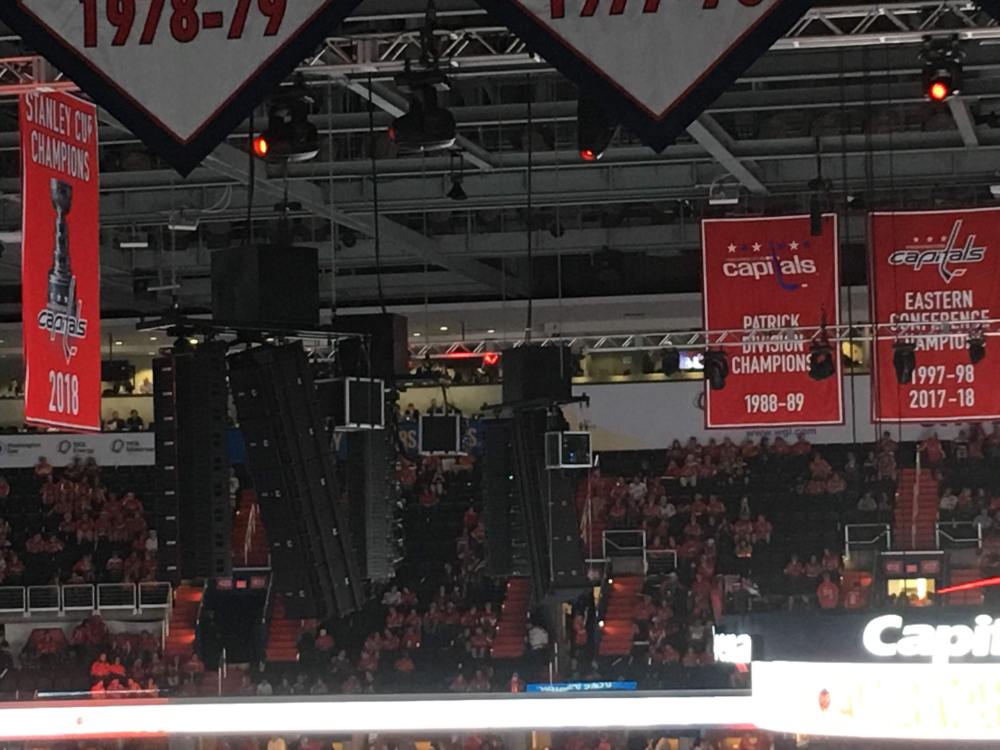
IMG_4394
Not in the frame: The banner for the three Presidents’ Trophys / postseason curses.

Us? Hundreds of politicians go home to their constituents and say they’re trying to fix things “in Washington.” They never admit they’re the problem. Not the people who actually live here.

“But what about the dirtbag lobbyists?” Sure, they’re reprehensible. But they’re generally not D.C. sports fans. They, like so many people in this area, are from somewhere else. And they think it’s cool to downplay their ties to this area even as they ride the gravy train provided by the workaholics who call this place home. (Rush hour starts at 5 a.m. It ends at 8 p.m. Buckle up. Granted, our mass transit sucks, which itself is indicative of the neglect our region gets.)

Even tonight, as the Washington Capitals raised their Stanley Cup banner, there were people wandering the concourse in Bruins jerseys. One was inexplicably wearing a Sidney Crosby jersey. In other cities, that guy would be stuffed in a trash can. Here, we’re too nice. And we’re used to this crap.

I’d love to tell you D.C. United’s trophies eased D.C.’s suffering. Maybe a little. But MLS Cup doesn’t have the history of the Stanley Cup. Nor is MLS the best league in the world in its sport. The NWSL has at least a case to be made for being the best women’s soccer league in the world, and the Washington Spirit did make the final a couple of years ago, only to lose in classic D.C. fashion. The Washington Kastles had a great run in World Team Tennis, but tennis players don’t dream of winning that trophy. The D.C. Breeze are a pretty good AUDL team, but they’re on the verge of losing half their players to a gender-equity boycott.

And the Capitals are the longest-suffering of the D.C. sports teams. The Wizards won one back when they were the Bullets. The NFL team with the racist nickname won a couple of Super Bowls. The Montreal Expos, currently hanging out at some ballpark for which they made a financially strapped city pay full freight, have less history.

Yet the Capitals have managed to put together a fun, fervent fan base. My suburban town is full of cars with Caps magnets, decals, license plate holders and license plates. It’s a community. You saw it in the massive viewing parties for Stanley Cup games just a few months ago.

This is not a region that manages to get together for things. We’re the region where people come to yell about stuff, either in the Capitol or on the Mall, and then go home. We’re the region where people work long hours at the Pentagon. Or the World Bank. Or tons of unheralded yet vitally important departments and agencies. Or at a law firm, desperately trying to fight the predators (not Nashville — well, maybe some) who are trying to feast off working-class America and immigrants. Or at some poorly funded news organization trying to maintain a watchdog role as long as they can keep the lights on. The Capitals gave us something to cheer for.

So yeah. We deserve this. We deserve to see a Russian who embraced Washington long before his leader did raise the Cup. We deserve to see Brett Connolly score a goal and then see the camera pan over to a wildly celebrating little girl who got a puck from him. We deserve to see Braden Holtby slam the door again and again.

When the game ends, we’ll go back to being your punching bag. Your anger is misplaced, but we’re used to it. We’ll just keep working.

And we’ll all have replica Cup banners at our desk. You punks who think you’re so cool because you keep cheering for your “home” team instead of your home team can just deal with it.

Let’s go Caps.

youth soccer

A Recreational/Most Travel Soccer Manifesto (updated)

A couple of years ago, I wrote a Recreational Soccer Manifesto for SoccerWire. At the time, I was focused more on the younger age groups, having just written Single-Digit Soccerand I was pushing the idea of having no full-time travel soccer (just All-Star tournaments and other interclub matchups) for kids under age 12.

But I did have a few ideas for older age groups, even though I had not yet coached there. Now I’m in my third year of coaching at the U14 (middle school) level, and I’m now coaching at the U16/U19 level (don’t ask — it’s a long story).

And I’ve found that I was right. Somewhat. I’ve learned a few things that have made me want to revise and expand the Manifesto.

One thing I’ve learned that I had not taken into account: You’re simply not going to be able to keep everyone. I have some ideas for giving all high schoolers an opportunity to play without being totally overwhelmed by all the players dropping back to rec soccer after several years of travel, but even then, high school kids tend to explore new activities and/or shift their focus to the activities at which they’re really good. The kids playing multiple sports may choose one. They may choose to run cross-country and march in the band instead. We have to be OK with that.

(Losing kids before age 12 is a different story. When that happens, it usually means the soccer community messed up.)

I’m also seeing in even more vivid detail just how counterproductive it is to have all these different leagues stuck in silos rather than a pyramid. In my area, kids from U11 on up have these choices:

  • The Development Academy, which is taking more and more kids at the younger age groups.
  • ECNL, which is fighting back against the DA. We can talk about that some other time.
  • EDP, which has taken over U.S. Soccer’s regional leagues in the region and offers a lot of tiers for teams to find a competitive level.
  • Club Champions League, a self-appointed elite league with club vs. club scheduling that seems less relevant now that we have three leagues at a higher level.
  • Virginia Premier League, a U.S. Club Soccer league that also does club vs. club scheduling and is at a lower level (with even less parity) than CCL.
  • NCSL, the traditional local promotion/relegation league that still has a handful of good teams and reaches downward to include teams that are demonstrably worse than a lot of “rec” teams.
  • ODSL, which some clubs consider “travel” and some consider “rec.” It’s supposedly a lower level, but after reffing a fantastic U13 game punctuated by a legit bicycle-kick goal, I’m not sure I’d agree.
  • Suburban Friendship League, the interclub “rec” league that has a few teams that would clobber the “travel” teams.
  • Local clubs’ rec leagues.

With so many artificial divisions, is it any wonder these leagues and clubs fail to offer the wide range of programs and competitive levels players and parents want? Several of these leagues try to have multiple tiers, but they don’t have teams to do it.

And these leagues end up imbalanced. Your local rec league may have some juggernauts, with players who’ve stuck together for a few seasons while doing all sorts of extra work. Can we let these friends stay together while giving them a challenge other than destroying the less serious rec teams? Why can’t they play the low-level travel teams who aren’t any better?

So the basic points of my previous manifesto still seem OK to me. But I think I can distill things down to a couple of simple points:

DA/ECNL: With some hesitation, I’ll exempt the DA and ECNL from what I’m suggesting below. They should merge, of course, with a simple compromise — the ECNL accepts the DA’s limits on the number of games each team plays in a weekend or a week, while the DA gets over itself and lets kids play in high school if they choose. That should give them enough teams for two tiers, and at the pivotal age of U16, they could have a truly national league. (After U16, players that are ready to go pro move into the USL or straight to MLS, while everyone else travels less so they can hit the books and get ready for college.)

As for everyone else …

One pyramid in each region: One. The top level would play throughout the region, though we’ll still try to keep travel reasonable — usually 1-2 states, or half a state in California’s case. The farther down the pyramid you go, the wider the base. (In other words, an actual pyramid. Not a ladder.) Professionally coached teams with committed players who practice 2-3 times a week and don’t mind a bit of driving will end up in the upper tiers. Teams we would now call “recreational” will be at the bottom — if they prove to be a bit better than their peers, they can move up a tier or two. Any team can decline a promotion to a level that would require too much travel. (Within reason — if a team is beating everyone 10-0 in Division 9, they should move up to Division 8 or disperse their players.)

Guest players/available subs: In my adult league, we had a roster of full-time players that was big enough to field a team if everyone showed up. They all paid full freight, and so they had first right of refusal for each game. If a few players were absent, we could call on a list of players who hadn’t committed to the team but would be willing to play on occasion. (I’ll draw once again on the curling example — a curling team usually has four players but can go with three or possibly five — so my local club lets teams call in subs who pay a small fee for each game they play.)

Free play, free play, free play: Some kids simply aren’t going to be able to commit to any team, no matter how low the commitment might be. You can still keep them playing on occasion and give your full-time players a fun break from their league schedules by having free-play days.

You could also offer a change of pace for everyone with small-sided tournaments (tiered) open to all.

Speaking of tournaments:

Set up any tournament you like: In the example above, CCL and VPL could reinvent themselves as organizations that offer club-vs.-club tournaments.

The bottom line is this: Offer a wide variety of clearly labeled programs. Parents have no patience for this alphabet soup. What I’ve outlined above is far simpler and friendlier than the dystopian mess of leagues I listed above that.

Clubs may argue that they’re moving from the “team-centric” model to the “player-centric” or “club-centric” model. You’re not fooling anyone. You might move the occasional player up to fill in on the top team, and the DA has provisions for part-time players who can be called up (and there’s no reason to discontinue that practice). But for the most part, you’re handing parents a schedule at the beginning of the season, and they’re scheduling everything else around those games. You’re not going back and saying, “Hey, let’s bump Maddie down to the C team this week. Game time is 8 a.m. Sunday in Farsburg. See you there.”

In any case, we’ll let clubs continue what little internal movement they have with the “guest player” provisions. Your Division 3 team can call up a Division 6 player if needed. But players and parents at most levels of soccer identify with a particular set of teammates. You can’t change that, nor should you.

So we’ll accomplish the following:

  1. We’ll make this more fun for everyone.
  2. We’ll make this less confusing.
  3. We’ll encourage more players to stay in the game.

And we’ll even provide that elusive “pathway” for all. Maybe a kid comes out to one of your free play sessions, decides to join your Division 10 team and catches on to the game. In a couple of years, that kid is in Division 3 helping you win a State Cup and going on to play in college. Stranger things have happened.

For the other 99 percent, youth soccer will be something other than a major annoyance. And that’ll be progress.