us soccer

U.S. Open Cup qualifiers: Which leagues fared the best?

The U.S. adult (not pro, but maybe not amateur) league system is in flux, with tons of teams joining the suddenly sprawling UPSL and other leagues taking steps toward greater recognition.

So with that in mind, it was interesting to see U.S. Soccer release the list of teams contesting the Open Cup in 2018-19 broken down by league.

Unfortunately, the results we’ve seen have the traditional state-by-state breakdown, so we can’t see which leagues progressed.

Let’s take the two documents together and see what we find. Each league is sanctioned through U.S. Adult Soccer unless otherwise specified. I’m going roughly west-to-east except for breaking out the national UPSL. A lot of games were intraleague; interleague matchups are in italic.

UPSL (4-7)

  • Cal FC; Thousand Oaks, Calif.: W 2-1 San Nicolas
  • California United FC II; Irvine, Calif.: L 2-6 CaliGators
  • JASA RWC; Redwood City, Calif.: W 7-0 San Ramon
  • Lionside FC; Redondo Beach, Calif.: W 2-0 SC Trojans
  • L.A. Wolves FC; Bell Gardens, Calif.: L 0-4 Santa Ana
  • Napa Sporting SC; Napa, Calif.: bye
  • Oakland Stompers; Oakland, Calif.: W 1-0 Leopards
  • Real San Jose; San Jose, Calif.: bye
  • San Nicolás FC; Los Angeles, Calif.: L 1-3 Cal FC
  • San Ramon Dynamos FC; San Ramon, Calif.: L 0-7 JASA
  • Santa Ana Winds FC; Lake Forest, Calif.: W 4-0 LA Wolves
  • Valley United SC; North Hills, Calif.: L 0-4 Buena Park
  • Nevada Coyotes FC; Carson City, Nev.: bye
  • Sporting AZ FC; Scottsdale, Ariz.: bye
  • Boise FC Cutthroats; Boise, Idaho: bye
  • San Juan FC; Draper, Utah: bye
  • Colorado Rush; Highlands Ranch, Colo.: L 1-2 Harpos FC 
  • Gam United FC; Aurora, Colo.: W 2-1 Northern Colorado
  • Indios Denver FC; Englewood, Colo.: L 0-1 FC Denver
  • Aurora Borealis Soccer Club; North Aurora, Ill.: bye
  • FC Maritsa; St. Louis, Mo.: bye
  • Bay Area Oiler FC; Houston, Texas: postponed
  • Dallas Elite FC; Plano, Texas: L 4-4 (PKs) Rayados
  • San Antonio Runners; San Antonio, Texas: postponed
  • Southwest FC; El Paso, Texas: bye
  • Juve-Pro Soccer; Stoughton, Mass.: L 0-1 Boston City
  • Mass United FC; Sommerville, Mass.: L 1-3 Safira
  • Safira FC; Sommerville, Mass.: W 3-1 Mass United
  • FC Cardinals; Winston-Salem, N.C.: L 1-5 Soda City
  • ASC America Soccer Club; Jacksonville, Fla.: W 1-0 Orlando FC
  • Deportivo Lake Mary; Kissimmee, Fla.: L 1-2 Sporting Orlando
  • Florida Soccer Soldiers; Hialeah, Fla.: W 2-1 Miami Sun
  • Hurricane FC; Delray Beach, Fla.: bye
  • Miami Sun FC; Miami, Fla.: L 1-2 Florida Soccer Soldiers
  • Sporting Orlando SC; Orlando, Fla.: W 2-1 Lake Mary

Oregon Premier Soccer League

  • International Portland Select (IPS)/Marathon Taverna; Portland, Ore.: bye

LIGA NorCal (US Club Soccer)

  • Academica Soccer Club; Turlock, Calif.: W 4-1 Davis
  • Contra Costa FC; Walnut Creek, Calif.: bye
  • Davis Legacy; Davis, Calif.: L 1-4 Academica

San Francisco Soccer Football League (0-1)

  • Oakland FC Leopards; Lafayette, Calif.: L 0-1 Stompers

SoCal Premier League (2-1)

  • Buena Park FC; La Palma, Calif.: W 4-0 Valley United
  • CaliGators FC; Lake Forest, Calif.: W 6-2 Cal United
  • Chula Vista FC; Spring Valley, Calif.: bye
  • L.A. South Bay Monsters FC; San Pedro, Calif.: 1-2 Outbreak
  • Outbreak FC; Long Beach, Calif.: W 2-1 South Bay
  • Quickening; Lancaster, Calif.: L 0-4 Royals
  • Real Sociedad Royals; Bellflower, Calif.: W 4-0 Quickening
  • SC Trojans FC; Los Angeles, Calif.: L 0-2 Lionside

Colorado Premier League (U.S. Specialty Sports Assn.; 2-1)

  • Club El Azul; Broomfield, Colo.: L 0-1 Colorado Rovers
  • Colorado Rovers; Broomfield, Colo.: W 1-0 Club El Azul
  • FC Denver; Aurora, Colo.: W 1-0 Indios
  • Harpo’s FC; Commerce City, Colo.: W 2-1 Colorado Rush
  • Northern Colorado FC; Fort Collins, Colo.: L 1-2 Gam United

Ann Arbor Premier Development League (0-1)

  • Ann Arbor FC; Ann Arbor, Mich.: L 3-4 Livonia

Michigan Premier Soccer League (1-0)

  • Livonia City FC; Livonia, Mich.: W 4-3 Ann Arbor

Minnesota Amateur Soccer League

  • FC Minnesota; Blaine, Minn.: bye

Austin Men’s Soccer Association (U.S. Specialty Sports Assn.)

  • Celtic Cowboys Premier; Austin, Texas: postponed

North Texas Premier Soccer Association (1-0)

  • Leon FC; Dallas, Texas: postponed
  • NTX Rayados; Dallas, Texas: W 4-4 (PKs) Dallas Elite

Bay State Soccer League (1-0)

  • Boston City FC II; Malden, Mass.: W 1-0 Juve-Pro
  • Boston Siege FC; Revere, Mass.: L 2-2 (PKs) Kendall Wanderers
  • GPS Omens; Boston, Mass.: W 2-1 Southie FC
  • Kendall Wanderers; Cambridge, Mass.: W 2-2 (PKs) Boston Siege
  • Southie FC; Roxbury, Mass.: L 1-2 GPS Omens

Connecticut Soccer League (0-1)

  • Newtown Pride FC; Newtown, Conn.: L 0-1 Jackson Lions

Rochester District Soccer League

  • Rochester River Dogz; Spencerport, N.Y.: bye

Cosmopolitan Soccer League

  • Lansdowne Bhoys FC; Yonkers, N.Y.: L 0-4 Pancyprian Freedoms
  • New York Pancyprian Freedoms; Jamaica, N.Y.: W 4-0 Lansdowne Bhoys

Garden State Soccer League (1-0)

  • Jackson Lions FC; Jackson, N.J.: W 1-0 Newtown Pride

Greater Pittsburgh Soccer League

  • Tartan Devils Oak Avalon; Pittsburgh, Pa.: bye

United Soccer League of Pennsylvania

  • Ukrainian Nationals; North Wales, Pa.: W 2-0 UGH
  • United German Hungarians; Oakford, Pa.: L 0-2 Ukrainian Nationals
  • Vereinigung Erzgebirge; Warminster, Pa.: L 1-2 West Chester
  • West Chester United; West Chester, Pa.: W 2-1 Vereinigung

Maryland Major Soccer League (1-1)

  • Christos FC; Elkridge, Md.: W 4-1 Rockville
  • Izee Auto FC; Columbia, Md.: L 2-4 World Class
  • Rockville Soccer Club; Rockville, Md.: L 1-4 Christos
  • Steel Pulse FC; Windsor Mill, Md.: L 1-2 Aegean Hawks
  • Super Delegates Football Club; Laurel, Md.: W 4-1 DC Cheddar
  • World Class Premier Elite FC; Boyds, Md.: W 4-2 Izee

Washington Premier League (1-0)

  • Aegean Hawks FC; Boyds, Md.: W 2-1 Steel Pulse

District Sports Premier League (0-1)

  • DC Cheddar; Washington, D.C.: L 1-4 Super Delegates

Woodbridge Soccer League

  • Centro America FC; Woodbridge, Va.: L 1-2 Virginia United
  • Virginia United; Woodbridge, Va.: W 2-1 Centro America

Soccer Organization of the Charlottesville Area

  • Cville Alliance FC Reserves; Charlottesville, Va.: W 3-1 Tigres
  • Tigres FC; Crozet, Va.: L 1-3 Cville Alliance

Central League (1-0)

  • Soda City FC Sorinex; Lexington, S.C.: W 5-1 FC Cardinals

Atlanta District Amateur Soccer League

  • Shahin Atlanta FC; Marietta, Ga.: bye

Gulf Coast Premier League 

  • Motagua New Orleans; New Orleans, La.: W 5-2 Port City
  • Port City FC; Gulfport, Miss.: L 2-5 Motagua

American Premier Soccer League

  • FC Kendall; Miami, Fla.: L 1-2 Red Force
  • Red Force FC; Miami, Fla.: W 2-1 FC Kendall

Central Florida Soccer League (0-1) 

  • Central Florida FC Spartans; St. Cloud, Fla.: Bye
  • Orlando FC Wolves; Altamonte Springs, Fla.: L 0-1 America SC

Sun Cup (U.S. Specialty Sports Assn.)

So that told us … very little.

pro soccer

February … frenzy? How U.S. pro soccer could have its own madness

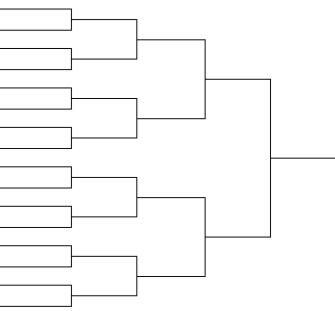
bracket-emptyTucked away in some of my modified promotion/relegation ideas and then expounded upon in an Open Cup idea is this notion — meaningful tournament games played in February in warm-weather and domed venues.

Suppose we could …

  1. Come up with something akin to the NCAA’s March Madness?
  2. Come up with something that gives soccer clubs what they’re all seeking through promotion/relegation — opportunity?

Let’s point out early — this is not a substitute for a promotion/relegation system. This idea works with open systems and closed systems. It works if the USA remains on the Brazilian calendar or switches to the English calendar.

It does work best if pro soccer has, like the NCAA, a lot of regional leagues. (Or regions within a larger national framework, if you prefer.) We should have that. In a country this size, it doesn’t make a lot of sense to have a national third division, then a national fourth division and so forth. Other countries split into regional play a few levels down the pyramid — Germany and France at the fourth, Spain at the third, even England at the sixth.

In fact, if you prefer a soccer model to a basketball model, just tell yourself we’re modeling all this after the German Futsal Cup.

Here’s the idea: No more MLS-only (or, if we’ve radically changed the league system, no more Division 1-only) tournaments. Maybe not even a national tournament for a Division 2 or Division 3 league, but if someone wants to put together the equivalent of an FA Trophy or special event to crown a “D3” champion, fine.

But this is the tournament that determines the USA and Canada’s professional champion. Each year, we’ll have three top-tier trophies:

  • Pro League Champion: Determined by league play, wrapping up either in May or December, depending on which calendar we pick.
  • U.S. Open Cup Champion: Probably determined in August, depending on whether we want this to include “summer league” teams (PDL, much of the NPSL, etc), but that’s another conversation.
  • Pro Cup Champion: Late January through February.

The format would depend on many factors. But here’s one hypothetical idea:

  • 24 teams: The champion of every regional pro league (D3, USASA, whatever), a couple of teams from D2 and the rest from D1.
  • Three-team round-robin groups. Everyone gets at least two games that way.
  • The eight group winners play a simple knockout tournament. Total of five games for the finalists.

Maybe you could also do a 32-team tournament. Maybe double-elimination instead of the round-robin groups. All good.

You could do brackets, like the NCAA Tournament. You’d have the occasional blowout, but you’d have the occasional upset.

It would finish up in late February, one of the deadest times in the U.S. sports calendar. Not yet NCAA Tournament time. Not yet the stretch run of the NBA or NHL. No baseball, aside from autograph-seekers in Florida. No gridiron. (During Winter Olympic years, you’d have a conflict, but maybe creative scheduling could help.)

And every pro team would have an opportunity to win a national championship. Every year. No matter which division they’re in.

Opportunity’s what everyone wants these days. Right?


us soccer

Scenes from a U.S. Soccer board meeting

While other reporters were out chasing down details of the Gang of Six (or Five or Four), I was at a U.S. Soccer Board of Directors meeting.

And what I can report from that meeting is that USSF board business is …

Boring.

Really, really boring.

If you read Twitter — and yes, the board members made it known that they’re aware of what’s said — you would think the board sits around discussing ways to prevent promotion/relegation from happening. Or ways to make sure Eric Wynalda is never employed. Or perhaps just taking turns swimming in piles of Soccer United Marketing gold.

Here’s what happened in the first, oh 150 minutes (minus a few minutes where I had to run out):

1. Sunil Gulati said he’s looking forward to the election being over. Carlos Cordeiro, sitting next to him, nodded his head slightly.

2. Gulati went over the USA/Canada/Mexico World Cup bid. He’s quite enthusiastic about it.

3. Gulati went over FIFA’s current thinking over changes in international competition. They’re combining youth tournaments — instead of a separate U20 and U17 tournament, we’ll see either U19 or U18. They’re leaning U18 because it’s easier to get players released. That also works for the U.S. because they often run into conflicts with college players now.

4. OK, THIS is interesting. FIFA is working a women’s Nations League, like the UEFA and CONCACAF men’s league. The goal is to keep women’s national teams more active. Gulati gave the example of Ecuador’s women, who made the 2015 World Cup and then went more or less dormant.

There’s a side discussion about SUM and whether it’ll have less stuff under its control as FIFA controls more rights. Gulati points out that other countries are in the same boat, and FIFA is backing off a bit for now.

5. Want to see a long presentation of marketing stuff being planned around the Women’s World Cup? Here you go. No word on what happens if the U.S. women don’t qualify.

6. A player development update turned into a discussion with Dr. Bob Contiguglia, attending his last board meeting as past president, asking about the process the federation went through before announcing the birth-year age-group changes that have blown up real good. Ryan Mooney answers and says nothing substantial for the first three minutes or so but then says it has spun off a longer discussion about better communication with members.

7. A participation study has shown that rec players tend to “lapse” at age 8-10, while travel players tend to leave at 11-15. But there’s a high interest in “unorganized” soccer, and there’s interest in an intermediate level between rec and travel. (Which some states do.)

8. Tax Reform Impacts. This goes on for a while.

Having fun yet?

9. USSF counsel Lydia Wahlke goes through a presentation on athlete safety, especially in the wake of what’s happened with USA Gymnastics. The federation was already doing a lot, including harassment training for every NWSL club last spring. This was a long but absolutely important discussion. I couldn’t follow all of it, and I started wondering how long these meetings would run if Wahlke and Kyle Martino are both involved.

10. Election update: The vendor overseeing the election is Plante Moran. We get the lowdown on who they are. I didn’t need to know that they were named one of the top places to work in Chicago.

A break. Finally.

11. Donna Shalala’s term as independent director is ending, and the Risk and Audit Committee needs another independent director to lead it in the interim. I think Val Ackerman ducked. Lisa Carnoy gets volunteered.

Incidentally, Carnoy also filled in as treasurer for the purposes of validating registration fees so they can properly weight the votes. Cordeiro would normally do that, but he recused himself, sensibly.

12. AN OPEN CUP DISCUSSION! And it got quite interesting. They’re considering an amendment that would eliminate the Cup’s foreign-player restriction, which currently stands at five for pro clubs. The pro clubs don’t want that any more — in fact, NASL interim commissioner Rishi Sehgal was in attendance and spoke up to testify that all the pro leagues agreed on this. (Nice to know they all agreed on something.)

The lines of argument are surprising. It’s basically Gulati and CEO Dan Flynn vs. Shalala, Carlos Bocanegra and Don Garber. Gulati argues that the Cup’s credibility won’t be hurt by limiting the number of foreign stars, especially considering how many of them sit out until the semifinals or final, anyway. And Gulati says he wants to give U.S. players more opportunities. John Motta is on the Open Cup committee but says he didn’t really participate in this discussion because it affects the pro leagues, not the ones in his domain (USASA).

tabledThe amendments wouldn’t take effect until qualifying begins anew in August, so the motion is tabled.

13. Insurance. The USSSA had some concerns with the USASA’s proposal. Tabled to give them time to work it out.

14. Wahlke describes an independent ethics committee proposal. Gulati points out the Risk and Audit Committee has been doing a lot of this work but doesn’t object to it being formed. No one speaks in opposition. So that passes the board — I’m not sure whether the National Council (the big meeting, which will vote on the presidency) has to vote on it tomorrow.

15. Membership fees. They saved the most explosive item for last. Motta wants to cut membership fees in half — from $2 to $1 per player for adults, from $1 to 50 cents for youth. At-large member John Collins, who asks great questions throughout the meeting, points out that the National Council would have to approve this.

It’s safe to say Gulati is not a fan of this idea. Especially the timing of it, one day before a National Council meeting at which they’ll need to approve the budget. (Cordeiro points out it’s also one day before the election.) And Gulati is convinced we’re not losing players over 50 cents.

Gulati unleases his full sarcasm on Motta, with whom he traded the VP slot way back when (Motta beat him for the spot in 1998, Gulati won it 2000): “Want to withdraw it or see it defeated?” Motta wants a vote.

So they vote … sort of. A couple of people raise their hands in favor. Athletes’ Council chair Chris Ahrens is intrigued. He asks Motta for a specific use of the money (which is maybe a couple million dollars, all told) if they get it “back.” Motta doesn’t give a particularly good answer.

It’s safe to say this issue is going to come up again. But the argument to recommend such a change now isn’t persuasive. They take a final vote. Motta and fellow Adult Council member Richard Moeller vote yes, as does Youth Council rep Jesse Harrell — overlooked at first because he doesn’t raise his hand very high. Cordeiro abstains. Everyone else votes no.

And that’s the last order of business. We’re off to the “Good of the Game” segment in which members can talk about what they want. That’ll be part of the National Council meeting — actually, all my local club meetings end with it, too. It’s generally like the minute-long speeches in Congress hailing the accomplishments of a local chess club. But it can get testy, as it did in the National Council meeting a couple of years ago when people went back and forth with contrasting opinions on Chuck Blazer. And if Kathy Carter wins, I think tomorrow’s session will be a doozy.

This one had a lot of positives. Bocanegra praised the work on the SheBelieves Cup and related initiatives. Several board members bid a fond farewell to departing board members Shalala and Contiguglia. Several also summed up their congratulations to Gulati for 12 mostly good years.

But there was some talk of the election animosity. Contiguglia was philosophical — having been through tough times at USSF before, he reminds everyone, “this too shall pass.” Moeller lamented the palpable animosity at the hotel bar last night.

Ahrens was particularly pointed, saying criticisms of the Athletes’ Council were offensive. They’ve put a lot of effort into their duties, he says, only to see their integrity unfairly and inaccurately called into question.

Then Gulati lets fly. “I’d love to say only friendly things, but that wouldn’t be honest.”

He laments that the board (other than Motta and Contiguglia) has been accused in legal documents of being conflicted. (I turned to look at Sehgal, who had a face of stone.) He says the independent directors are truly independent. He didn’t know Shalala until Julie Foudy introduced them. He barely knew Ackerman or Carnoy.

He takes aim at Twitter — particularly, the fact that people who retweet nonsense. “A tweet by someone anonymous gets retweeted, and now it’s Encyclopedia Brittanica.” He jokes that his wife tried to take the tweet that he’s due $30 million-$50 million from the World Cup bid to the bank to see if she could some how use it for cash or credit.

“So much nonsense out there, and you should let people know that.”

And frankly, it was hard not to sympathize. Anyone who sat through that and doesn’t think these people are doing their fiduciary duty is … well, probably looking at it strictly through the lens of self-interest and one decision that didn’t go their way. If you think that’s worth burning down everything the board members and staffers in that room are doing, fine. Sign your name to it and make your case below.

No, that’s not an endorsement for anything in the election. It’s one thing to say the board could use some fresh ideas. So could MLS, for that matter. That’s all that needs to be said. The rest is overkill.

And I found myself wondering who would want to be on this board in the current climate. Who would voluntarily put themselves through this?

So tomorrow, someone is going to win an exhausting and often tedious volunteer position. And they will have skipped all the other exhausting and often tedious volunteer positions that people normally do to pay their dues. So the new president should walk before the board with the greatest humility. Maybe then those fresh ideas will gain some traction.


pro soccer, us soccer

A U.S. Open Cup proposal (with some NPSL/PDL ramifications)

Let’s address a couple of issues:

  1. The U.S. Open Cup could use a boost.
  2. Teams could use some meaningful games in February, but it’s too cold to play in many parts of the country.

So let’s do this:

The Cup is already playing a lot of qualifying games in the preceding fall. See the 2018 qualifiers that took place from September through November. Switching the tournament to a fall-to-spring schedule wouldn’t take much more.

As in England’s FA Cup (as I type, American Eric Lichaj’s two goals have Nottingham Forest — once affiliated with the Carolina Dynamo — ahead of Arsenal), let’s have the top two divisions (or whatever gives us between 30 and 40 teams) enter the competition in the round of 64.

Then let’s play the first three rounds at neutral-site warm-weather (or indoor) venues in February.

Here are the advantages:

  1. At least one meaningful game in February even if a home ground is covered in snow.
  2. A month in which the Open Cup is the only thing going on in U.S. outdoor soccer, giving it a promotional push.
  3. A good warmup for the Division 1 season (and the CONCACAF Champions League).

The disadvantages:

  1. You lose a bit of the romance of making a Division 1 club play at some tiny lower-division club’s home ground, such as yesterday’s Fleetwood-Leicester matchup. But this is mitigated by having your pick of suitable venues.
  2. Tough to get a “home” crowd. You’d need to put something together to get hard-core supporters to travel. Maybe some creative scheduling could help avoid having teams travel too far. Perhaps some East Coast teams go to Atlanta, Rocky Mountain teams go to Texas or Arizona, Great Lakes teams go to domes (Minneapolis, Indianapolis, Detroit, Syracuse, Milwaukee, Fargo and maybe the warehouse-esque Ultimate Soccer Arenas in Michigan).

Then play the quarterfinals and semifinals during the spring season, with the final itself being the last game before the summer break for the World Cup, Euros, Copa America, Gold Cup, etc.

A couple of questions this format would raise:

If we’re playing a fall-to-spring schedule, what about the MLS playoffs? 

These have always been too long, anyway. In last night’s forum in Illinois, Eric Wynalda pointed out the problem of players getting rusty when their teams don’t make deep runs in the playoffs. That’s a bit of a problem in the current schedule, when a player might sit out from late October to early March, and it would be a problem in a fall-to-spring system — you certainly don’t want players sitting out several weeks before a World Cup or a Copa.

Maybe you’d still have a single-game MLS Cup or a four-team tournament, but that’s it. Hopefully, the Open Cup will fill our need for knockout play. (And maybe some promotion/relegation playoffs, but that’s another rant.)

What about the NPSL and PDL teams that currently play in the Open Cup? 

They shouldn’t be in the Open Cup. At least, the teams that rely on college players (pretty much all PDL teams and most NPSL teams) shouldn’t be in it. If you have a club with enough non-college amateurs to play a fall-spring schedule, fine.

The current NPSL/PDL schedule is absurd. Players only have a couple of months to participate, and yet each league is run as a national competition with national playoffs at the end. Just as Wynalda lamented the fact that many pro players are left idle because their teams don’t make the playoffs, these college players who need more games don’t get to play a couple of weeks in the summer.

And then the players go back to their college teams, sometimes before the league final. Last year, Midland-Odessa had to scramble to find enough players to play the NPSL final. In the current format, there’s no way a college-dependent team could play the Open Cup semis or final if it advanced that far.

These leagues should focus on guaranteed games. Try to play 14 regular-season games over 10-11 weeks. If you want to play a Summer Open Cup of sorts on additional weekdays, fine, and there’s always the option to play in the fall-to-spring Open Cup if the players are available.

Let the summer leagues be summer leagues. Nothing wrong with that. For everyone else, have a Cup that has a larger spotlight.

(And yes — USSF needs to pay the travel costs for any team, particularly amateurs, going to the round of 64 and beyond.)