pro soccer, women's soccer

The top 100 women’s soccer players, by the numbers

The Guardian has released its annual list of the top 100 women’s soccer players in the world, drawing votes from an outstanding panel.

It’s a diverse group of voters. The only U.S.-based journalists on the panel are Jennifer Gordon and Jen Cooper, both terrific choices. (You might also include Jordan Angeli, a former player now doing broadcast commentary, in the journalist category as well — a great choice as well, no matter how you classify her.) I don’t see any U.S. managers/coaches on the list — the three from the NWSL are all from Europe, though they’ve certainly been here long enough to know the talent pool. Three former U.S. players, including Angeli, are on the panel. They’ve found voters based in Asia, Africa, Australia, South America, Central America and New Zealand in addition to the usual hotbeds of the USA and Europe.

Fortunately for me, the timing is excellent. I’m writing the women’s soccer portion of my book now, and this data fits perfectly. 

I’ve uploaded my spreadsheet to Github if you’d like to dig in for yourself. Here are some highlights … 

BY COUNTRY

The USA is still No. 1 in terms of numbers of players on the list. FIFA rankings in parentheses.

  • 16 USA (1)
  • 11 England (4)
  • 11 Germany (2)
  • 9 France (3)
  • 6 Netherlands (7)
  • 5 each for Australia (6) and Sweden (9)
  • 4 each for Brazil (10), Japan (8), Norway (13) and Spain (12)

Fifth-ranked Canada had two players on the list. No. 11 North Korea had none.

I also wanted to look not just at the overall depth but in terms of where the top players ranked. To analyze that, I used the same scoring system that cross-country meets use — a sum of the top five. The lower the score, the better.

  • 75 USA
  • 98 France
  • 114 England
  • 116 Netherlands
  • 151 Germany
  • 265 Norway*
  • 311 Brazil*
  • 334 Australia
  • 375 Sweden
  • 390 each for Japan* and Spain*

The asterisks are for countries that had four players on the list. I added a hypothetical fifth player ranked 125th — seems likely that those countries would have another player somewhere around that rank if it continued for another 50 or 100.

So by either measure, the USA leads the way despite all the progress made in the rest of the world. The biggest surprise is that England and the Netherlands have raced past Germany. 

BY LEAGUE

One caveat here: Players on loan from the NWSL are counted in both of their leagues. That means several players, such as No. 2 Sam Kerr, contribute to the rankings for the NWSL and Australia. No. 28 Jess Fishlock counts for both the NWSL and France. (I filtered out the second reference to each player when I calculated the county rankings.)

I’m a little surprised that the NWSL held onto No. 1.

  • 30 NWSL
  • 21 France
  • 18 Germany
  • 16 England
  • 6 Australia
  • 5 Spain
  • 4 Sweden
  • 3 China
  • 2 Norway
  • 1 each for Japan and the NCAA

The cross-country rankings don’t really tell us much. Five players can form the backbone of a very strong team, but they don’t reflect the strength of a league. Still, I was on a roll, so …

  • 26 France
  • 45 NWSL
  • 92 England
  • 93 Germany
  • 266 Spain
  • 331 Australia
  • 417 Sweden (again using the hypothetical fifth player ranked 125th)

As expected, France’s success rides mostly on the ridiculous strength of one club …

BY CLUB

  • 14 Lyon
  • 10 Wolfsburg
  • 8 North Carolina (Courage, not NCAA)
  • 6 Seattle
  • 5 each for Arsenal, Chelsea, Manchester City and PSG
  • 4 each for Barcelona, Bayern Munich, Chicago, Orlando and Portland

You’re not expecting the cross-country rankings to be close, are you? Asterisks once again mark the four-player teams with a hypothetical 125th-ranked player added.

  • 26 Lyon (3rd, 4th, 5th, 6th, 8th)
  • 93 Wolfsburg
  • 145 Arsenal
  • 201 Chelsea
  • 209 Seattle
  • 235 North Carolina
  • 243 Portland*
  • 276 Manchester City
  • 328 Chicago*
  • 342 Barcelona*
  • 343 Orlando*
  • 347 PSG
  • 383 Bayern Munich*

As you’d expect, the salary-capped, parity-driven NWSL spread its talent across far more clubs than the other leagues did.

NWSL: 30 players — 8 at North Carolina; 6 at Seattle; 4 each at Portland, Orlando and Chicago; 2 at Utah; 1 each at Washington (Pugh but not Lavelle) and Houston 

France: 21 players — 14 at Lyon, 5 at PSG, 2 at Montpellier

Germany: 18 players — 10 at Wolfsburg, 4 at Bayern Munich, 2 at Essen, 1 each at Turbine Potsdam and Frankfurt

England: 16 players — 5 each at Arsenal, Chelsea and Manchester City, plus 1 at Birmingham

Australia: 6 players at 5 clubs

Spain: 5 players — 4 at Barcelona, 1 at Atletico Madrid

Sweden: 4 players — 3 at Rosengard, 1 at Linkoping

China: 3 players at 3 clubs

Norway: 2 players at 2 clubs

ODDS AND ENDS 

  • The players in China’s league are from Brazil, Nigeria and Malawi.
  • The five nominees for U.S. Soccer Female Player of the Year rank 7th (Morgan), 10th (Rapinoe), 12th (Horan), 25th (Heath) and 32nd (Ertz). The nominees did not include No. 21 (Dunn).
  • The U.S. players who played the most international games in 2018 without being ranked in the top 100 are Lloyd (19), Sonnett (14) and Lavelle (13). 
  • Adrianna Franch is ranked (65th) despite making no appearances for the USA in 2018.

Again, the full spreadsheet is at Github.
us soccer

The Berhalter hire and why I don’t really care

As the press conference announcing Gregg Berhalter as the U.S. men’s soccer head coach started, I was at The Fresh Market pondering ways to introduce farro into my diet. 

After listening to a bit of the press conference on delay on Jason Davis’ show, I went downstairs to play the following songs on drums: 

  • The Weapon – Rush (playing along with live version from Grace Under Pressure tour, complete with the intro from SCTV’s Count Floyd)
  • Green Eyes – Angela Perley and the Howlin’ Moons
  • Texas – Magnapop
  • Falling to Pieces – Faith No More

I played pretty well. Much better than the other day, when I made a complete mess of Love Spreads (Stone Roses) and I Need Some Fine Wine, and You, You Need to Be Nicer (The Cardigans).

OK, OK. I’ll get to soccer. 

The press conference had a few moments of interest. The opaque process of finding a coach was emphatically laid bare, with president Carlos Cordeiro and general manager Earnie Stewart talking about whittling a list of 30 candidates down to three finalists, one of whom opted to go elsewhere. (Tata Martino?) 

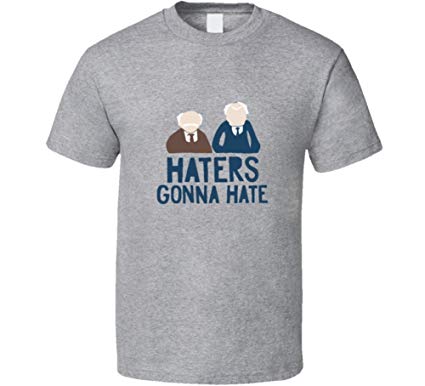
Not that it matters. Haters gonna hate. Ambivalents gonna ambivalent. 

The former group is, of course, quite active on Twitter. There’s already a BerhalterOUT Twitter account, followed by the usual disgruntled Twitterati and a disturbing number of MAGA accounts. 

A perfect stocking stuffer from BustedTees.

Prepare for an irony over the Berhalter era, no matter how long it lasts, of a bunch of people who consider themselves experts because they watched a couple of damn Ajax training sessions, all turning up their noses at a guy who actually played many years in the Netherlands and Germany, all starting with the endorsement of Rinus Freaking Michels. If Rinus Freaking Michels recommended you for a career in Europe, please let me know and share all your insights.  

I have no idea whether Berhalter will be a good coach for the national team. His resume is fine. He might be more motivated to turn around the U.S. program than a foreign coach with no ties here — besides, we really shouldn’t be in the mood to repeat the Klinsmann experiment any time soon, and Klinsmann at least had lived here for a while. You could make a good case for Oscar Pareja, and I probably couldn’t argue with you. 

Nor am I particularly aggravated by the presence of Jay Berhalter in U.S. Soccer management. If someone can really connect the dots to undue influence from the federation’s chief marketing officer, please let me know. Sure, perhaps now would be a good time for Jay Berhalter to … I don’t know, replace Kathy Carter at SUM? Work for Nike? Retire, having made more money in U.S. soccer than just about anyone other than David Beckham? The optics could be better, and anything USSF can do to demonstrate a firewall between the Berhalters would be a good idea. 

But perhaps the most notable part of the press conference is that it contained quite a few questions and answers about tactics and style. We’re obsessed with such things, even though Bruce Arena engineered one of the biggest wins in U.S. history by changing things up for the 2002 World Cup game against Mexico, thanks in part to his faith in a defender named … you guessed it … Gregg Berhalter, who is quoted as such in an oral history of the game: “This is a team that had never played that system before.”

In particular, Soccer Twitter seems pleased with this exchange between Alexi Lalas and the new coach: 

For further reading both on the Dutch-style tactics and the Habsburg-esque family entanglements, may I recommend Kim McCauley at SBNation.

After all that, why do I have such a blasé attitude about the Berhalter hire? 

Simple. I’m working on a book now that gets into a lot of the problems in U.S. soccer (lowercase s), some of which can be solved and some of which cannot. Not one of them can be solved by the men’s national team coach. Not Berhalter, not Klinsmann, not Arena, not Pareja, not Martino, not Lopetegui. Not even Klopp.

I kept listening to Jason Davis and company after the Berhalter wrap, and he had an interview with Julie Foudy that illustrated some of those problems. We don’t have a U.S. women’s general manager. We don’t have an NWSL commissioner. (I have a good nominee — just email me.)

And we have a lot of bureaucrats. 

Meanwhile, we have families that can’t afford the money or time needed to play high-level youth soccer. We have coaches who can’t get the education they need. We have leagues and organizations that can’t stop fighting with each other. We have coaches and pundits whose entire identity is based on doing what the majority of people in U.S. soccer are not — if the Federation didn’t jump off a cliff, they would. We have deep currents of distrust — some justified, some not.

Good luck to Gregg Berhalter as he attempts to find the 30-40 best U.S.-eligible players that can get the team to the World Cup (assuming it’s still held in 2022) and make a halfway decent showing. He might actually have an easier job than Carlos Cordeiro, and he’s getting paid for it.